
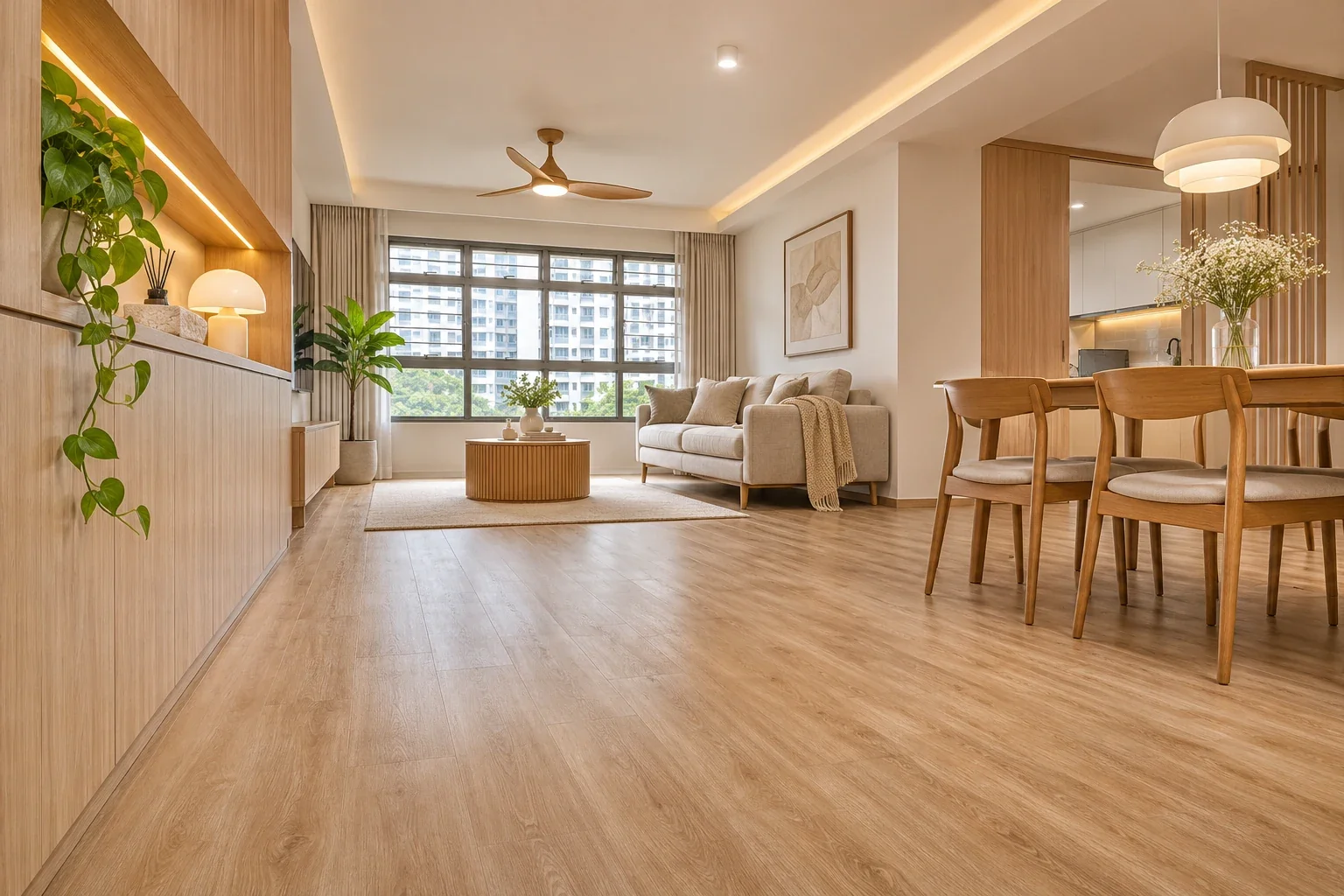
Compare glue-down vinyl, click-lock planks and SPC for Singapore homes. Learn what to check before laying vinyl over existing tiles.
Vinyl flooring can give a room the look of timber or stone with a different feel underfoot. The sample tells you what the floor will look like. The backing, joints and condition of the floor underneath help determine how it will perform. Start with the room and the existing floor, then shortlist finishes.
01. Understand what LVT, LVP and SPC mean
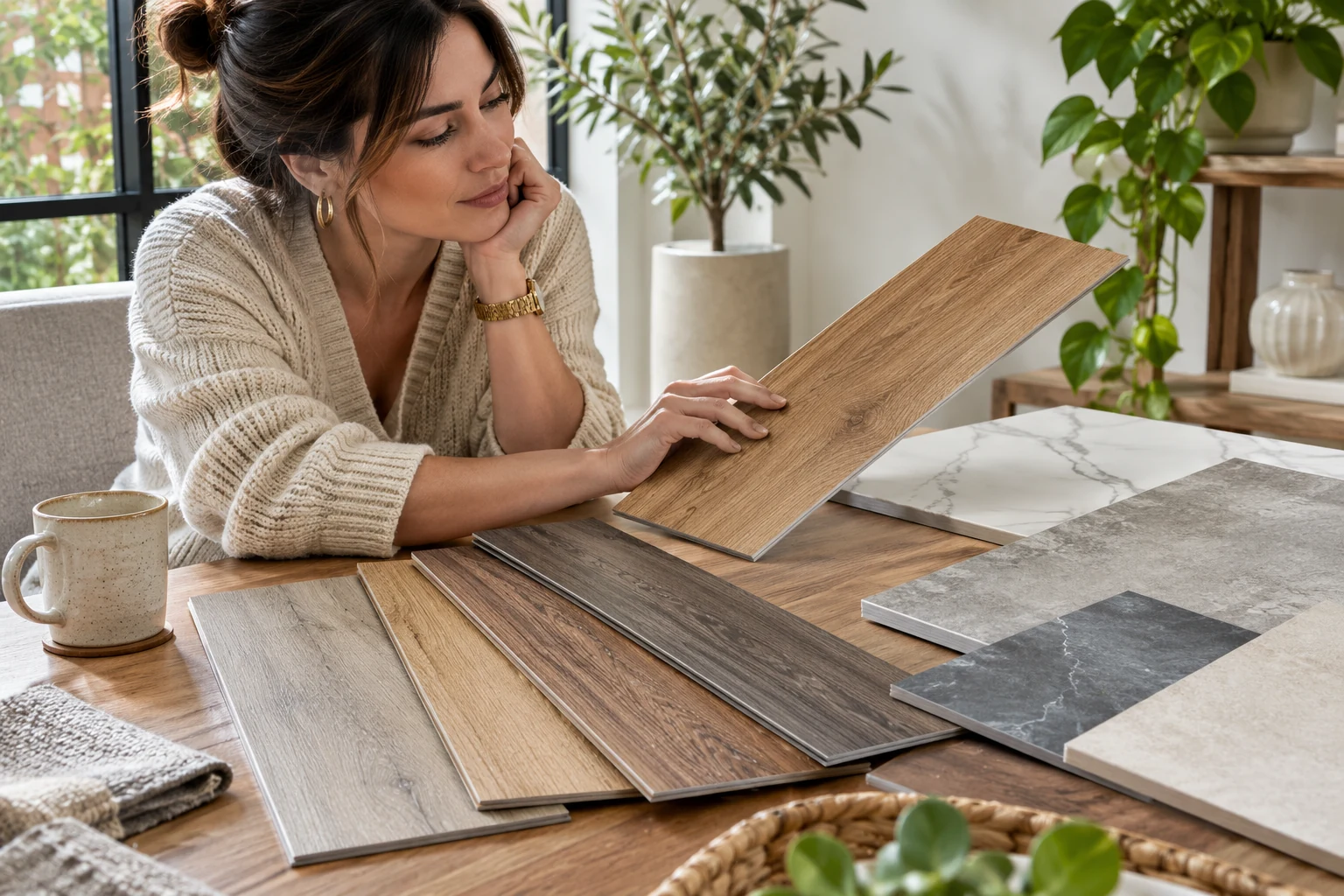
Vinyl flooring is a resilient floor finish that comes in sheets, tiles and planks. LVT means luxury vinyl tile, and LVP means luxury vinyl plank. Suppliers sometimes use LVT for both formats. These names tell you about the product format, so ask separately about how it is installed.
Click-lock describes how adjoining pieces connect. SPC usually refers to a mineral-filled rigid vinyl core, commonly sold as click-lock planks. Some click-lock products have more flexible cores. When comparing samples, ask for the core type, installation method and manufacturer’s fitting instructions.
| Term | What it describes | What to check |
|---|---|---|
| LVT | Luxury vinyl tile. Usually sold in tile shapes. Some suppliers use LVT for tiles and planks. | Check the exact format and whether it is glue-down or click-lock. |
| LVP | Luxury vinyl plank. A plank format, often with a timber-look finish. | Check the core and fitting method. LVP can be glue-down or click-lock. |
| SPC | Stone plastic composite. A rigid, mineral-filled vinyl core commonly used in click-lock products. | Check floor flatness, approved underlay and expansion gaps for the exact product. |
How the terms overlap: A timber-look vinyl plank with a rigid SPC core and click-lock edges can be described as LVP, SPC and click-lock. Each term tells you something different about the same product.
02. Choose glue-down vinyl for a low-profile bonded floor
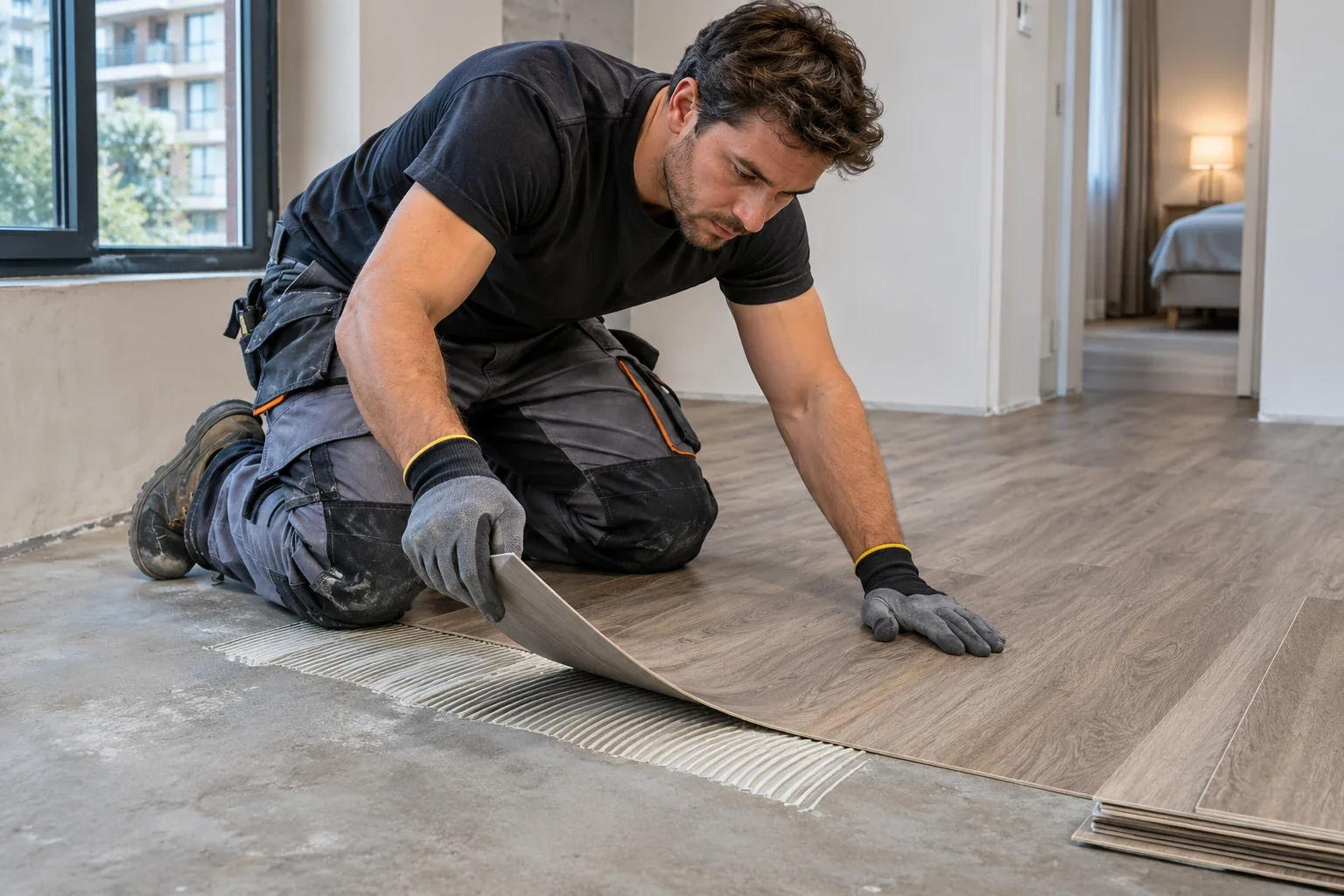
Glue-down vinyl is bonded to the prepared floor with a compatible adhesive. It is worth comparing where you want a low floor build-up, such as at a doorway with limited clearance. Many glue-down products are relatively thin, so ridges, grout lines and patch marks in the base can show through if the surface is poorly prepared.
Ask whether smoothing, moisture checks and adhesive are included in the quote. If a plank is damaged later, ask how it can be removed and replaced and whether matching spares will be available.
03. Consider click-lock or SPC for a suitable dry-area overlay
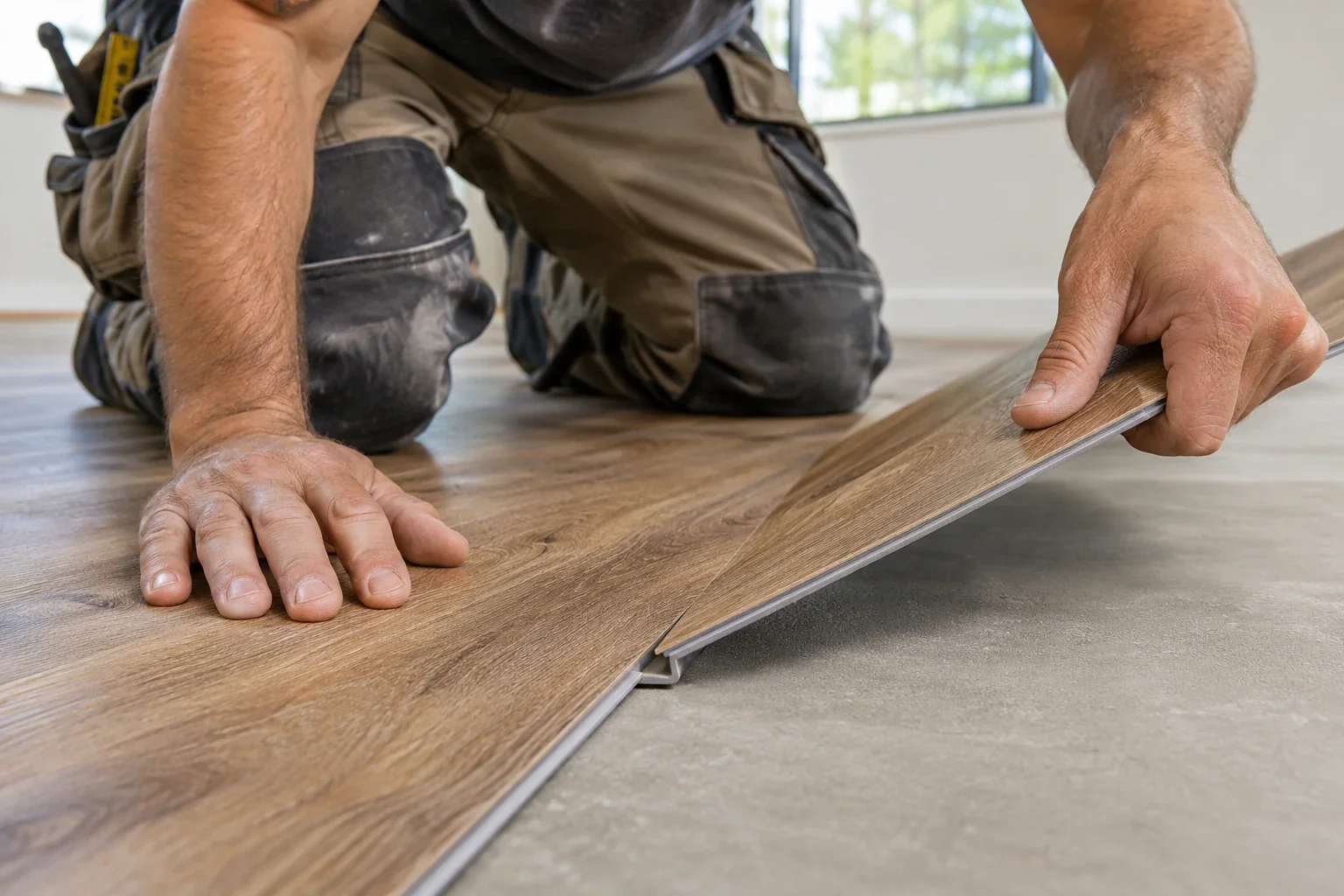
A floating click-lock floor connects plank to plank without bonding the whole surface to the base. Rigid-core SPC is one option for a living room or bedroom overlay where the existing floor is stable and meets the product’s flatness requirements. A rigid plank still needs proper support. Dips and high spots can make the floor move underfoot and stress the joints.
Check the exact system’s underlay, expansion gaps and transition requirements. Ask how it will meet fixed carpentry, walls and adjoining floors. Follow the manufacturer’s instructions for clearance around fixed units and whether the flooring can run underneath them.
04. Check existing tiles before committing to an overlay
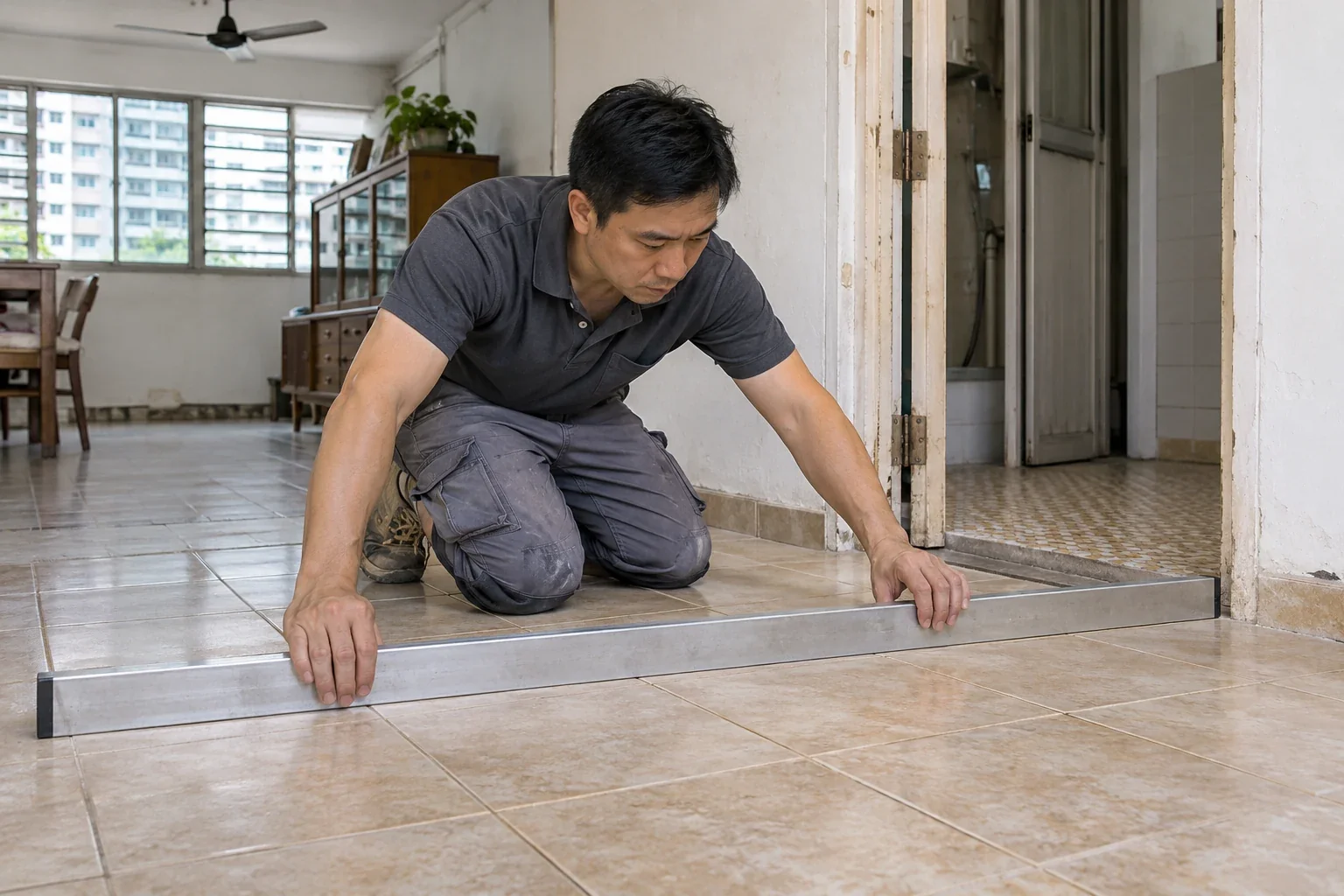
Ask the installer to assess the existing floor for movement, loose tiles, uneven edges, deep grout lines and signs of moisture. The product instructions should guide any filling, smoothing or moisture checks. Compare the finished height at doors, skirting, room transitions and built-in fittings before ordering.
HDB lists laying vinyl or linoleum flooring as work that does not require a renovation permit. If the proposal also includes removing existing floor finishes or raising floor levels, check those works separately against HDB’s requirements for your flat.
05. Match the product to water, sunlight and daily wear
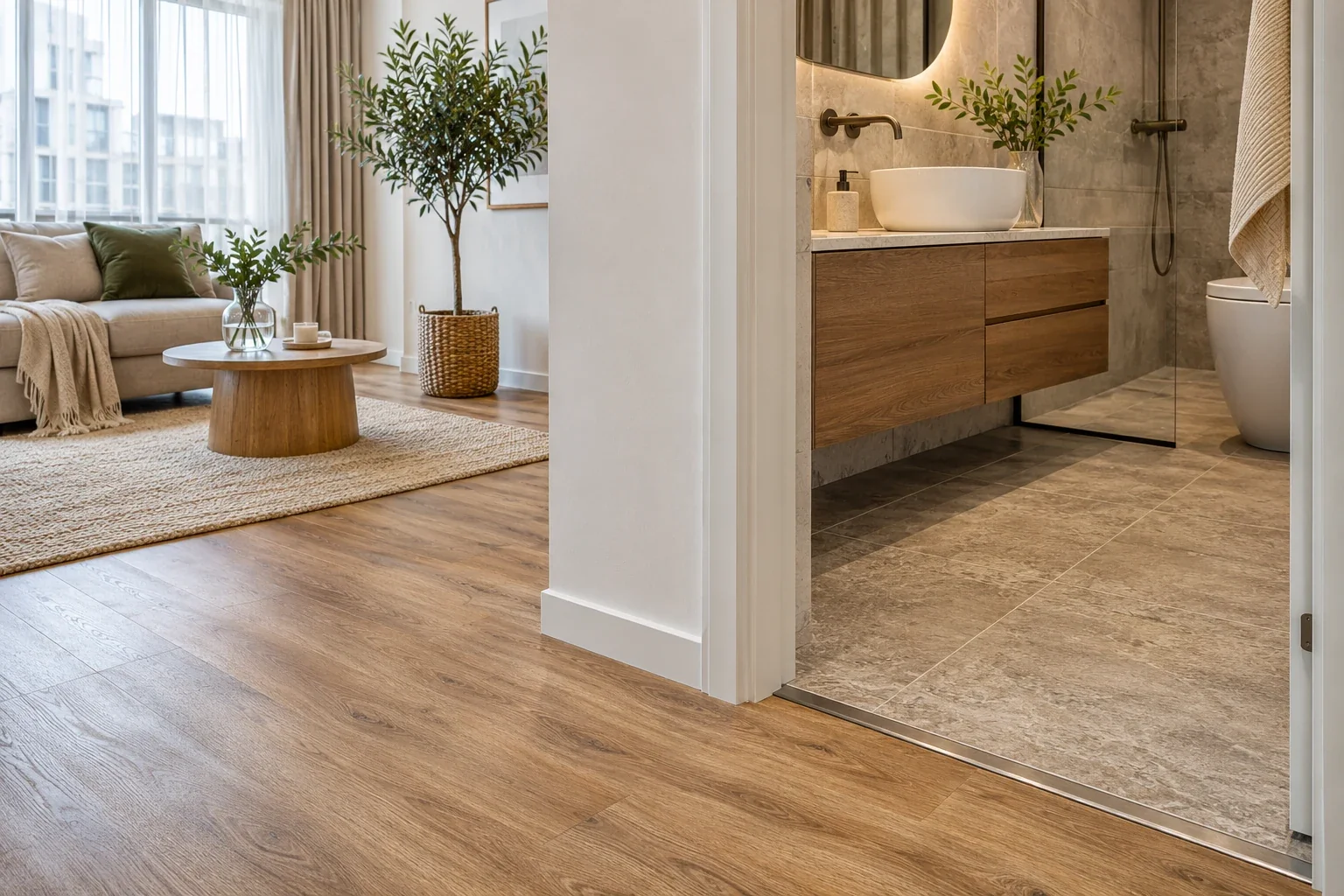
For kitchens, service yards and other splash-prone areas, check which rooms the exact product is approved for and what its warranty covers. A water-resistant plank and a waterproof room are different things. Water can reach the base through edges or joints, so keep the wet-area waterproofing and drainage requirements separate from the choice of surface finish.
If the room gets strong afternoon sun or has heavy furniture, ask about temperature limits and protection against dents and scratches. Compare the wear layer, surface finish and warranty together. Total plank thickness includes the core and any backing, so it tells only part of the story.
06. Approve the sample and compare the complete quote

Start with glue-down if a low build-up matters and you can prepare a smooth base. Compare click-lock or SPC if you want a floating system over a suitable dry floor. If you are looking at sheet vinyl, ask how seams and edges will be handled and whether that exact system is intended for the room.
View several planks together in daylight so you can see the shade and pattern repeat. Compare quotes that list the exact product, preparation, approved underlay or adhesive, trims, skirting and warranty. Confirm who covers the work if an installation issue appears and how many spare pieces you will keep.
Considering vinyl for your renovation? Share photos of the existing floor and doorway transitions with Formstill Studio. We can discuss what preparation to allow for before you select a product.
For information and reference only. The scope, methods and sequence for your renovation depend on actual site conditions, applicable requirements and the on-site assessment and professional judgement of the specialists carrying out the work.