
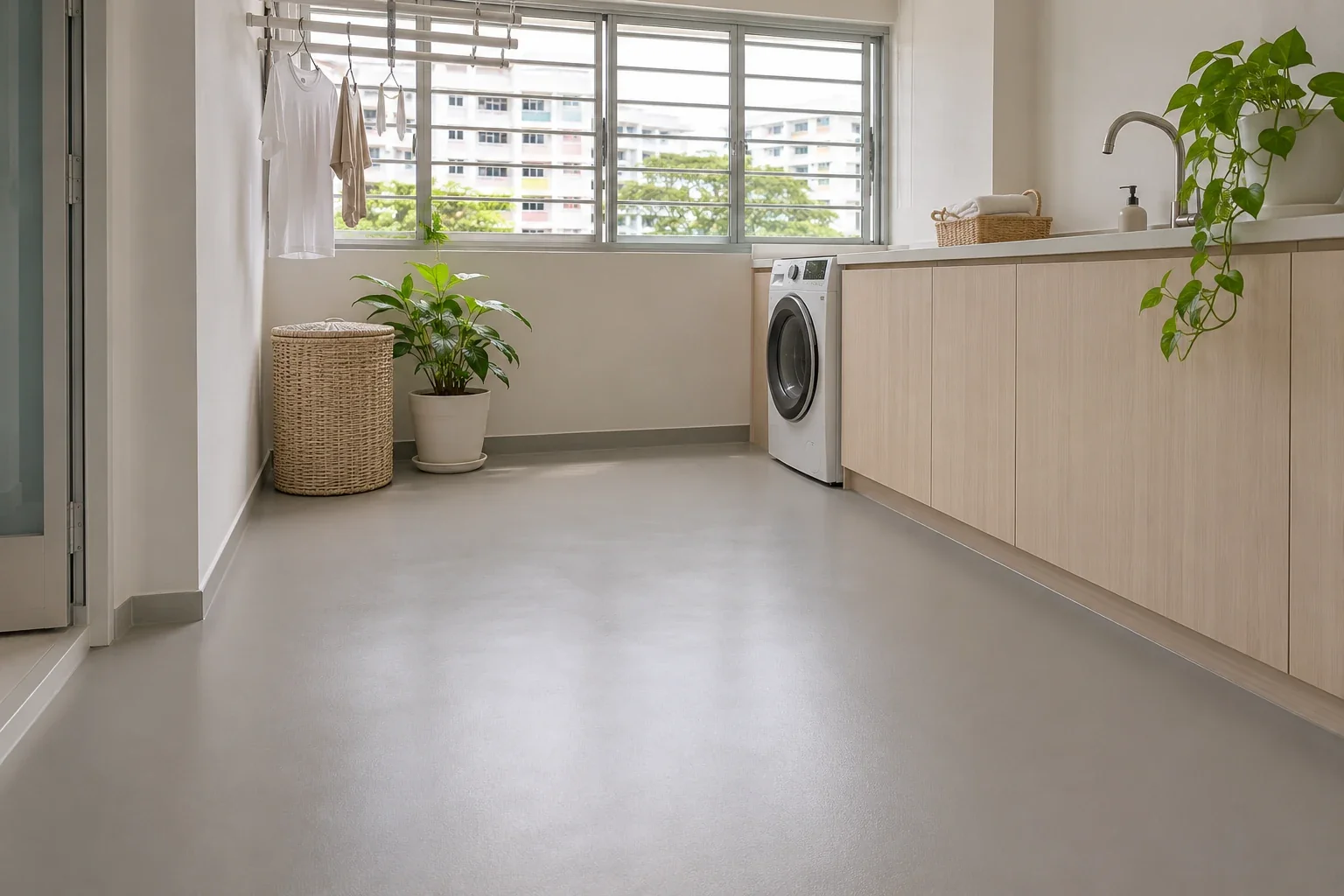
Epoxy flooring gives you a continuous resin finish over a prepared floor. If your tiles are sound and only the grout looks worn, regrouting is a smaller job that keeps the existing tile finish.
Start with the problem you want to solve. For a different look across the entire room, compare a resin floor with a new tiled floor. For worn or stained joints between otherwise sound tiles, compare ordinary cement grout and epoxy grout.
01. What is epoxy flooring?
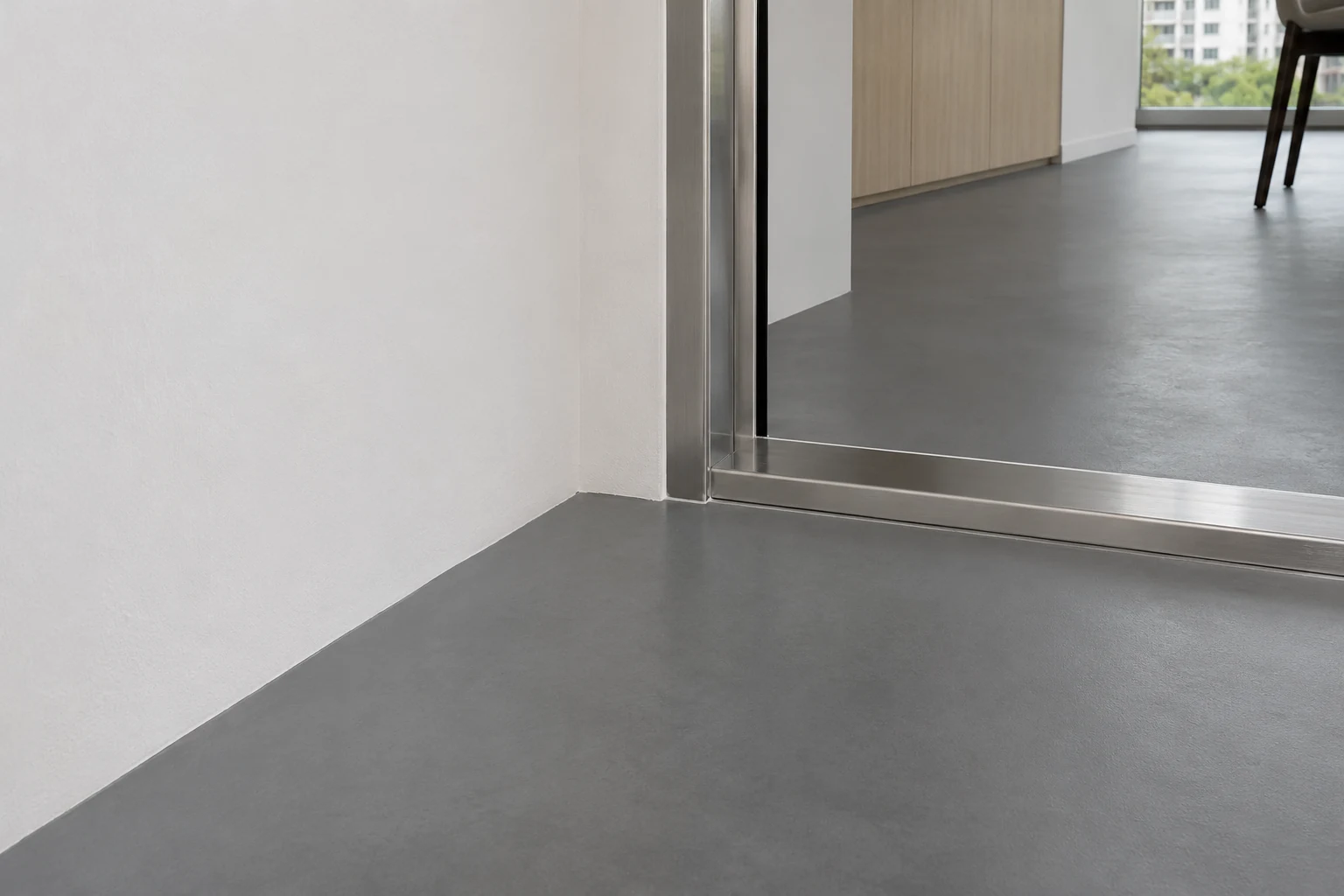
Epoxy flooring typically uses a resin and hardener that react to form a hard wearing surface. Depending on the system, an installer may roll on a thin coating or apply a thicker self-smoothing layer. Textured systems can incorporate aggregate for grip. Ask what goes into the full build-up, including any primer and topcoat, because the finish you walk on depends on the whole system.
The surface has no tile grout grid, though required movement joints still need to be carried through. Standard epoxy can discolour with UV exposure. If the floor gets direct sun, check the specified finish’s UV suitability and ask what appearance changes to expect.
02. Epoxy flooring vs ordinary cement grouting
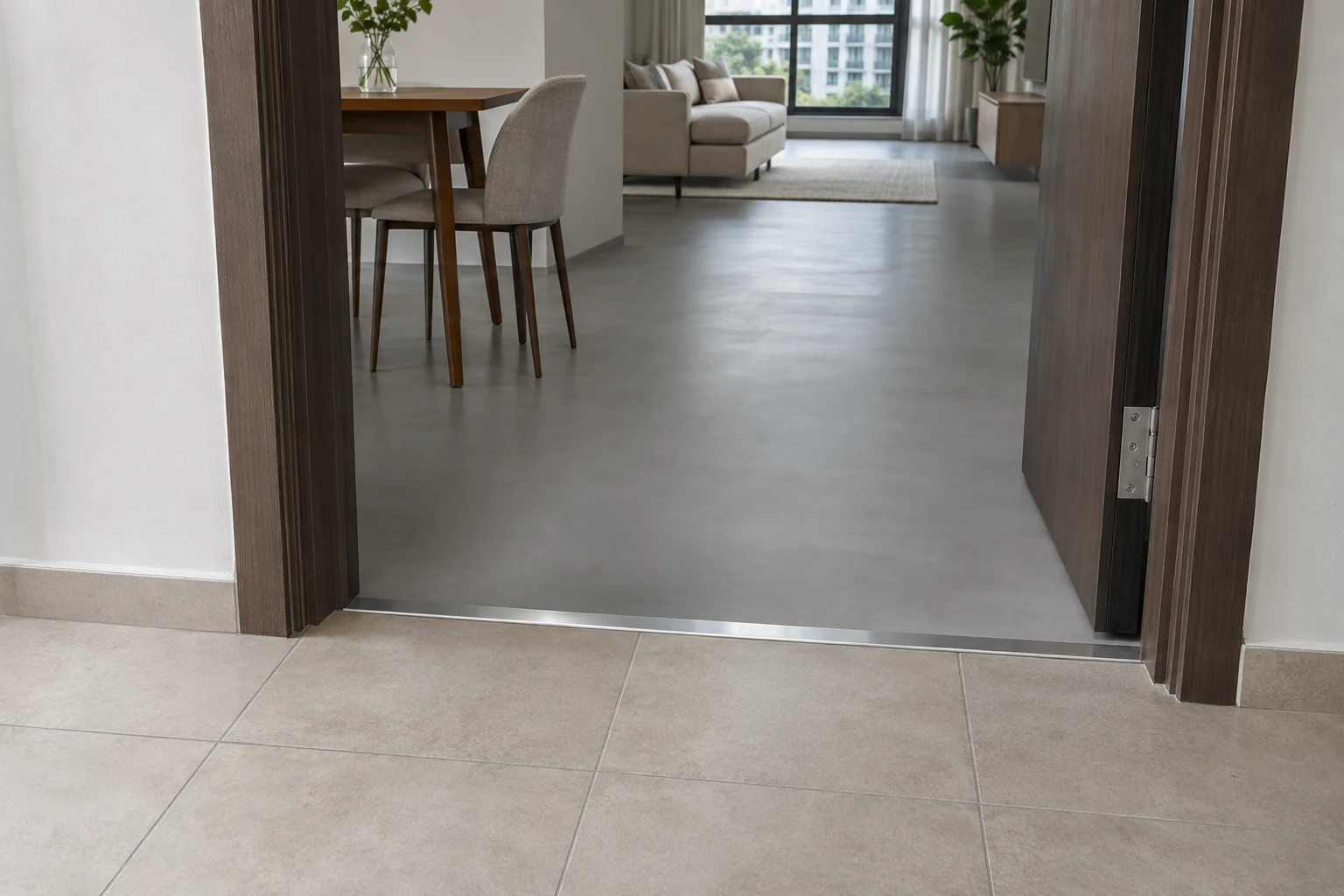
Epoxy flooring covers the tile faces or prepared base across the floor. Ordinary cement grout fills the joints between tiles. A tiled floor with cement grout is the comparable full-floor option. If you’re keeping the existing tiles, the relevant decision is what to refill the joints with.
| What to compare | Epoxy flooring | Ordinary cement grout | Epoxy grout |
|---|---|---|---|
| What it covers | The whole floor surface. | The joints between tiles. | The joints between tiles. |
| Finished look | A continuous resin surface with required joints retained. | Existing or new tile faces stay visible with a grout grid. | Tile faces stay visible with a less absorbent grout joint. |
| Best fit | You want to change the whole surface and the base suits the coating system. | The tiles are sound and the joints need a straightforward refresh. | The tiles are sound and the joints regularly collect stains or soap residue. |
| Quote scope | Floor preparation, repairs, coating layers and curing. | Joint preparation and filling, plus tile work if needed. | Joint preparation, epoxy application and timely cleanup. |
| Repair | A local patch can show. A larger area may need recoating to blend the finish. | Sound tiles can stay while affected joints are repaired. | Sound tiles can stay. Removing cured epoxy can take more care. |
03. Can you use epoxy over tiles or in a bathroom?
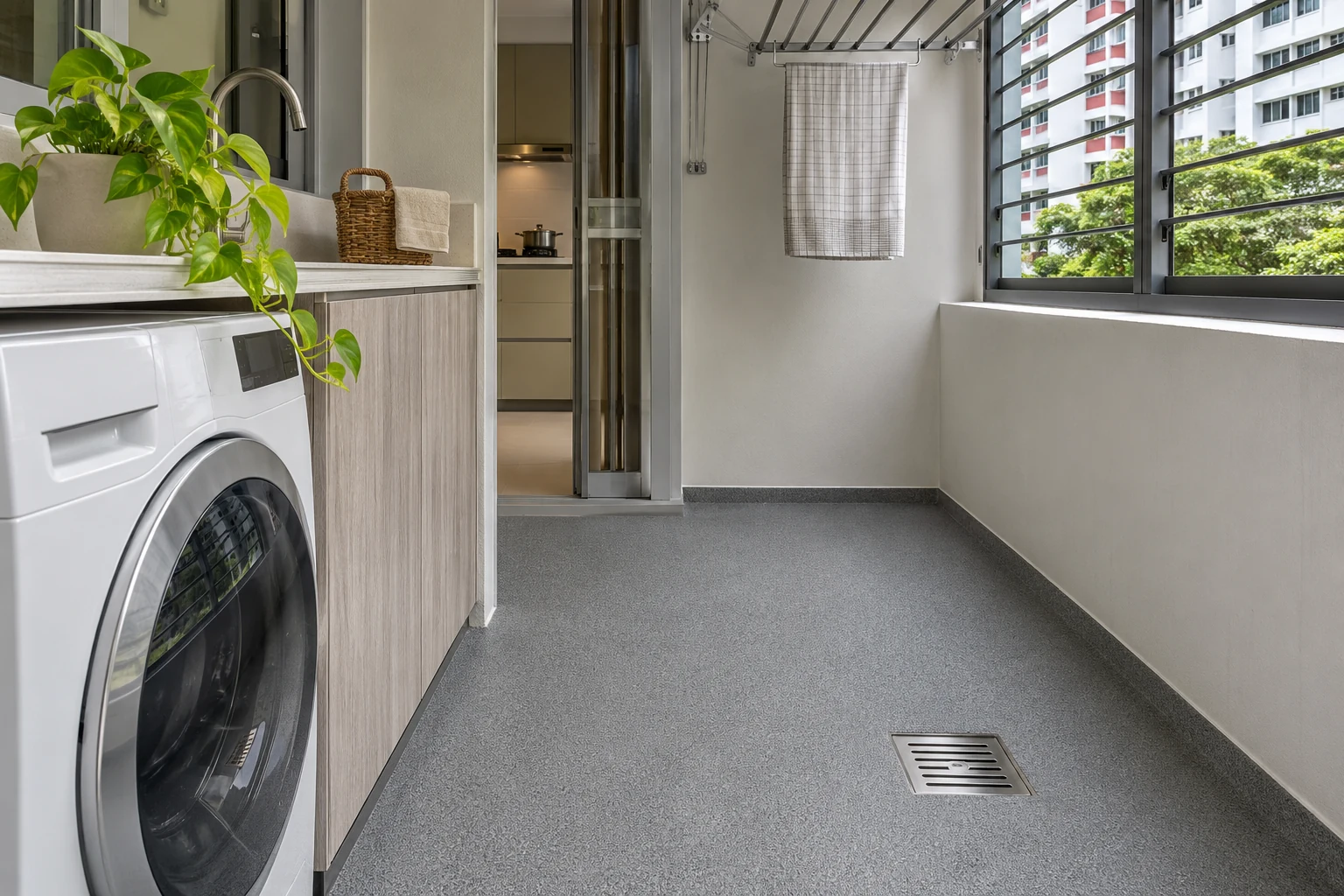
Some systems are suitable for certain existing tiles. The installer should check that the tiles are firmly bonded, look for cracks or dampness, and confirm the primer and surface preparation for that tile. Ask how grout lines will be filled and whether they could show through. A coating won’t stabilise a loose tile or stop movement in the base.
For a bathroom or service yard, ask for wet slip-resistance test data for the exact finished system. Check the fall to the drain, the threshold and the waterproofing underneath. Investigate leaks and standing water before coating. HDB restricts replacement of original bathroom wall and floor finishes for three years from block completion. Ask your HDB-registered contractor to confirm whether the proposed coating and preparation are allowed for your flat. In a condo, check the estate’s rules with management. HDB’s renovation requirements.
04. What should an epoxy flooring quote include?
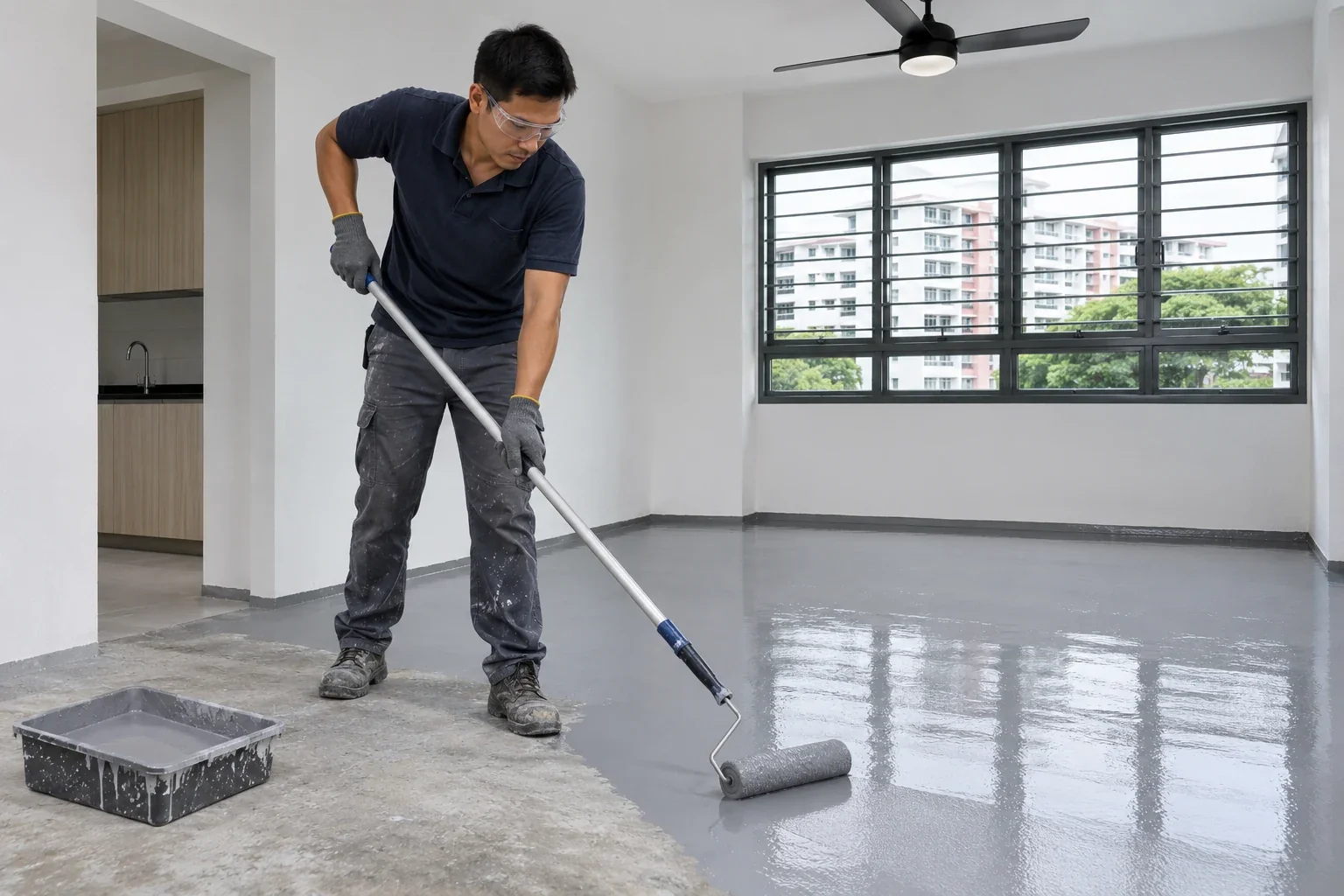
Ask the installer to identify the existing base and check its moisture using the method required for the proposed system. The quote should spell out grinding or other preparation, crack repairs, levelling, primer, coating layers, slip texture and edge details. Ask how existing movement joints will be handled and who will address any failed areas found during preparation.
Compare prices for the same scope. A small room may carry a minimum charge, while repairing or removing a failed finish can add substantial labour. Get written dates for foot traffic, moving furniture back and first wet cleaning. A floor can feel dry before it is ready for normal use.
05. How does an epoxy floor wear and clean?

Use the cleaning products the installer specifies. Remove grit before mopping and put protective pads under movable furniture. A textured floor offers more grip when correctly specified, but may take more brushing to clean than a smooth finish. Approve a sample that matches the final sheen and texture.
Ask what happens if the floor scratches, chips or loses its sheen. A patch may differ in colour or gloss, particularly on a sunlit or older floor. If the problem is limited to stained tile grout today, compare the cost and disruption of regrouting before deciding to coat the entire surface. BCA’s guide to tile grout, movement joints and waterproofing.
Considering epoxy flooring for your renovation? Share photos of the existing floor and tell Formstill Studio how you use the room so we can discuss which scope makes sense.
For information and reference only. The scope, methods and sequence for your renovation depend on actual site conditions, applicable requirements and the on-site assessment and professional judgement of the specialists carrying out the work.