

If your voice sounds hollow on a video call, treat the echo inside your room. If you can hear the TV from the corridor with the door closed, look for where the sound is getting through. Both problems can happen in the same room, but they call for different work. Start with the noise you want to reduce and where you hear it.
| What you hear | Start here | What to check before spending more |
|---|---|---|
| Echo on calls or recordings | Try fabric-covered absorbers and soft furnishings. Bring the microphone closer to the speaker. | Listen back to a recording at your desk. Panels mainly change how sound behaves inside the room. |
| Speech or TV through the room door | Check the frame and the gap beneath the door. Compare a well-sealed solid-core door set if the existing leaf is light. | Consider the leaf, frame, perimeter and threshold together. Check ventilation before sealing an undercut. |
| Traffic through a closed window | Check how the sash closes and whether seals and frames are sound. | Assess the complete window assembly and ventilation needs before changing the glass or adding a second window. |
| Footsteps, drum impacts or bass | Identify where vibration starts. Reduce it at source where you can. | Sound can travel through floors, walls and junctions. Get a site assessment before paying for wall or ceiling linings. |
01. Reduce echo inside the room
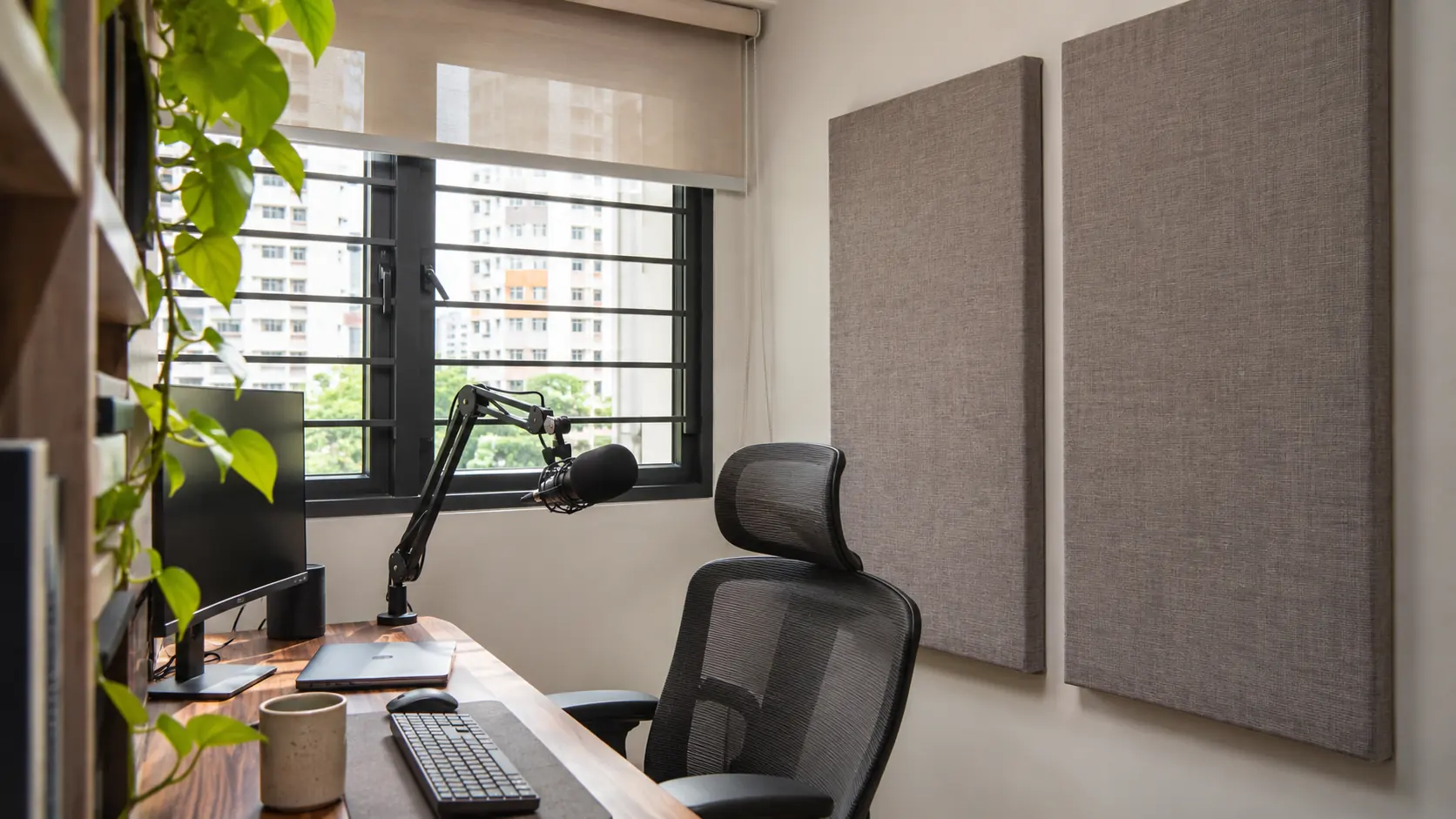
Hard walls and floors reflect sound. Absorbers near the desk or listening position can make speech clearer, and a rug or curtains can help soften some reflections. Compare absorption data for the panels you are actually buying. A Noise Reduction Coefficient (NRC) describes absorption in a test. For sound passing between rooms, ask about the tested sound isolation of the complete wall or door assembly instead.
02. Follow the sound to doors and windows
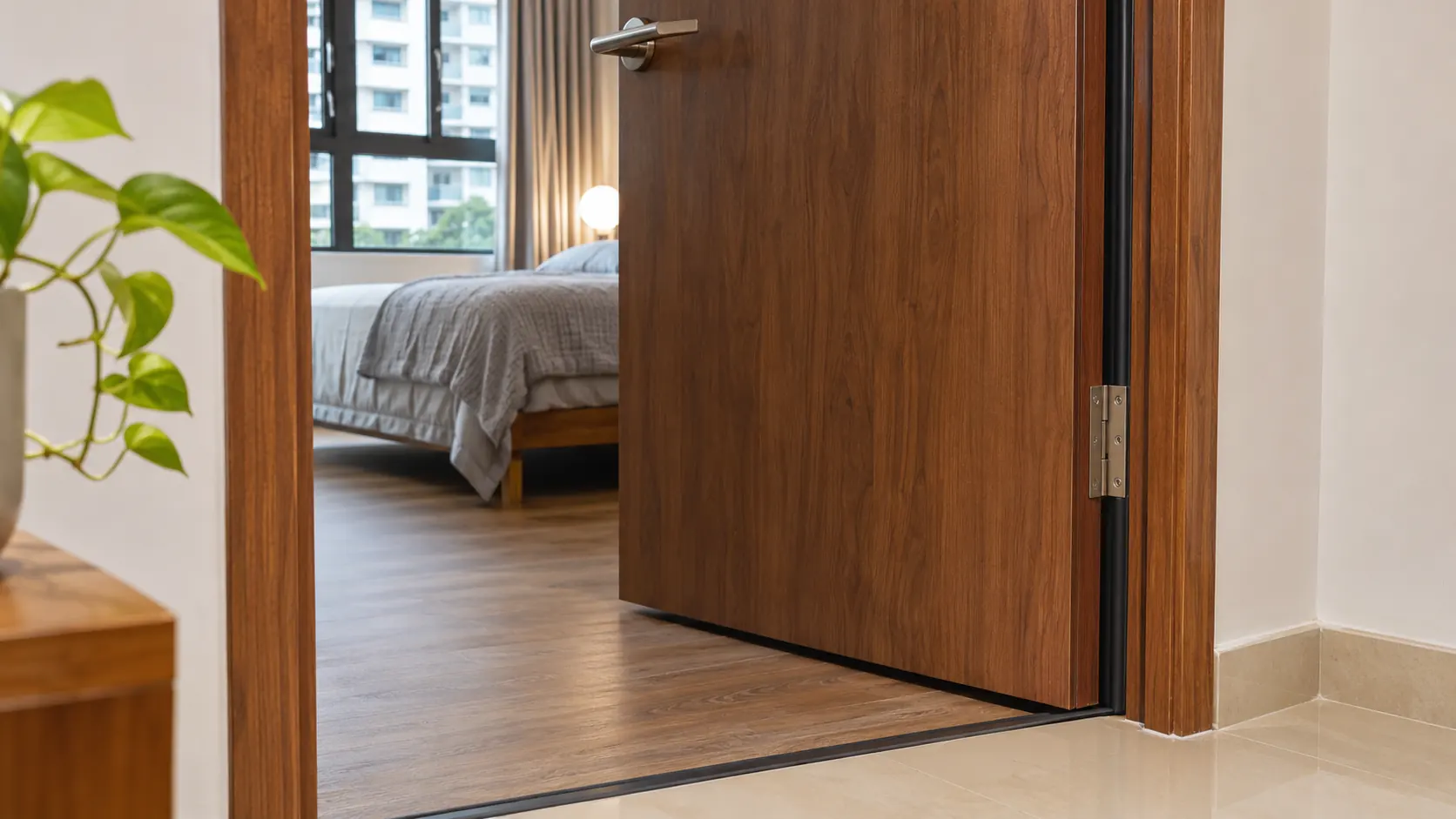
Compare what you hear with the door or window open and closed, then listen near the edges. A heavier door leaf can still let speech through if the frame or threshold leaks. Ask how the proposed seals will meet at the corners and close at the floor. For traffic noise, assess the seals, frame and glazing together. Plan how the room will get fresh air when the windows are closed, particularly if the room will be used for long sessions.
For HDB flats, check the applicable requirements before changing windows or the main entrance door. Engage a BCA-approved window contractor listed with HDB for window replacement, and confirm fire-rating and permit requirements for the main door where applicable. For a condo, check with your management before altering these elements. HDB window works guidelines · HDB building works guidelines.
03. Specify the whole partition if noise is still getting through
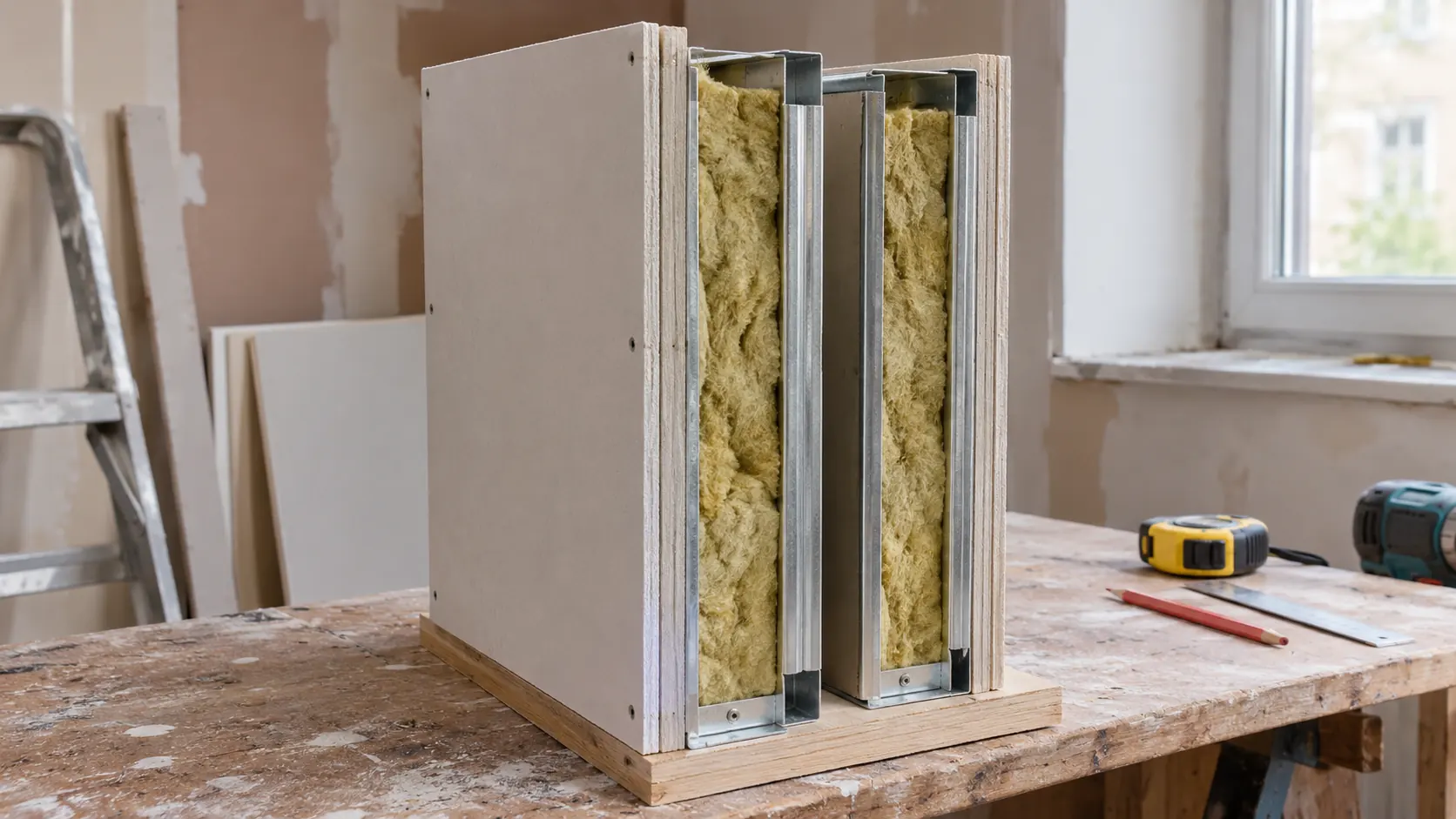
An isolation partition can combine added board mass, insulation in the cavity and framing that reduces direct vibration transfer between the two faces. The result depends on the complete build-up. Ask how it meets the floor, slab and side walls, and how outlets, air-conditioning pipes and other openings will be handled. A shared ceiling void or an adjoining wall can carry sound around the new partition. Check the usable space the build-up will take and any applicable renovation requirements.
If a quote promises a specific reduction, ask which assembly was tested and how the result will be assessed in your room. An STC or Rw laboratory rating describes the tested assembly and gives limited information about deep bass or sound bypassing it on site.
04. Match the work to what you do in the room
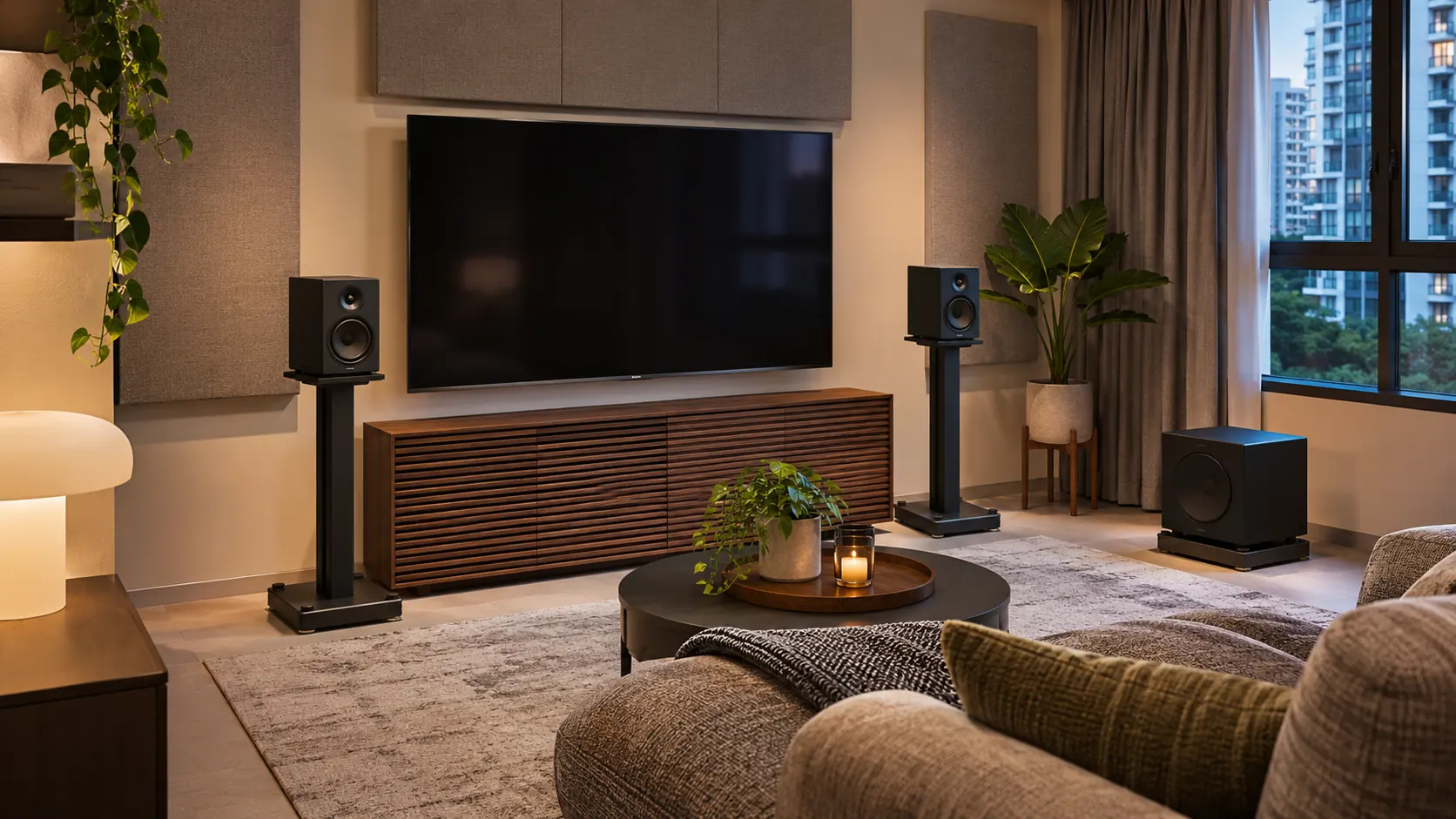
For a home office, start with speech clarity and the door gap if privacy is the issue. For a media room, move speakers closer to the listening position where practical so you can play them at a lower level. Isolation pads can reduce direct vibration into a stand or floor, while airborne bass can still travel through the building. For loud instruments or a subwoofer that disturbs neighbouring rooms, have an acoustic specialist assess the noise path before committing to construction.
For information and reference only. The scope, methods and sequence for your renovation depend on actual site conditions, applicable requirements and the on-site assessment and professional judgement of the specialists carrying out the work.