

Microcement gives walls and floors a hand-trowelled, concrete-like finish with fewer visible lines. Before choosing it, check what’s underneath, how the room gets used and what the installer’s quote covers.
If you love the look but worry about upkeep, try it on a dry feature wall and keep porcelain on the shower floor. You can still carry the same colour through both surfaces.
01. What is microcement?

Microcement is a thin decorative coating, typically made from cement, fine fillers, pigments and a polymer binder. An installer applies it in layers over a prepared surface. The complete system may include primer, reinforcement, base coats, finish coats and a protective sealer. Some systems are only a few millimetres thick, but the full build-up depends on how much preparation the base needs.
Expect some tonal variation and trowel texture. Approve a sealed sample under the lighting you’ll use at home. A small chip is useful for colour, while a larger sample gives a better sense of the movement across the surface.
02. Microcement vs porcelain tiles vs cement screed

Choose by location. A dry feature wall mainly needs to look the way you want. A shower floor also has to drain, provide grip when wet and tolerate frequent cleaning. Screed usually levels the base for a finish. If you want exposed screed, specify it as the finished floor and ask how it will be detailed and sealed.
| Finish | Look and use | What to check before choosing |
|---|---|---|
| Microcement | Continuous, hand-trowelled look on suitable walls and floors. | Base condition, movement joints, sealer and whether a patch will show. |
| Porcelain tiles | Consistent patterns, including concrete looks. Individual tiles can sometimes be replaced if you keep spares. | Grout and layout, wet slip resistance for floors, and build-up at thresholds. |
| Exposed cement screed | Raw cement appearance, with finish and texture dependent on the mix and workmanship. | Floor height, cracking, joints, sealing and suitability as a wearing surface. |
03. Can you apply microcement over existing tiles?

Sometimes. The tiles must be firmly bonded and compatible with the system. Ask the installer to inspect for hollow or loose tiles, moisture, cracks, lippage and movement joints. The quote should explain how grout lines will be levelled and which joints must carry through the new finish. Movement in the base can still show up as cracks, and a coating won’t fix dampness or loose tiles.
Measure the proposed build-up at doors, skirting and where the floor meets another material. If the base needs major repair, compare a properly prepared overlay with replacement before committing.
04. Can you use microcement in an HDB bathroom?
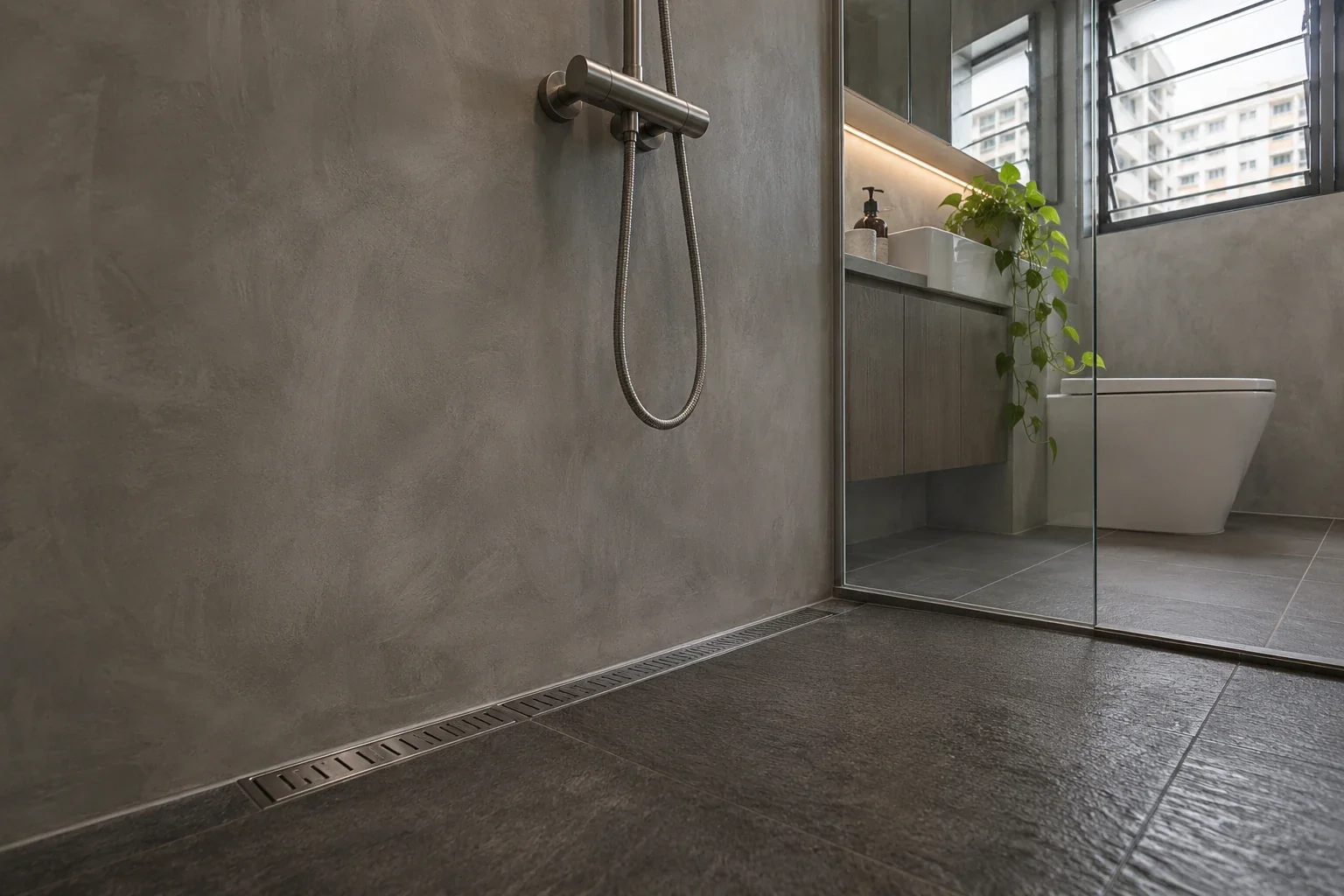
Ask for written confirmation that the exact system suits the intended location. A vanity wall and a shower floor have different demands. For a shower, confirm the waterproofing assembly, drain and pipe details, slope to the floor trap and wet slip resistance of the finished, sealed surface. Even a water-resistant coating depends on the waterproofing and detailing underneath it. Investigate an existing leak before covering the surface.
HDB restricts replacement of original bathroom floor and wall finishes for three years from block completion. Its guidelines allow certain floor overlays subject to conditions. Ask an HDB-registered contractor to confirm how your specific system and scope fit the rules before starting. For a condo, check the estate’s renovation requirements with management. HDB’s bathroom renovation restrictions · HDB’s building works guidelines.
05. What affects cost and installation time?

Compare the installed scope. A price per square foot can leave out repairs, levelling, priming, reinforcement, edges and the sealer. A small bathroom can take considerable labour because of corners, niches and pipe penetrations. Ask whether the quote includes waterproofing where required, protection for adjacent finishes and a sample for approval.
Get separate dates for application, light foot traffic, furniture delivery and first water exposure. Drying between coats and full cure are different milestones. Follow the written schedule for the exact system, especially when other trades still need access.
06. How do you clean and maintain microcement?
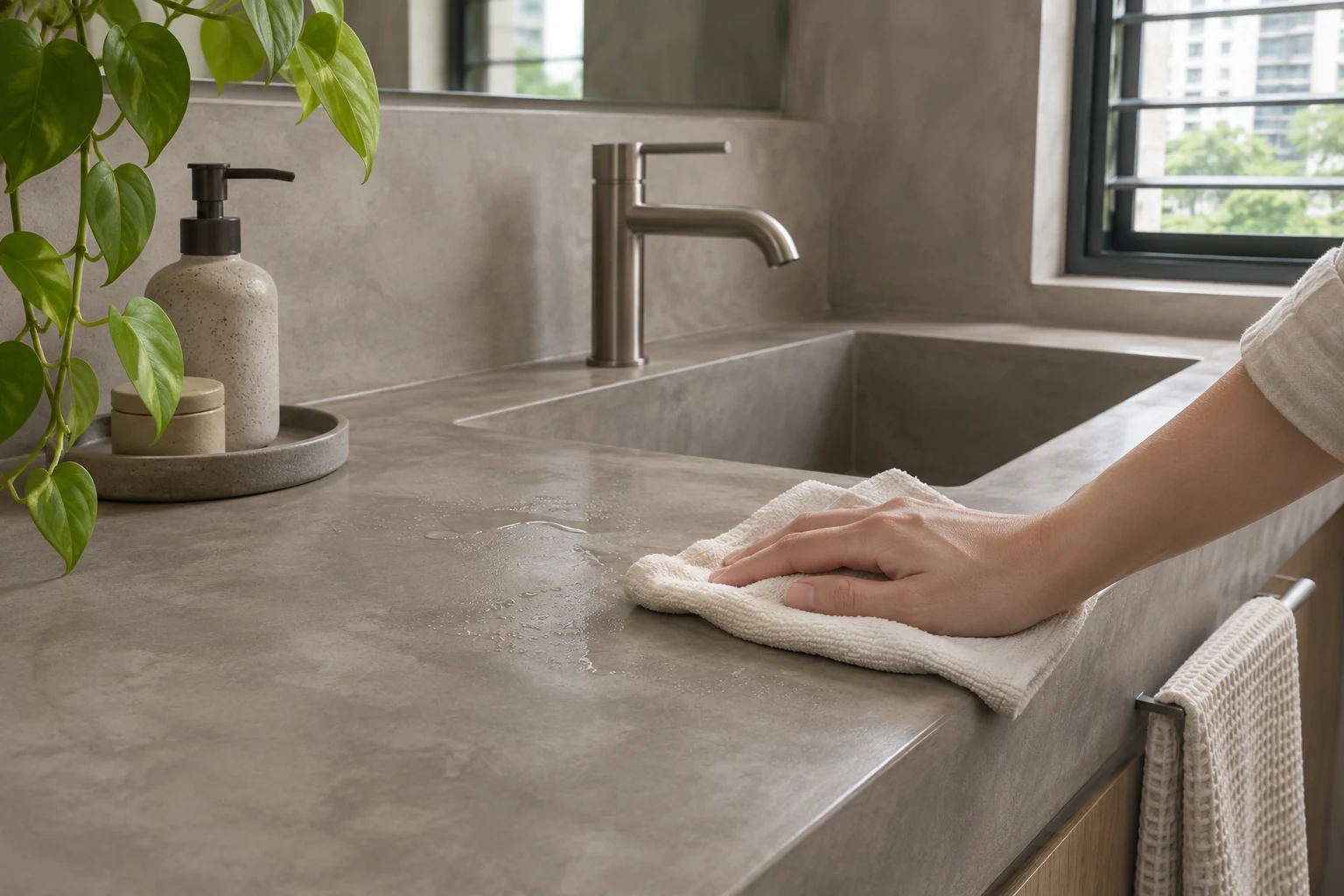
Use a soft cloth or mop with a cleaner approved for the sealer. Wipe spills promptly and use felt pads under movable furniture. In bathrooms, ask which products are suitable for soap residue and limescale before reaching for an acidic cleaner or abrasive pad.
Ask what wear looks like, when the installer recommends inspecting or renewing the sealer, and what the warranty covers. A local patch can show because of differences in colour, sheen or trowel texture. Ask whether a repair can stop at a natural break such as a corner or doorway.
Considering microcement for your renovation? Share the rooms you’re planning with Formstill Studio so we can discuss where it makes sense and where tiles may be easier to live with.
For information and reference only. The scope, methods and sequence for your renovation depend on actual site conditions, applicable requirements and the on-site assessment and professional judgement of the specialists carrying out the work.