
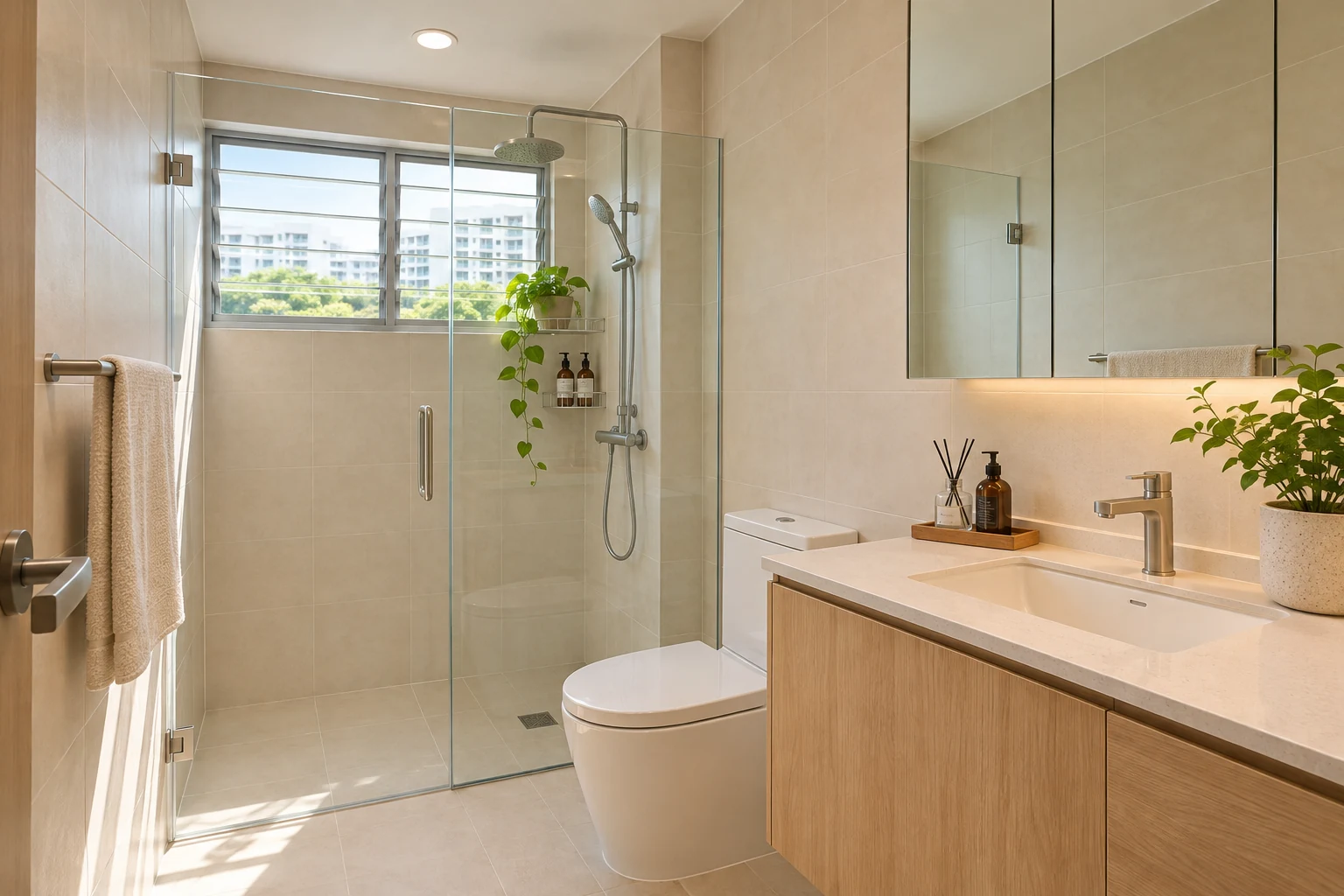
Epoxy grout absorbs less water and generally resists stains better than ordinary cement grout. It can be worth the extra cost in a busy shower or kitchen backsplash. For lightly used areas, a compatible cement grout is often a sensible choice.
Choose grout by area. You can specify epoxy where soap or cooking splashes are a daily problem and use cement grout elsewhere. If you’re trying to fix a leak, identify the source before paying for regrouting.
01. What is epoxy grout?
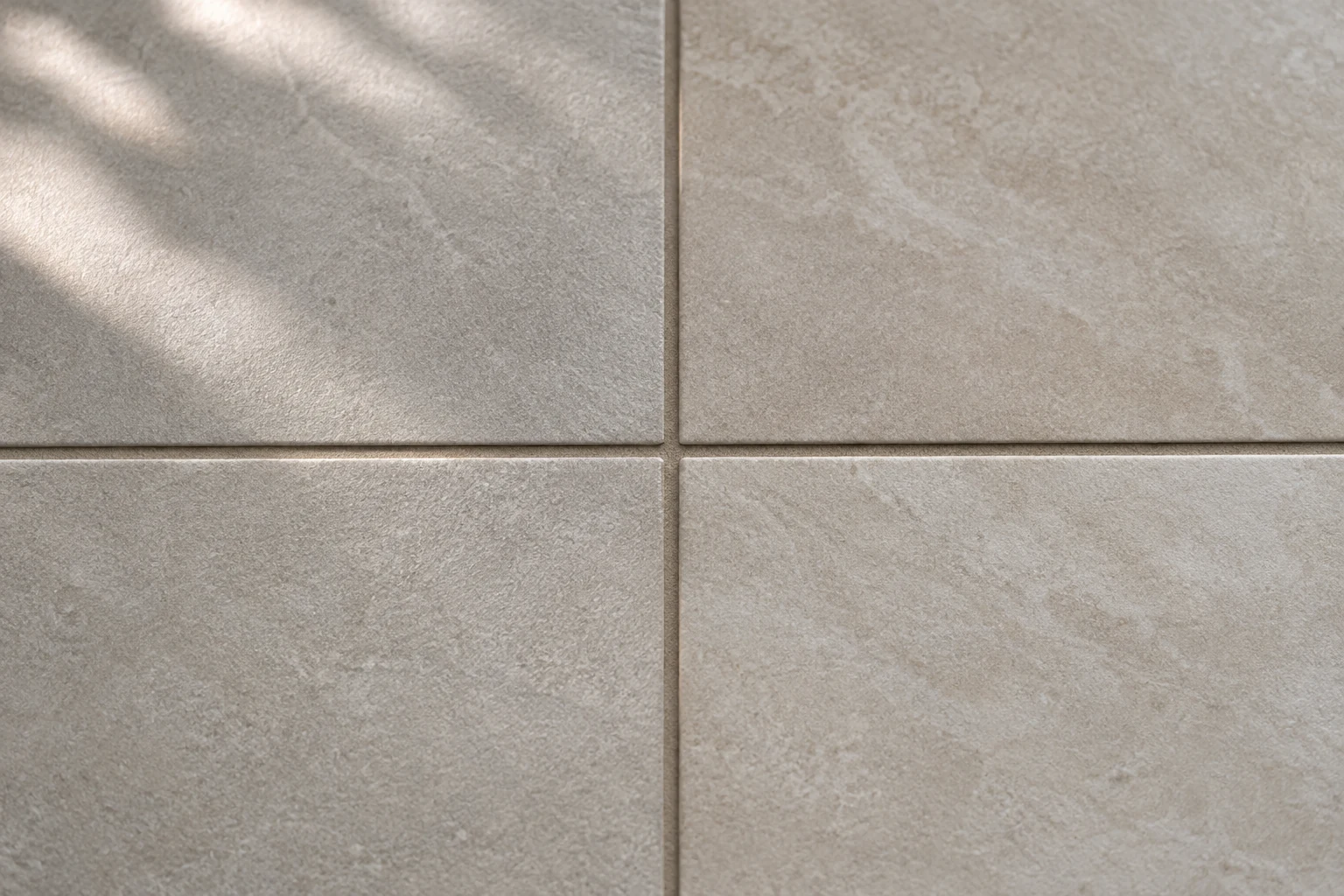
Grout fills the gaps between tiles. Epoxy grout typically combines a resin, a hardener and filler. Once mixed, the components react and cure into a dense joint. Cement grout uses a cement-based powder mixed with water or the specified additive. It comes in standard and improved formulations, so performance varies even within the same grout type.
When you read a data sheet, CG means cementitious grout. CG1 is the standard performance class and CG2 is improved cementitious grout. Epoxy products are typically classed as RG, which means reaction resin grout. Check the intended application and supported joint widths before choosing by class alone. BCA’s ceramic tiling guide, including grout and movement joints.
02. Epoxy grout vs cement grout
| What to compare | Epoxy grout | Ordinary cement grout |
|---|---|---|
| Water absorption | Generally very low once cured. The tiled assembly still needs its specified waterproofing. | Typically more absorbent. Improved low-absorption cement products are available. |
| Stains and cleaning | Usually easier to wipe clean where cooking oil or soap residue builds up. | Stains may penetrate more readily, especially in light or porous grout. |
| Sealing | Typically needs no penetrating grout sealer. | Some products benefit from a compatible sealer. Check the manufacturer’s instructions. |
| Installation | Mix and clean within the specified working window. Missed residue can leave a cured haze. | Generally simpler to apply. Mixing and cleanup still affect colour and finish. |
| Cost | Usually higher upfront for materials and labour. | Usually lower upfront. Improved formulations can cost more than standard grout. |
| Where to consider it | Frequently used showers, tiled backsplashes or floors where staining is a recurring concern. | Dry walls and budget-sensitive areas. A suitable improved grout can also work in wet areas. |
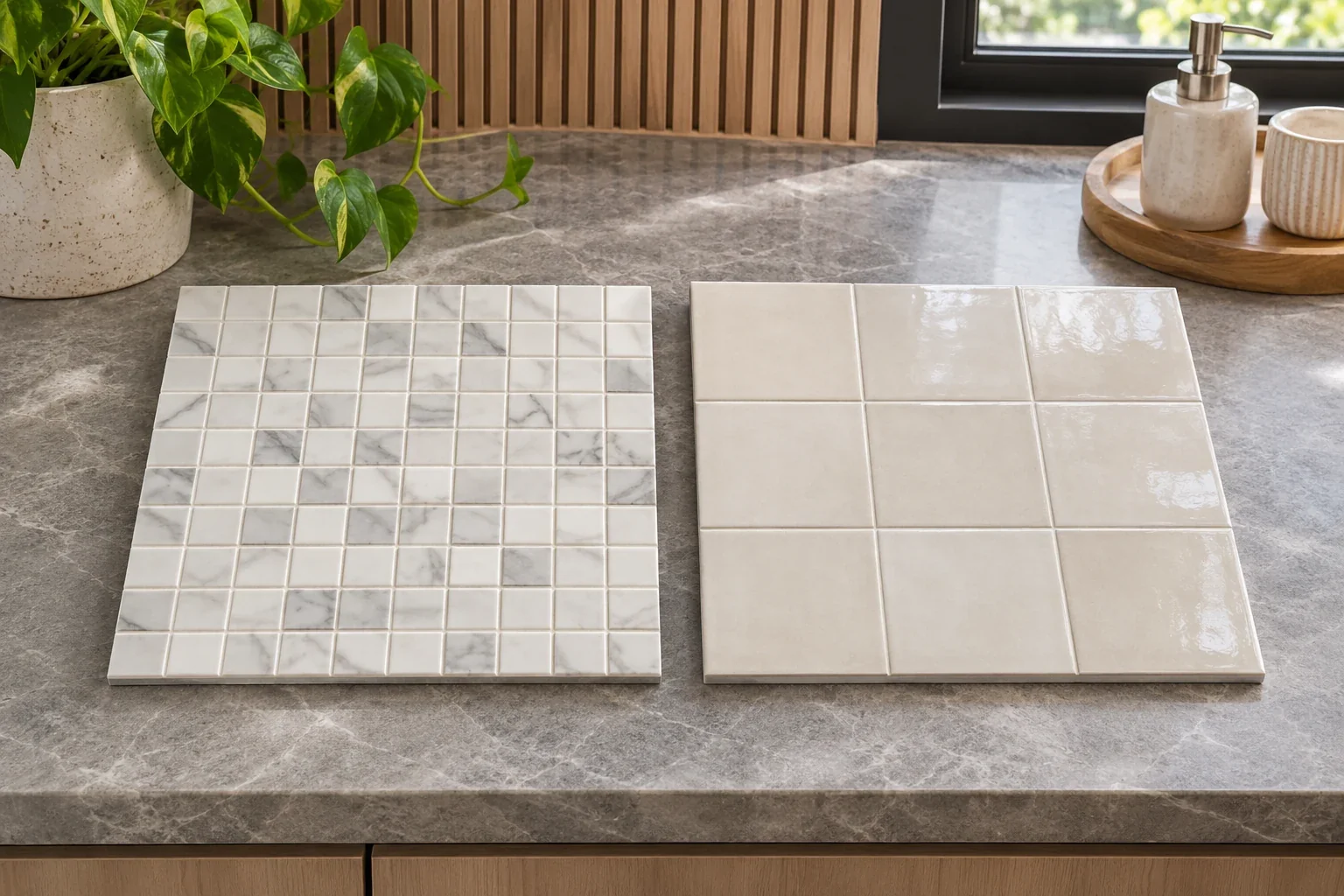
Ask to see a cured sample on your actual tile. The same grout colour can look different beside a dark tile or under warm lighting, and textured tiles may take more care to clean during installation.
03. Will epoxy grout waterproof a bathroom?
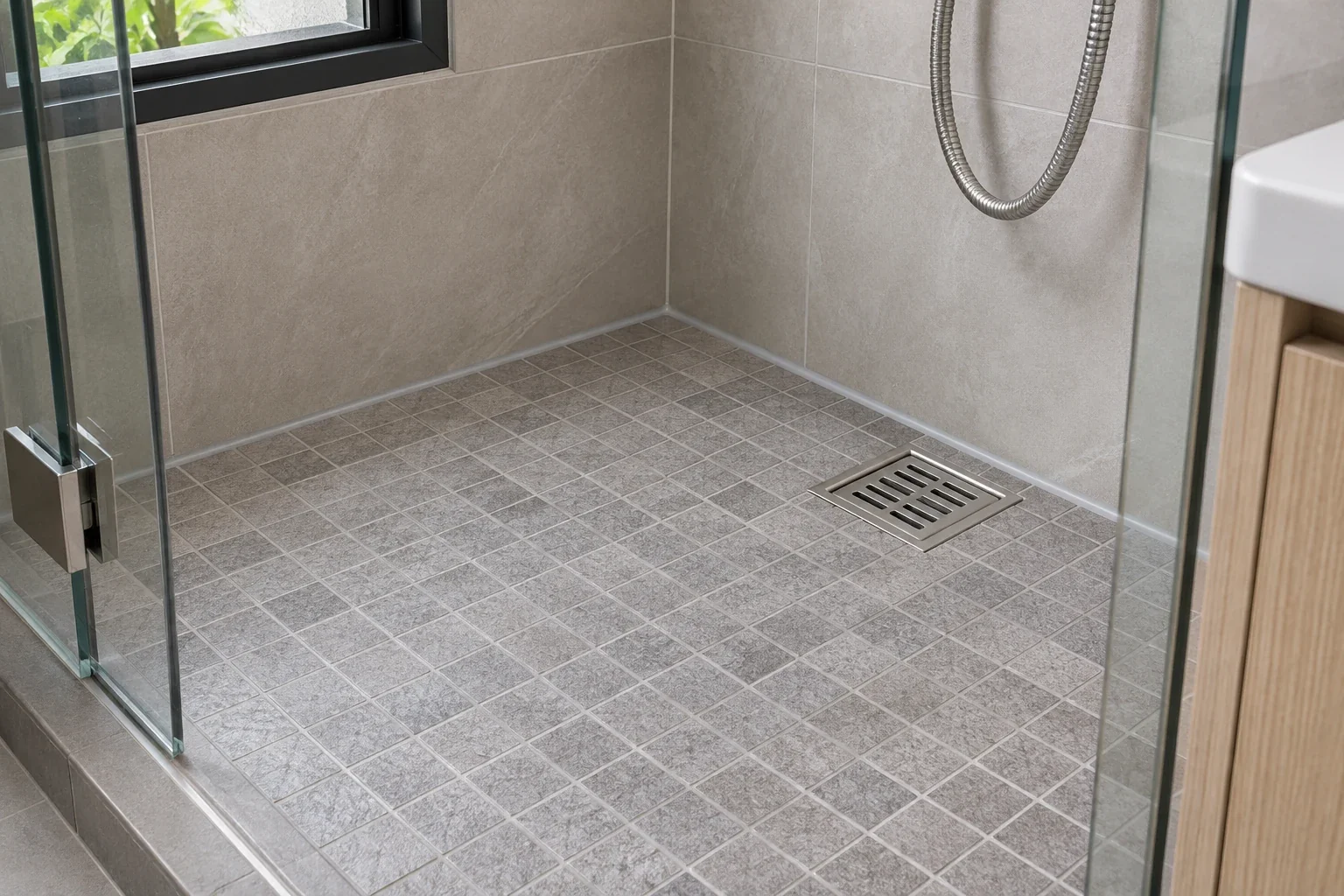
Epoxy grout makes the tile joints less absorbent. The bathroom still relies on the waterproofing membrane and details around drains, pipes and edges. Specified movement joints need a suitable flexible sealant or joint system, including at changes of plane where required. Hard grout in those joints can crack when surfaces move.
If the downstairs ceiling is damp, dampness persists when the shower has been out of use, or tiles are loose, get the cause checked. A failed membrane, plumbing leak or damaged sealant can need a different repair. When replacing HDB bathroom floor finishes, follow HDB’s waterproofing and water-test requirements for that scope. HDB’s renovation requirements.
04. Can you regrout existing tiles with epoxy?
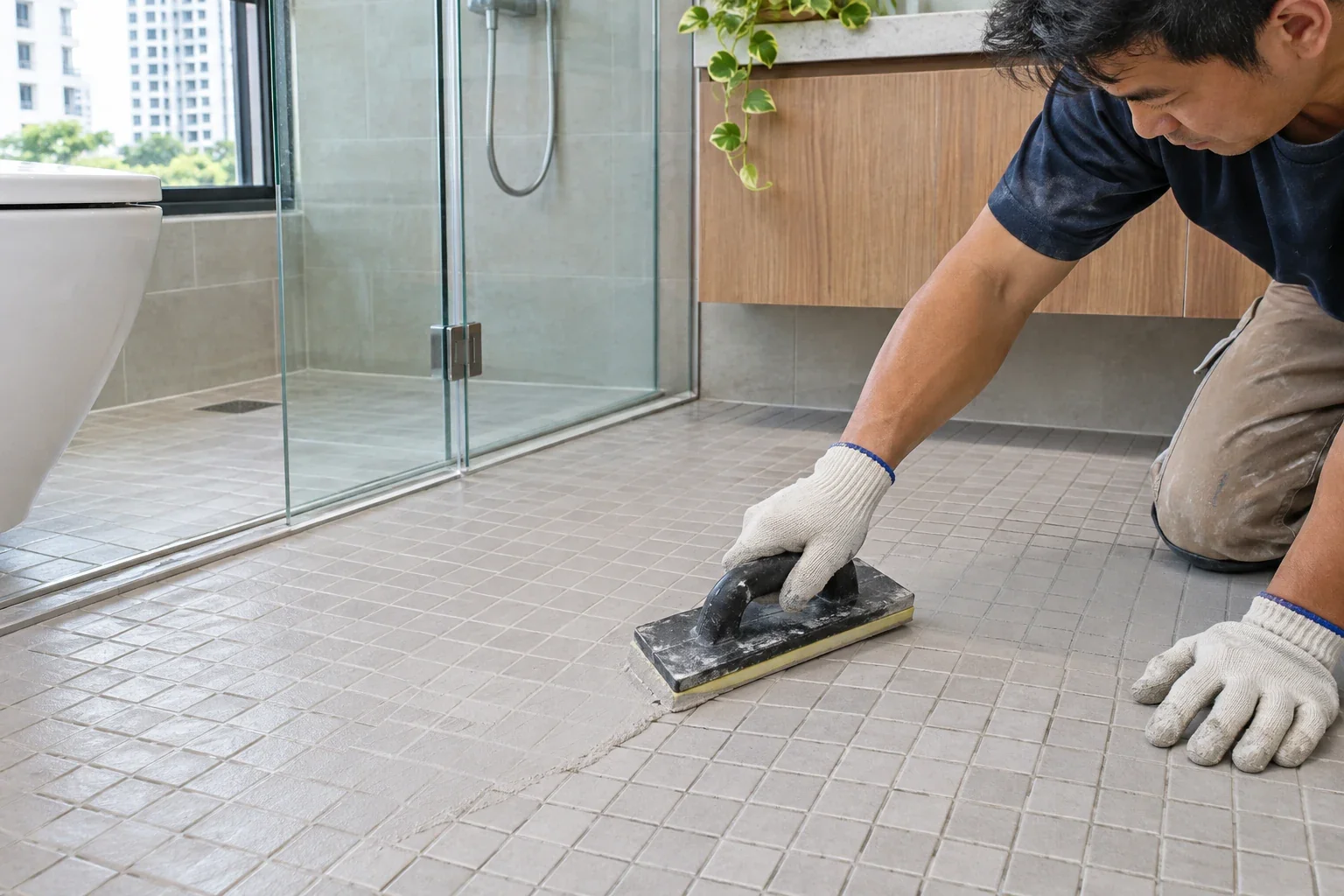
Regrouting can make sense if the tiles are sound and the problem is limited to the joints. Ask the installer to inspect the tiles, remove old grout to the depth the replacement product requires, and clean and prepare the joints. A thin skim over old grout may leave too little depth for a sound repair. If cracking keeps returning, check for movement or loose tiles first.
Compare quotes on the same scope. Ask which product is included, how much old grout will be removed, how tile edges will be protected, whether flexible joints will be renewed, and when you can walk on the floor or use the shower. Small mosaics can mean more joints to prepare and fill, even in a small room.
05. How should you clean and maintain the joints?

Use a soft cloth or brush and a cleaner compatible with both the tile and the grout. Clean soap film and cooking splashes regularly, and ventilate the bathroom so surfaces dry more readily. Mould can still grow on residue sitting on the surface of epoxy grout. Ventilation and routine cleaning matter whichever grout you choose.
If the grout looks patchy shortly after installation, ask the tiler to check for residue or haze before using a stronger cleaner. Check cure times and cleaning instructions for the exact product, especially on porous stone or textured tiles. HDB’s guide to maintaining floor tiles.
Choosing tiles for a kitchen or bathroom renovation? Share your tile samples and how you use the space with Formstill Studio so we can discuss where epoxy grout is worth specifying.
For information and reference only. The scope, methods and sequence for your renovation depend on actual site conditions, applicable requirements and the on-site assessment and professional judgement of the specialists carrying out the work.