

Exposed cement screed gives a room a quiet, continuous look with fewer visible joints than a tiled floor. It also shows the character of a hand-applied finish. If you like the tonal variation and can live with the possibility of fine cracks and visible repairs, it can suit a dry living or dining area. If you want a more predictable appearance with a simpler care routine, start by looking at concrete-look porcelain.
01. Specify the floor you want to walk on
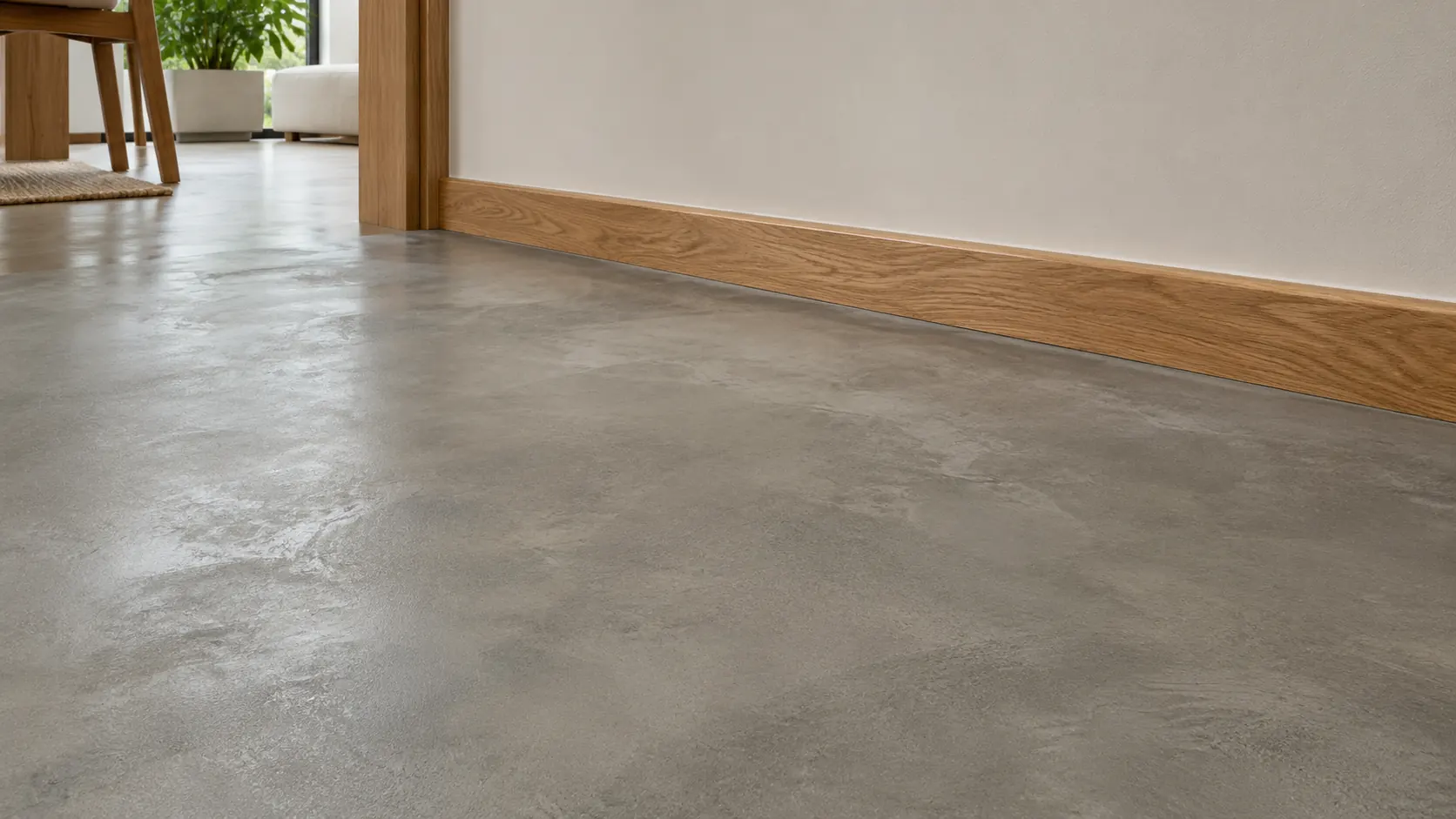
Screed is a layer applied over a base such as a concrete slab. In many renovations it simply levels the floor before vinyl or tiles go down. An exposed floor needs a screed or topping specified for use as the finished walking surface, together with a compatible sealer where the system calls for one. If your quote says only “cement screed”, ask which of those jobs it covers.
Ask to see a cured and sealed sample in daylight. Check its texture barefoot and view it from the doorway. Large areas can show trowel marks and differences in tone more clearly than a small sample does. Agree on the appearance and the location of any visible joints before work starts.
| What to compare | Exposed cement screed | Microcement | Concrete-look porcelain |
|---|---|---|---|
| Appearance | Hand-trowelled variation across larger areas. | Thin decorative coating with layered texture. | Printed concrete effect with visible grout lines. |
| Base and floor height | Confirm the system thickness and how it bonds to the base. | Thin build-up over a sound, suitably prepared base. | Allow for tile and adhesive thickness at thresholds. |
| Movement and repairs | Fine cracks can show. Patches may stand out. | Movement below can show through. Local repairs may differ in tone. | Tiles and grout can crack. A spare matching tile can help with local replacement. |
| Spills and upkeep | Follow the sealer’s care and recoating instructions. | Cleaning and resealing depend on the specified coating system. | Clean the tile and grout separately as needed. |
| Where to start | Dry rooms where you welcome a visibly hand-finished surface. | Where a continuous look and a thin finish matter. | Where easier routine care matters and grout lines are acceptable. |
02. Understand where cracks and joints can show
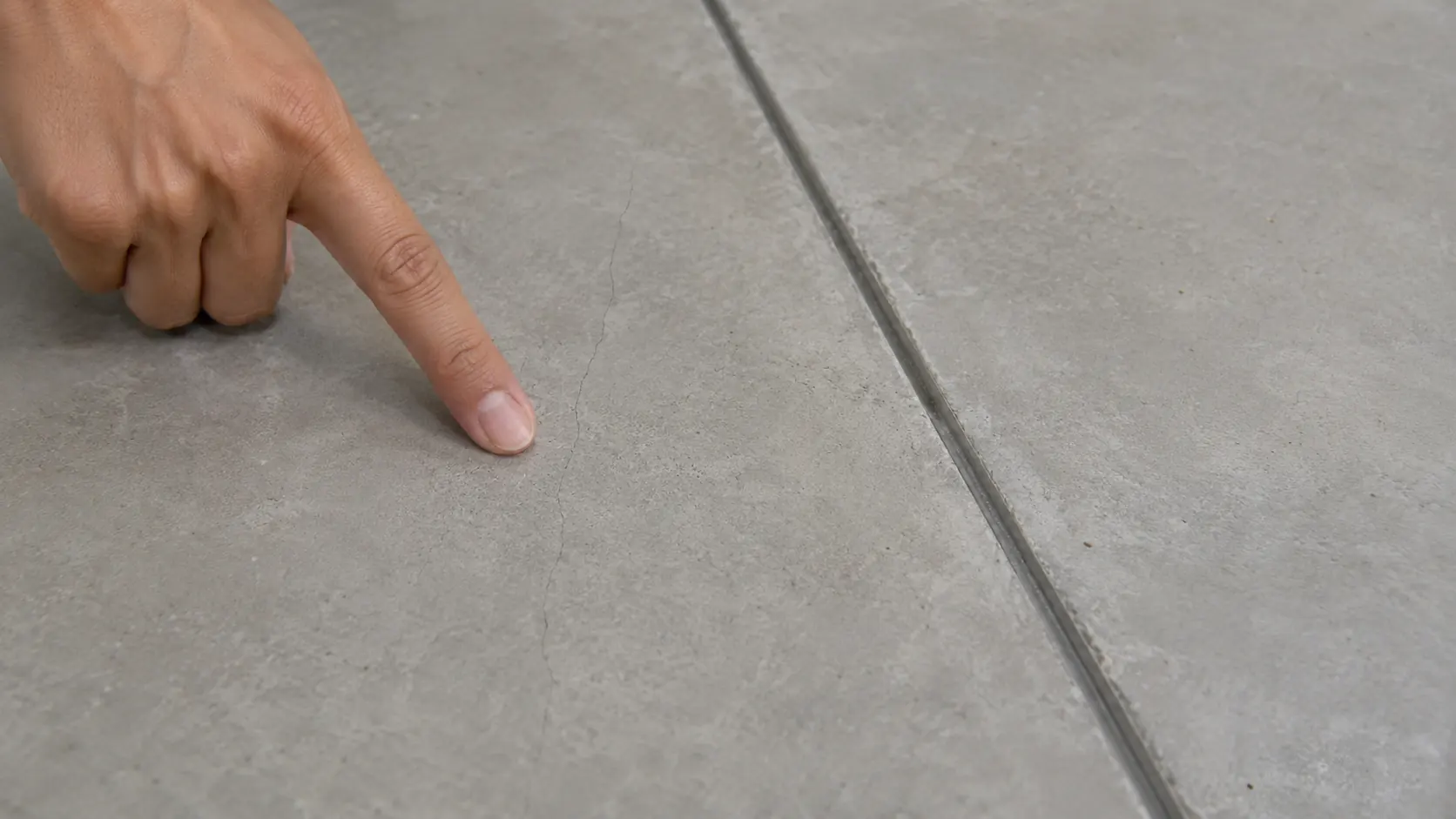
Screed can shrink as it cures, and movement in the base can show through the finished floor. Good preparation and a suitable joint layout help manage that risk. Ask the installer how they will treat existing cracks, loose material and movement joints, and where new joints will be visible. Agree how they will handle doorways and transitions between rooms.
A stable hairline crack may mainly affect appearance. If a crack widens, the edges move, or the floor becomes loose or starts sounding hollow, ask the installer to inspect the affected area before patching it. A repair can leave a visible difference in colour or texture, so clarify the likely finish and the repair scope up front.
03. Check how the floor handles spills and wet feet

A sealer helps limit absorption, but spills can still leave marks depending on the finish, the liquid and how long it sits. Wipe spills promptly and use the cleaner specified for the sealer. Ask whether it will need recoating, how wear will show in busy areas and when rugs or furniture can go down after installation.
Check slip resistance for the actual finished and sealed surface, especially where wet feet are likely. For an HDB bathroom or other wet area, have your contractor confirm the applicable floor finish, waterproofing and renovation requirements before choosing the system. HDB sets requirements for screed materials in dry and wet areas. HDB renovation requirements.
04. Compare complete quotations
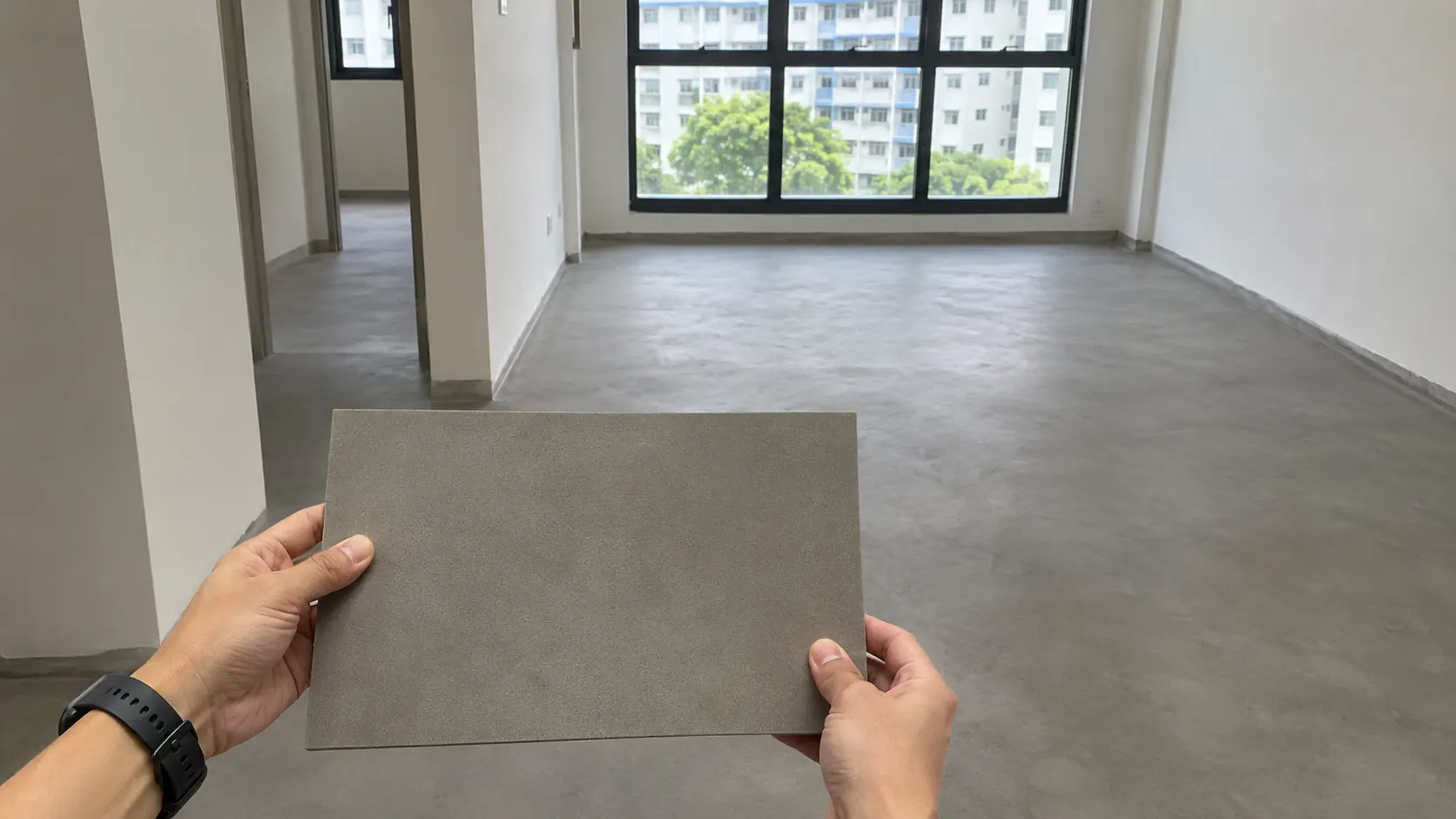
Compare prices for the same scope. Ask whether each quote covers removal or preparation of the existing floor, levelling or patching, the exposed topping, joint details, sealer, transitions and protection while other trades are on site. Confirm how the installer will check that the floor is ready for sealing and how much time the system needs before foot traffic and furniture placement.
If a screed quote only covers levelling, it leaves out the work needed to get the exposed look. Compare the complete installed scope with a microcement system or a concrete-look porcelain tile. Choose based on how you want the floor to look after everyday use, as well as how it looks on handover day.
For information and reference only. The scope, methods and sequence for your renovation depend on actual site conditions, applicable requirements and the on-site assessment and professional judgement of the specialists carrying out the work.