

Tiles are a good starting point for floors that get wet often. Vinyl can feel warmer underfoot in bedrooms and living areas, and may be laid over suitable existing flooring. In a Singapore flat, the choice often comes down to three things: how wet the room gets, what condition the old floor is in, and how the new floor will meet doors and adjoining rooms.
| What to compare | Porcelain floor tiles | Residential vinyl flooring |
|---|---|---|
| Hardness and wear | Hard surface that resists everyday wear when suitably rated. A heavy impact can chip or crack a tile. | Resilient surface that can scratch, gouge or indent. Check the product’s wear and indentation ratings. |
| Feel underfoot | Usually feels cooler and harder. | Usually feels warmer. A rigid-core plank can still feel firm. |
| Water and grip | Choose a finish suitable for the wet conditions. Grout, falls, drains and waterproofing still matter. | Check the exact system’s wet-area suitability. Water can reach the base through joints or edges. |
| Installation and overlay | Requires setting and grouting. An overlay adds thickness and depends on the condition of the existing floor. | A compatible overlay can avoid hacking. The base must meet the manufacturer’s flatness, moisture and stability requirements. |
| Cleaning and repairs | Clean the surface and grout. A replacement tile may differ in shade or require careful removal. | Follow the cleaning instructions and wipe up spills promptly. Replacing a click plank may require lifting nearby planks. |
| What drives the quote | Tile selection, hacking, screed, setting, grouting and finishing at edges. | Plank or sheet system, removal of old finishes, levelling, skirting and doorway transitions. |
01. Choose floor tiles by finish and use
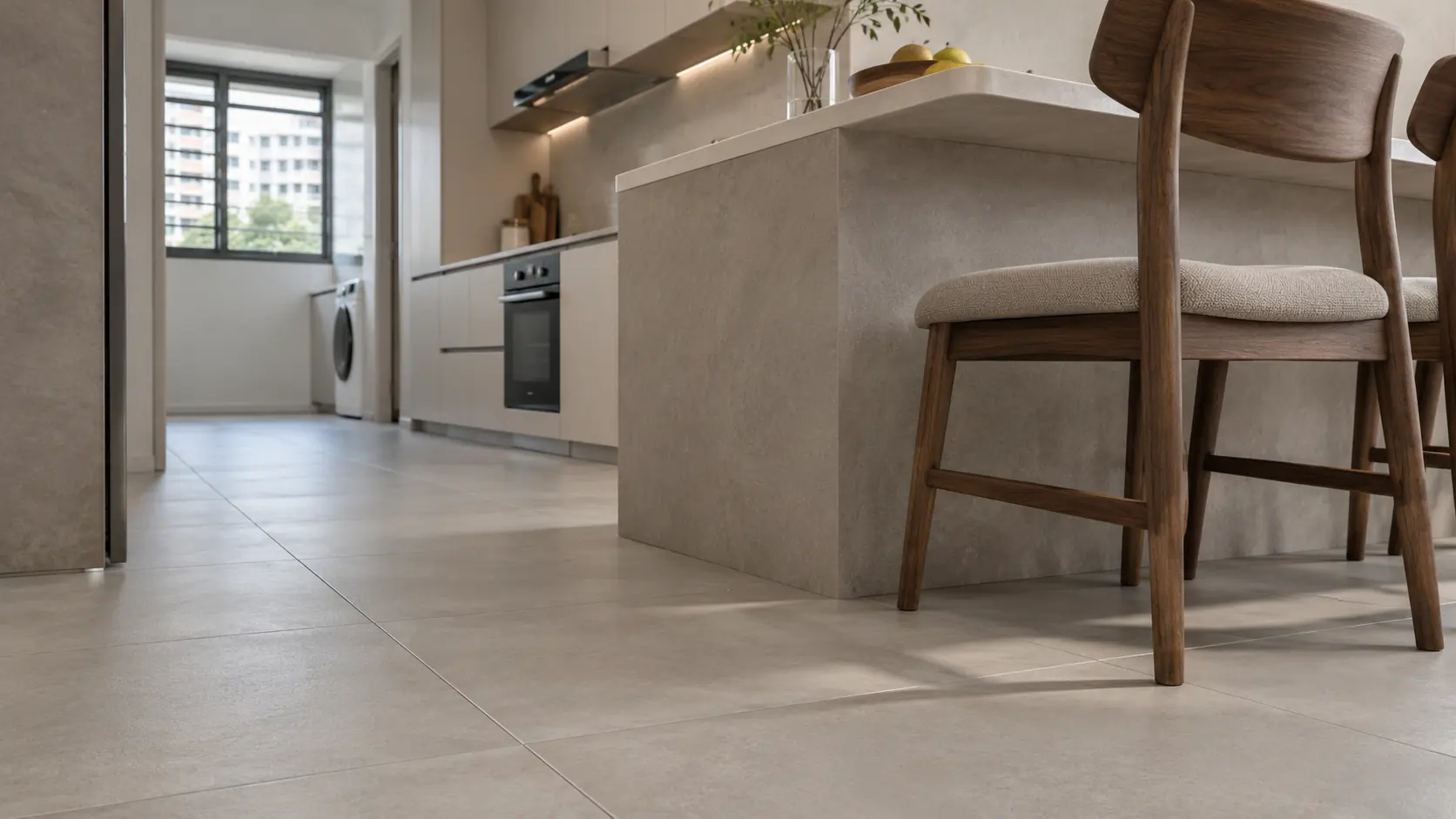
Porcelain is a hard ceramic tile, but how it wears and grips depends on its surface finish and rating. Check wet slip suitability for the exact tile, especially where you walk barefoot. Ask for a cut sample if the edge will be exposed. If a heavy object chips a glazed tile, the colour underneath may show. Keep spare tiles from the same batch for future repairs. See our guide to choosing tiles for more on finishes and materials.
02. Compare the vinyl system and how it will wear
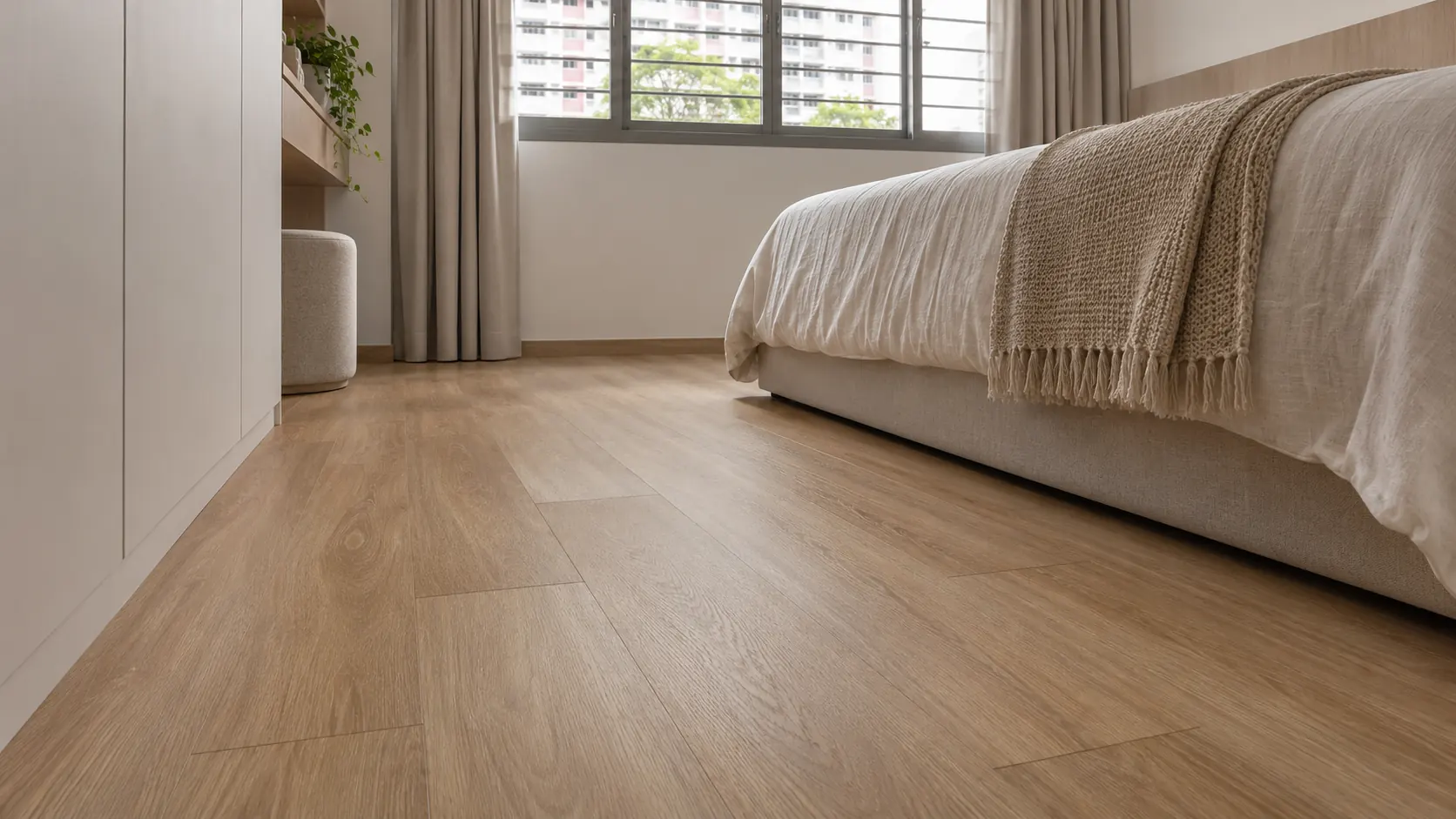
Click-lock, glue-down and sheet vinyl have different installation and repair requirements. For a home office, ask about chair castors. For a bright room, check limits on direct sunlight and heat. In a room with heavy furniture, check indentation resistance and any restrictions on placing fixed carpentry over a floating floor. The wear-layer thickness is one part of the specification. Compare it with the product’s intended use and care instructions. See our guide to vinyl flooring types.
03. Check the existing floor before quoting an overlay
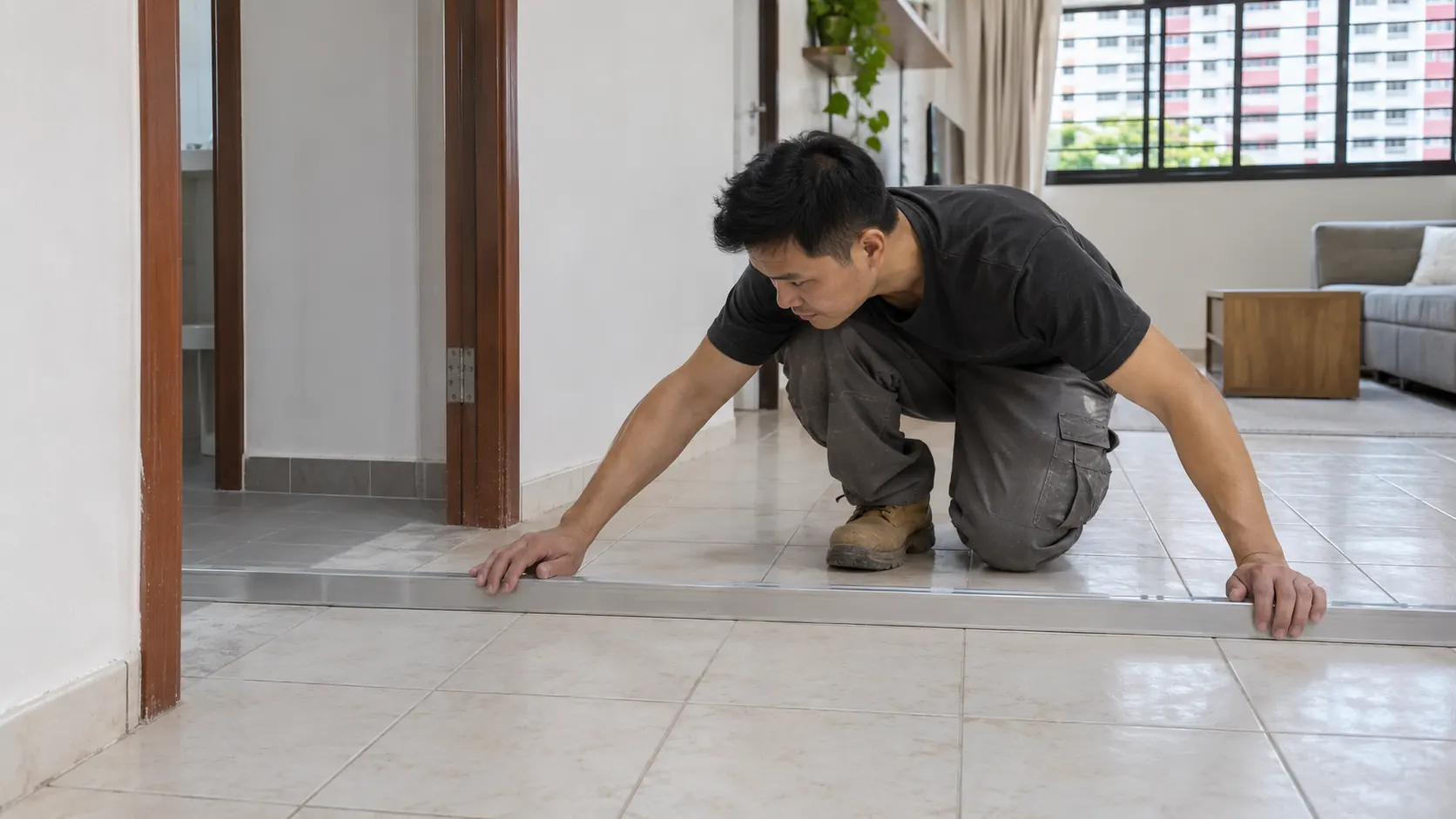
Have the installer check for loose or cracked tiles, uneven joints and signs of moisture. Ask how the base will be prepared so that grout lines do not show through thin vinyl or high spots stress click joints. Check finished levels at door swings, skirting and adjoining rooms. Compare the full quotes on the same scope, including preparation, disposal where needed, and transition strips. BCA good industry practices for vinyl flooring.
04. Decide room by room
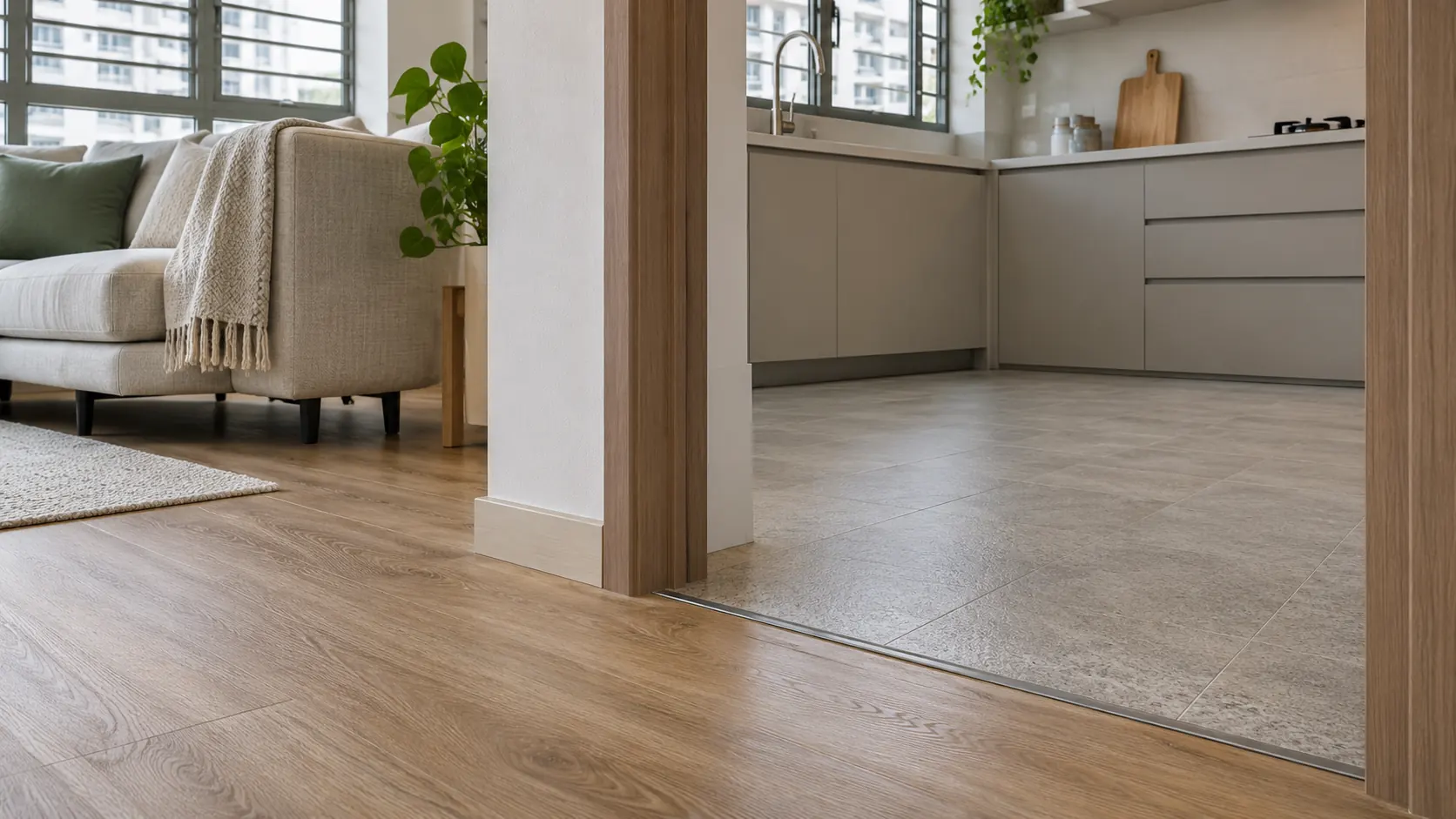
For bedrooms and dry living areas, choose based on comfort, cleaning and the condition of the floor you are keeping. For a kitchen or service yard, think about how often the floor gets wet and how you clean it. Floor tiles suited to wet conditions are a practical starting point for frequently wet areas. In a shower, check wet barefoot grip, falls and waterproofing together. If you prefer vinyl in a wet area, confirm that the complete system is specified for that use.
For HDB flats, check the proposed floor works and any permit requirements before starting. In newly built blocks, HDB restricts removal of the original bathroom wall and floor finishes for three years from block completion. If you are considering a bathroom overlay, check the applicable conditions separately. HDB renovation requirements. See our bathroom hacking versus overlay guide.
For information and reference only. The scope, methods and sequence for your renovation depend on actual site conditions, applicable requirements and the on-site assessment and professional judgement of the specialists carrying out the work.