
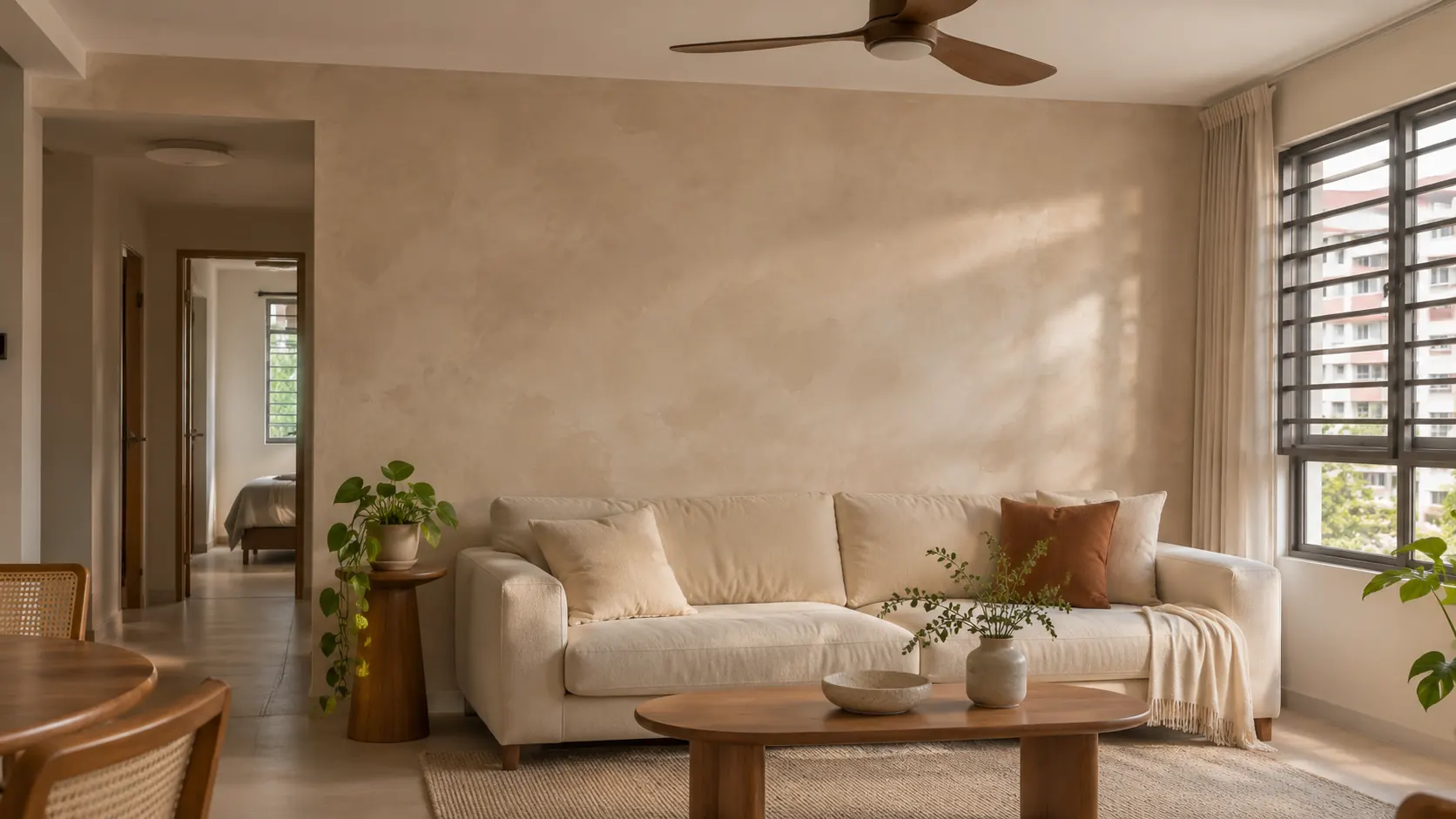
Limewash gives a wall soft shifts in colour that change as daylight moves through the room. Before choosing it for your Singapore home, check what product is being quoted, whether your existing paint can take the finish and how often the wall will need wiping. A dry living-room feature wall and a narrow entrance corridor can call for different finishes.
| What to compare | Mineral limewash | Limewash-effect coating | Regular interior paint |
|---|---|---|---|
| Appearance | Matte, with soft tonal movement from application and drying. | Mottled or brushed appearance. The effect depends on the product and technique. | Generally more even in colour and sheen. |
| Wall preparation | Needs a sound, compatible base. Previously painted walls may need a dedicated preparation system. | Use the primer or base coat specified for the exact product and wall. | Repair loose paint and surface defects, then use a compatible primer where needed. |
| Cleaning | Check the care instructions. Repeated wiping can mark some finishes. | Check the product’s washability and whether a compatible protective coat is available. | Washable grades are worth comparing for walls that need frequent wiping. |
| Touch-ups | A local patch may show a change in tone or brush pattern. | Matching the original technique and sheen can take a test patch. | Small repairs can still show, especially on older or higher-sheen paint. |
01. Ask what the quotation means by limewash
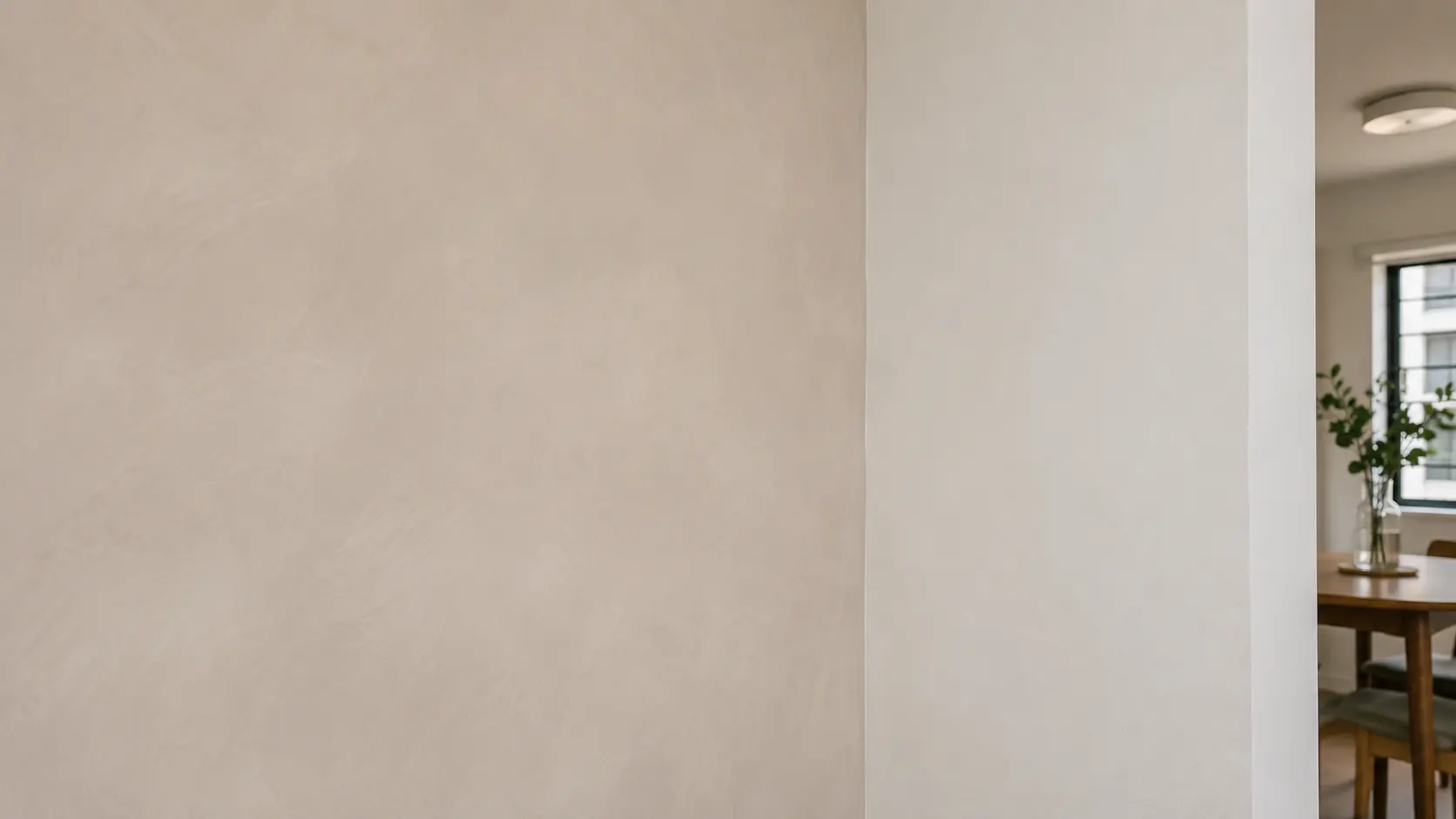
Traditional limewash is a lime-based coating that produces a soft mineral finish. Decorative limewash-effect products recreate the clouded look with their own formulations and application methods. Ask for the exact product, preparation system and care instructions. Two finishes can look similar on a sample yet respond differently to water, cleaning and repairs.
02. Inspect the existing wall before choosing the finish
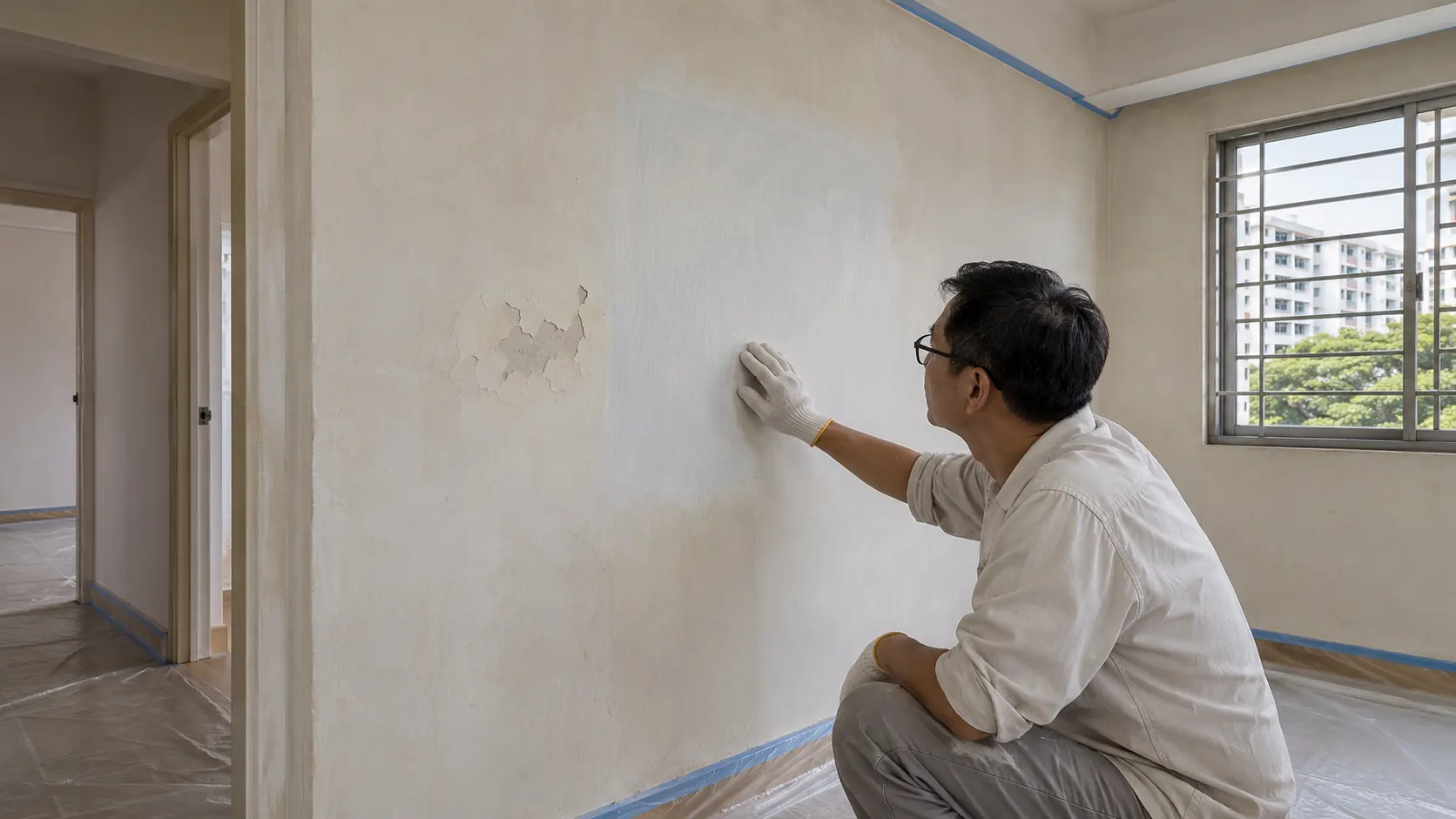
On a resale flat that has been repainted several times, check whether the existing layers are sound. If the paint is peeling or powdery, find the cause and agree on the preparation needed before applying a decorative finish. If dampness is present, investigate and resolve it first. A primer specified for sound painted walls cannot stabilise loose layers underneath.
Limewash adds tonal movement and leaves the shape of the wall visible. If you want to reduce waves, ridges or visible repair edges, ask whether local repairs or a wider skim coat should be quoted separately. Discuss how much of the old paint needs removing after the wall is assessed. See our painting versus plastering guide.
03. Approve a sample under your actual lighting
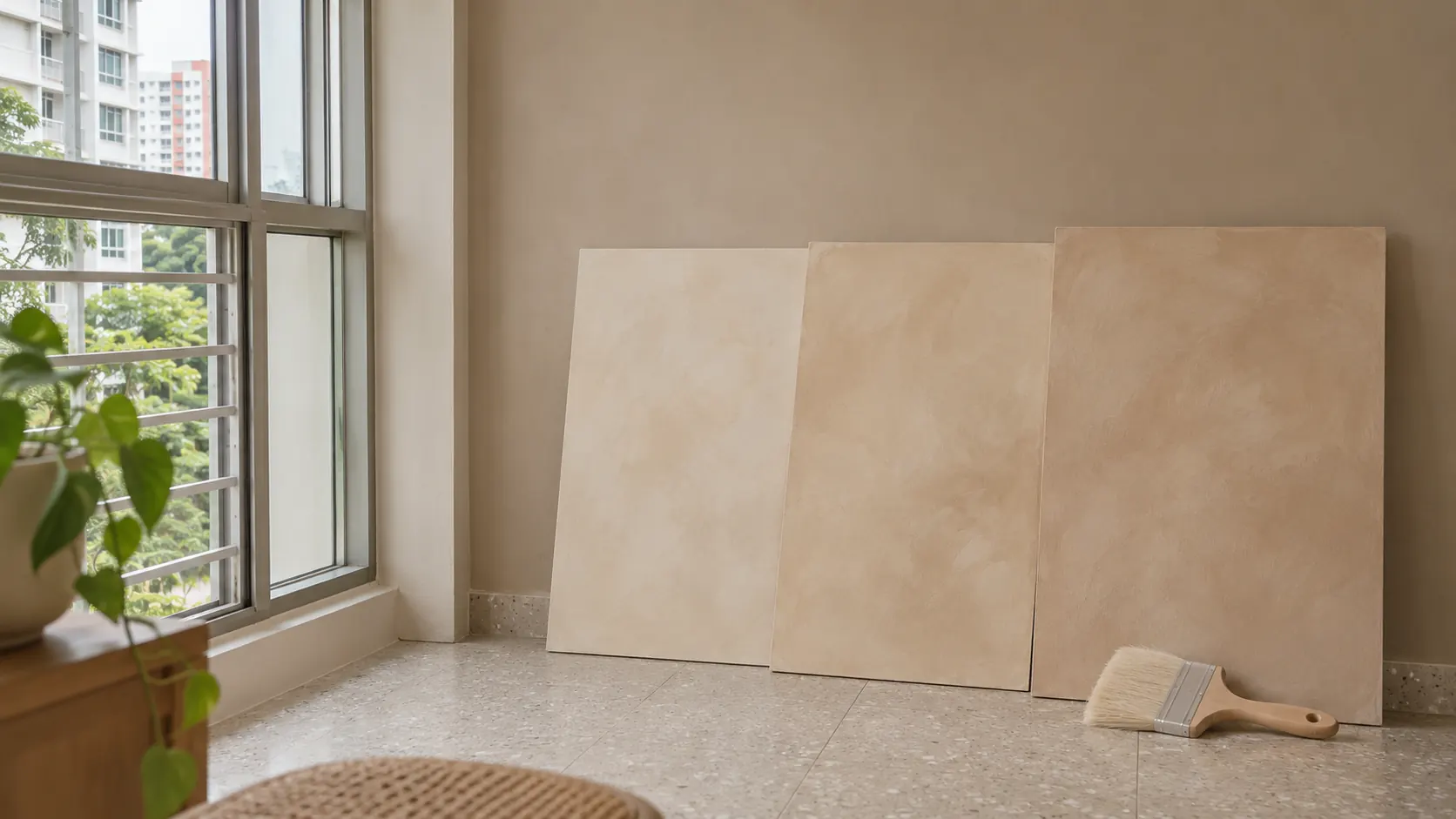
Ask for a sample large enough to show the intended brush pattern, ideally using the same base and finish system as the wall. Look at it in daytime and again with the lights on. Side lighting can make both the tonal variation and underlying surface irregularities more visible. Agree on how subtle or pronounced you want the movement to be, and use the approved sample as the reference for the finished wall.
04. Choose the wall based on how you use it
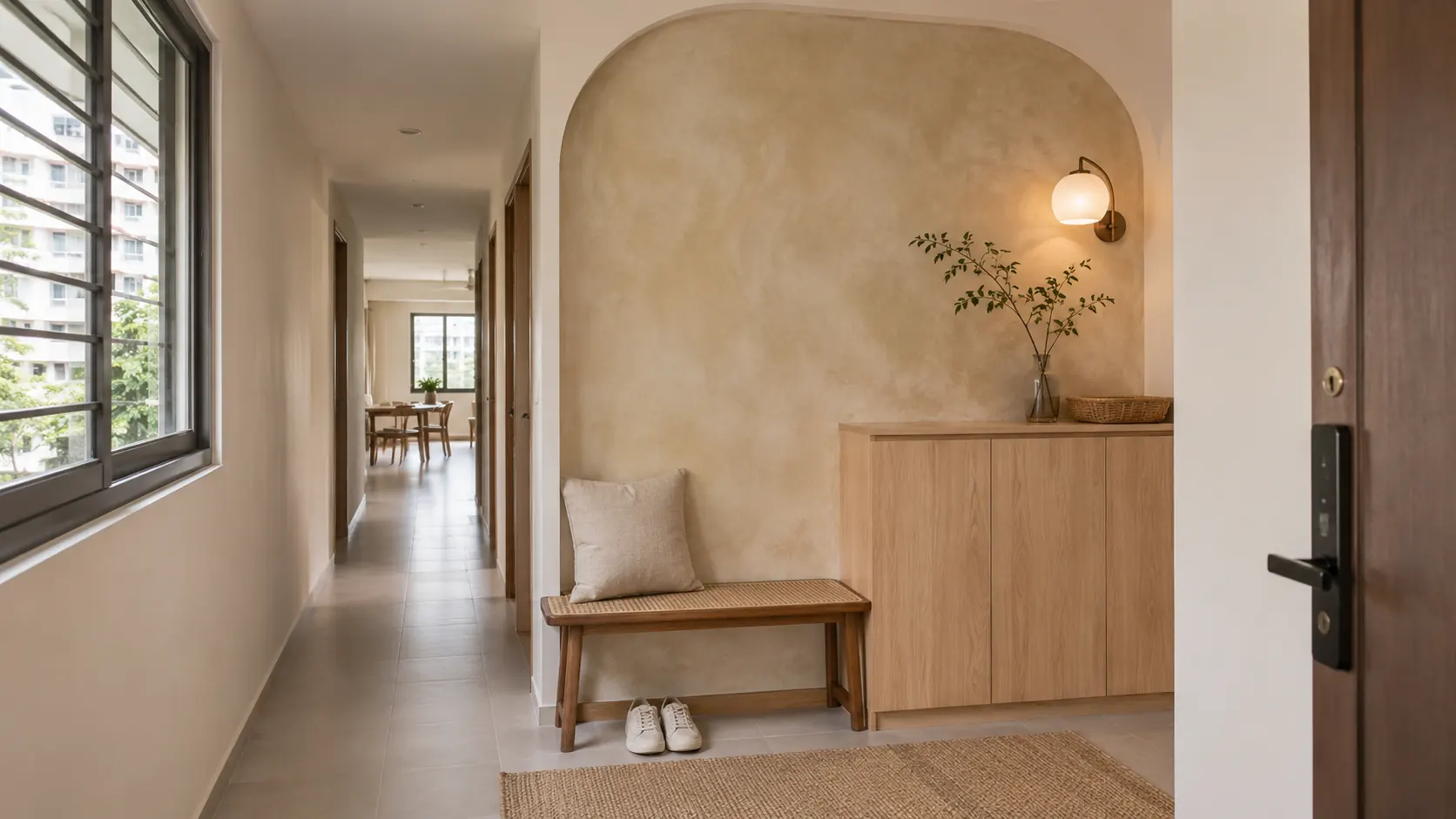
A bedroom headboard wall or a dry living-room feature wall is a good place to start. For entrances, busy corridors or walls behind dining chairs, consider how often hands, bags and furniture will rub the surface. Compare the specified finish with a washable interior paint for those areas.
For a kitchen splash zone or a bathroom wall exposed to regular splashing, use a finish rated for those conditions. Check the manufacturer’s guidance before adding any sealer, since it can change the appearance and cleaning requirements. Ask whether a mark can be touched up locally or whether the wall may need recoating from corner to corner to blend the finish.
For information and reference only. The scope, methods and sequence for your renovation depend on actual site conditions, applicable requirements and the on-site assessment and professional judgement of the specialists carrying out the work.