
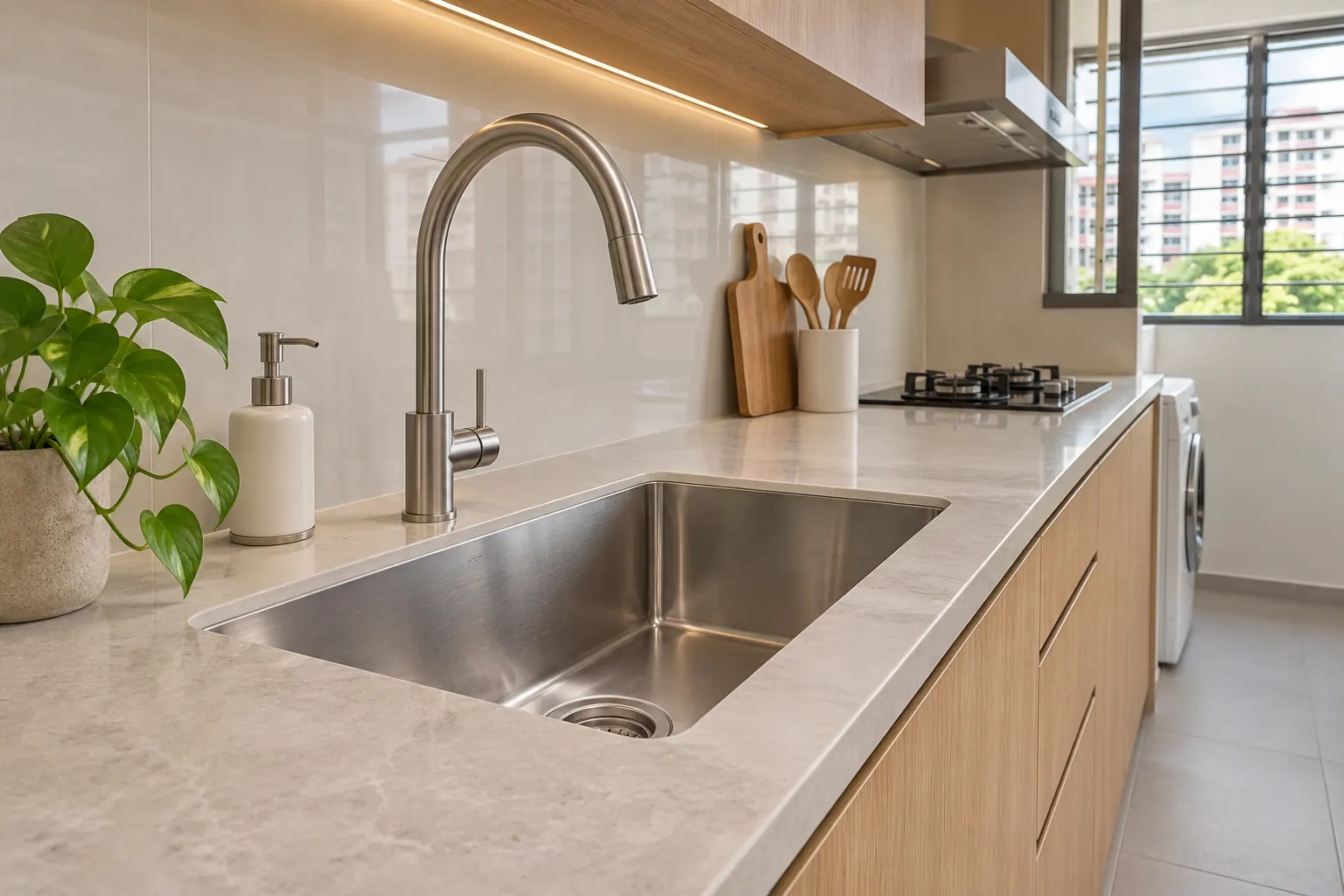
Choose the sink and countertop together. A top-mount sink is usually the simpler choice for a conventional laminate worktop or a replacement using an existing opening. An undermount sink can make daily wiping easier when the countertop, cut-out and cabinet are designed for it.
01. Top-mount gives you a rim that sits on the worktop
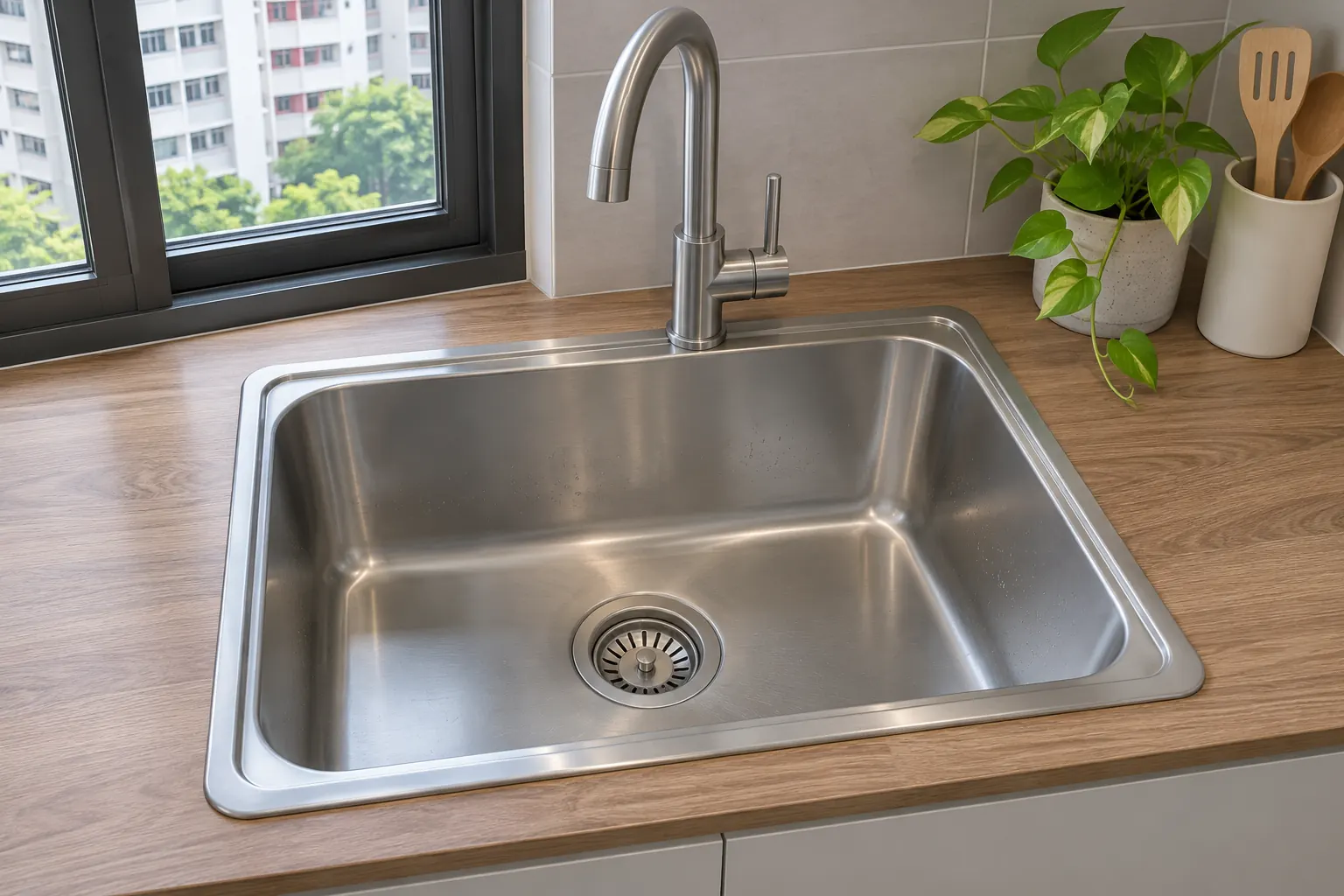
A top-mount, or drop-in, sink is lowered into an opening from above. Its rim rests on the worktop and covers the cut edge. It is commonly paired with laminate over a wood-based core, where protecting the cut edge from moisture matters. The installer still needs to seal the opening and fit the sink using the manufacturer’s specified fixings and sealant.
For a replacement, have the installer measure the existing cut-out, including its corner radii. The outer dimensions on the box tell you how much surface the sink occupies. The cut-out template tells you whether the body will fit through the opening and whether the rim will cover it.
| What to compare | Top-mount | Undermount |
|---|---|---|
| How it sits | The rim rests on top and covers the cut edge. | The rim sits below the worktop and the cut edge is visible. |
| Worktop fit | Common with standard laminate. Also an option with many solid worktops. | Common with compatible quartz, granite, sintered stone and solid surface. Confirm the specific slab and sink system. |
| Daily cleaning | Wipe around the raised rim and its seal. | Sweep crumbs into the bowl and clean the joint beneath the cut edge. |
| Installation | Confirm the rim covers the opening and the specified clips are accessible. | Confirm the exposed edge finish, reveal, seal and model-specific support. |
| Future replacement | Often simpler if a compatible rim and cut-out can be found. | Check access from below and the fit of the replacement to the existing opening. Changes can require fabrication or worktop replacement. |
02. Undermount makes it easier to wipe straight into the bowl
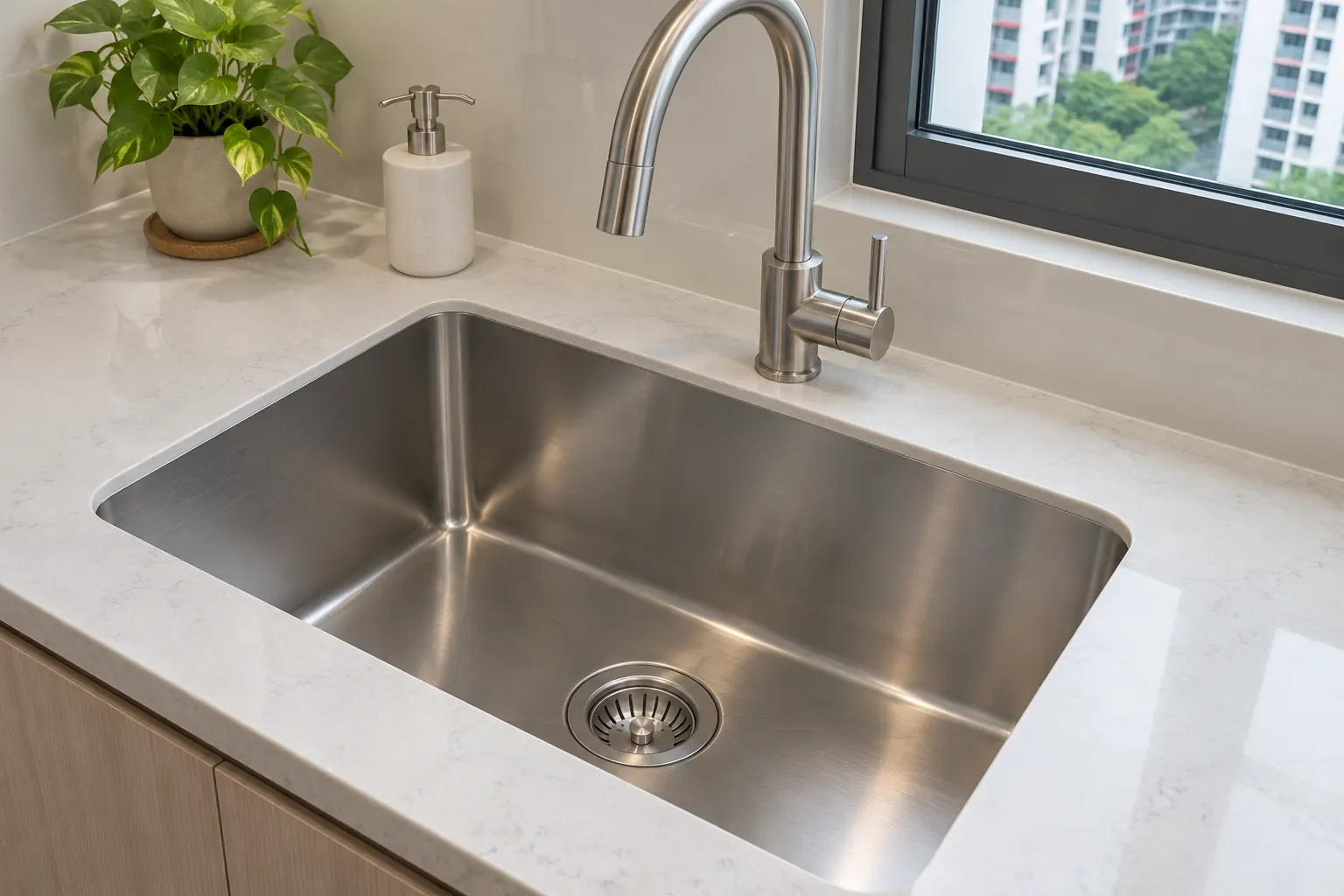
With the sink fitted below the slab, the worktop has no raised sink rim in your way. You can sweep crumbs and small spills into the bowl. Ask to see how the countertop edge and the underside joint will look. Depending on the model and cut-out, you may see a narrow strip of the sink flange, or the worktop may sit flush with or extend slightly over the bowl.
Agree on that edge detail, called the reveal, before fabrication. Follow the options supported by the chosen sink and worktop. If you plan to use a chopping board or colander that sits on the sink, check that the reveal leaves its ledge usable.
03. Match the installation to your exact countertop

Standard laminate over a moisture-sensitive core is usually better suited to top-mount. A specialist undermount system may be possible if the worktop and sink manufacturers expressly support it. For quartz, granite, sintered stone or solid surface, ask the fabricator how the cut edge will be finished and what minimum material they need around the opening, tap hole and nearby joints.
Give the fabricator the actual sink model and its template before cutting. This is especially important with thin slabs or a narrow strip between the sink and front edge. For more on selecting the worktop itself, see our sintered stone versus quartz guide.
04. Check support and plumbing inside the cabinet
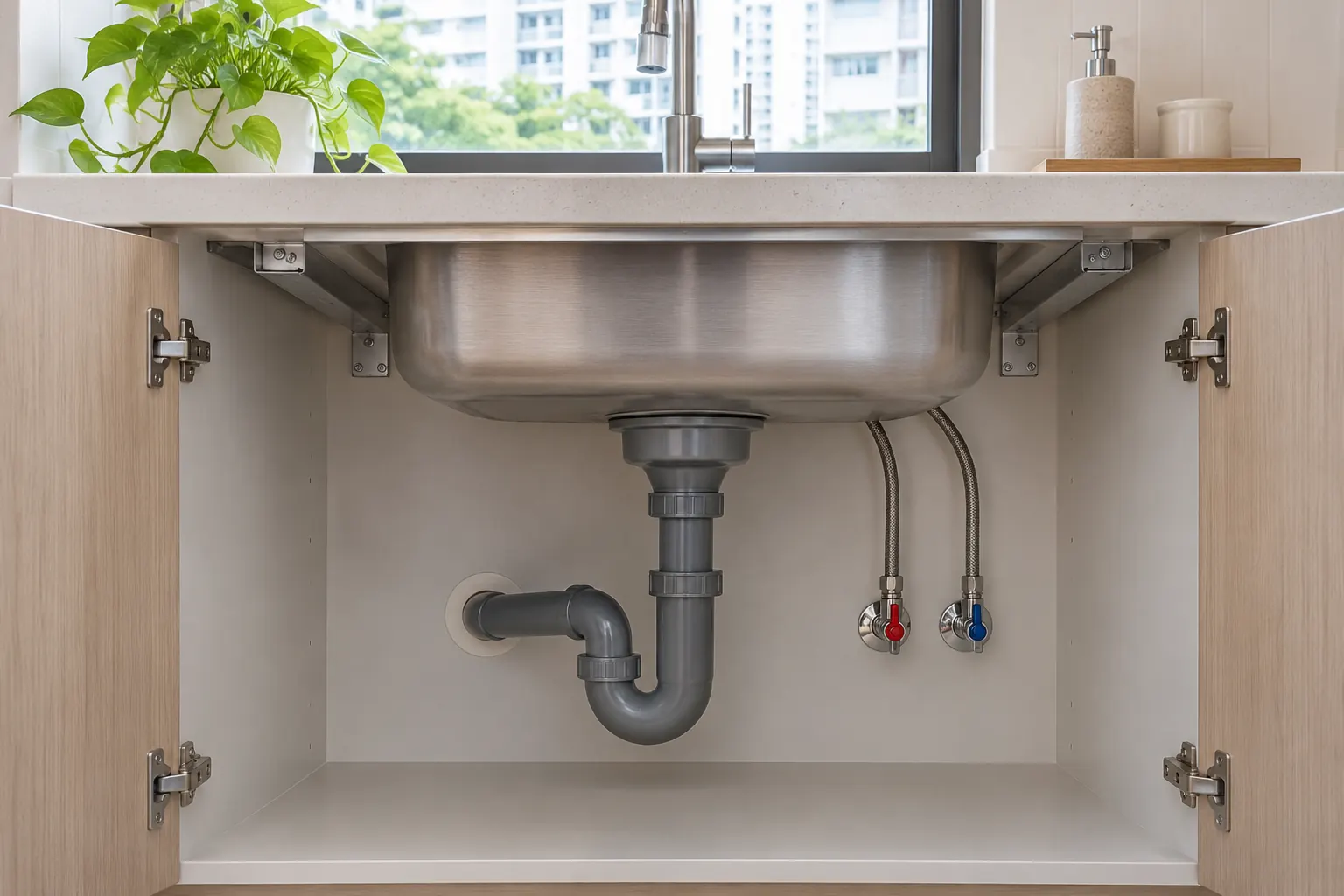
Check the usable cabinet width between the side panels. Compare it with the sink’s minimum cabinet size and allow for clips, rails or other supports specified by the manufacturer and fabricator. Ask how an undermount bowl will be supported when full. A sealed joint and a load-bearing support serve different purposes.
Draw the bowl depth and drain position on the cabinet elevation. Make sure the waste trap, shut-off valves and tap connections remain reachable, especially if you want a pull-out bin, drawer or water filter below. If you are keeping the existing plumbing, have the installer confirm the new bowl and outlet can connect before ordering.
05. Plan for cleaning and replacement before you sign off
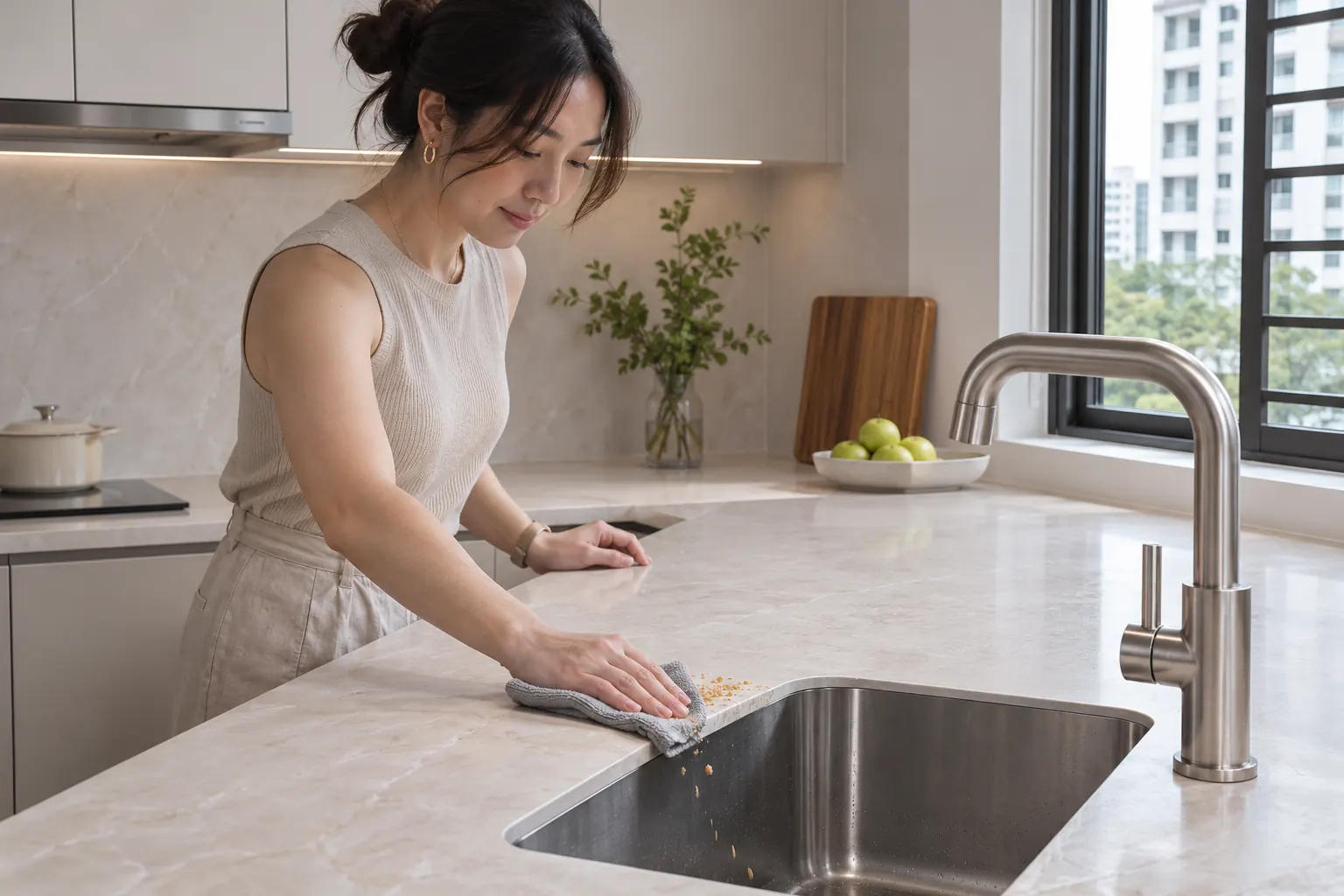
Try the cleaning motion on a display sink. With top-mount, check whether you can comfortably wipe around the rim and behind the tap. With undermount, run your hand along the cut edge and check how you would reach the underside joint. Either style needs a sound seal and enough space around the tap to clean.
If you expect to keep the countertop for years, ask how the sink could be removed and whether the replacement would need the same shape and cut-out. Get the cut-out, sealing, support and plumbing reconnection clearly described in the quotation. Use our kitchen carpentry checklist to coordinate the sink cabinet with the rest of the kitchen.
For information and reference only. The scope, methods and sequence for your renovation depend on actual site conditions, applicable requirements and the on-site assessment and professional judgement of the specialists carrying out the work.