

Wood-look vinyl is a practical starting point if you want timber tones and easy routine cleaning. Engineered wood gives you a real timber surface in a layered board that generally moves less with humidity than solid wood. Solid hardwood makes sense if you value timber throughout the board and want more scope for future sanding. In all three cases, what is underneath the floor matters as much as the sample you see in the showroom.
01. Check what is inside the plank
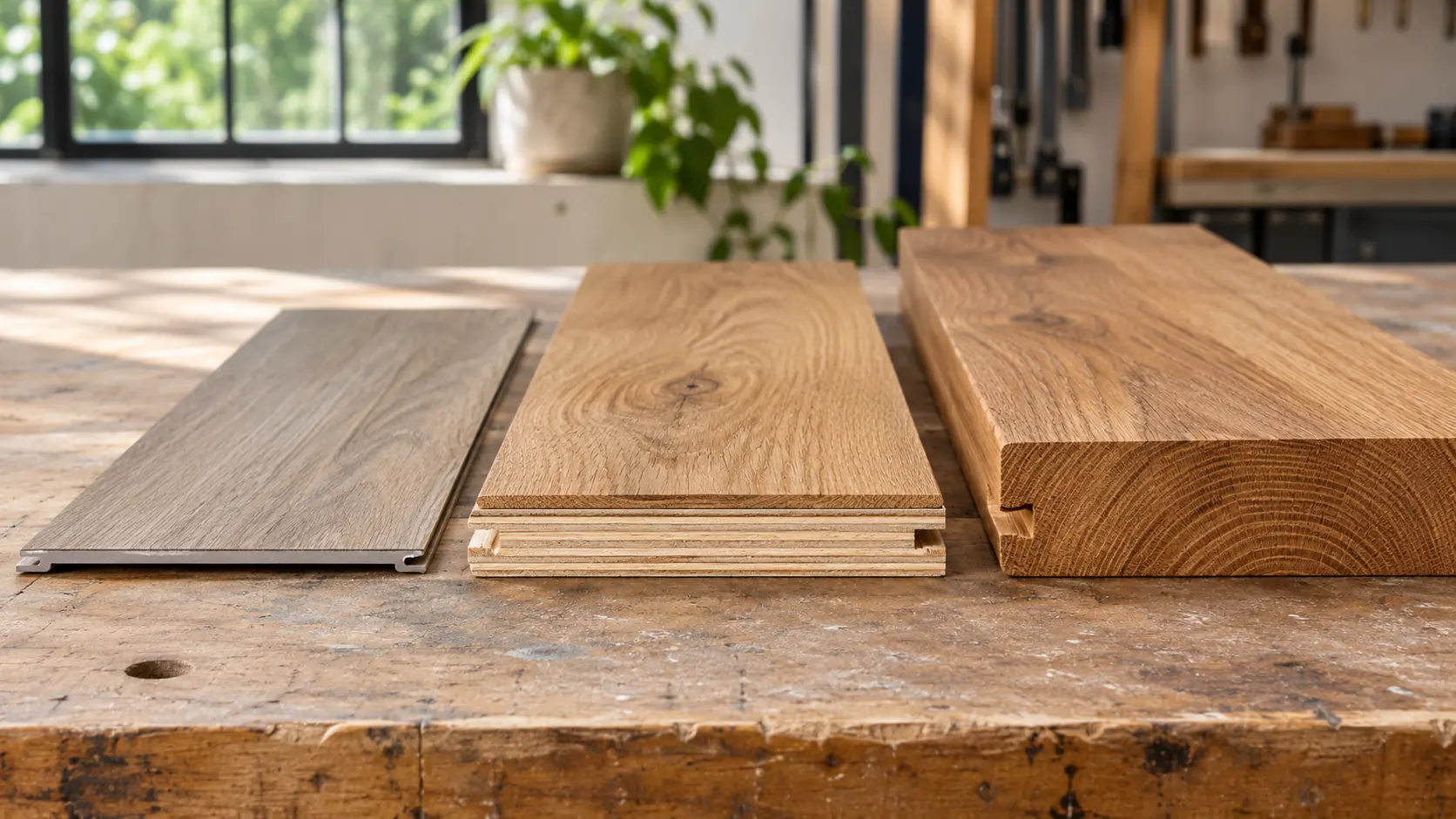
Wood-look vinyl gets its pattern from a printed layer under a protective surface. Engineered wood has a real timber face bonded to a layered core. Solid hardwood is timber throughout. Ask to see a cut edge and several full planks. With vinyl, that helps you spot repeating patterns. With real wood, it shows how much the colour, grain and knots vary from board to board.
| What to compare | Wood-look vinyl | Engineered wood | Solid hardwood |
|---|---|---|---|
| Construction | Printed timber pattern under a protective layer. | Real timber face over a layered core. | One piece of timber through each board. |
| Scratches and dents | Can scuff, scratch or dent. Check the specific product and its warranty. | Finish affects scratch resistance. Timber species affects dent resistance. | Same considerations as engineered wood. Hardness varies by species. |
| Water and humidity | Many products tolerate surface spills. Check seams, edges and wet-area suitability. | Usually moves less with humidity than solid timber. Wipe spills promptly. | More sensitive to seasonal humidity changes. Wipe spills promptly. |
| Repair and refinishing | Replace a damaged plank where the system allows. Keep matching spares. | Check the timber face thickness and whether the maker permits sanding. | Often allows more sanding, depending on remaining timber and board profile. |
| Feel underfoot | Varies between flexible and rigid-core planks. Try the installed sample. | Real wood texture. Underlay and fitting method affect the sound and feel. | Real wood texture throughout. The base and fixing method also affect the feel. |
| Installed cost | Often the lower-cost starting point. Include any levelling and trims. | Varies with species, face thickness, finish and fitting method. | Allow for timber, installation and any on-site sanding and finishing. |
02. Think about chair legs, grit and future repairs
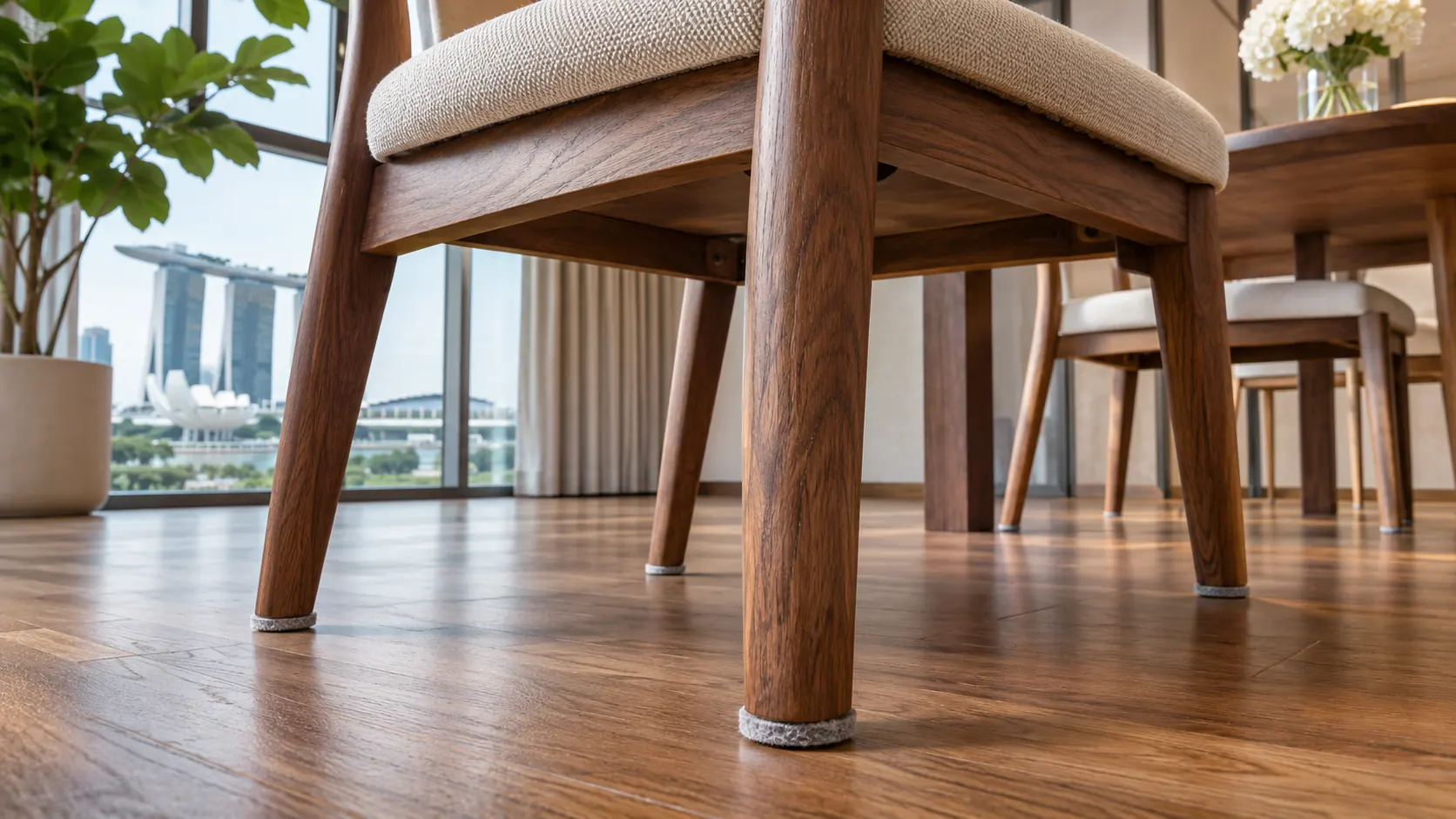
A hard timber species can resist dents better, while the finish on top affects how readily everyday scratches show. Grit under a chair leg can mark any of these floors. If the dining chairs move daily, use felt pads and ask to see a full-sized sample in daylight. A matte, textured surface may make small marks less visible.
Ask how a damaged board in the middle of the room would be repaired. Some click floors may need to be opened from an edge. A timber floor may be suitable for recoating if wear is limited to the finish. Sanding removes wood, so have a specialist check the remaining timber above the joints on solid boards or the usable face on engineered boards. A repair can still differ in colour from the surrounding floor.
03. Check moisture and floor height before ordering
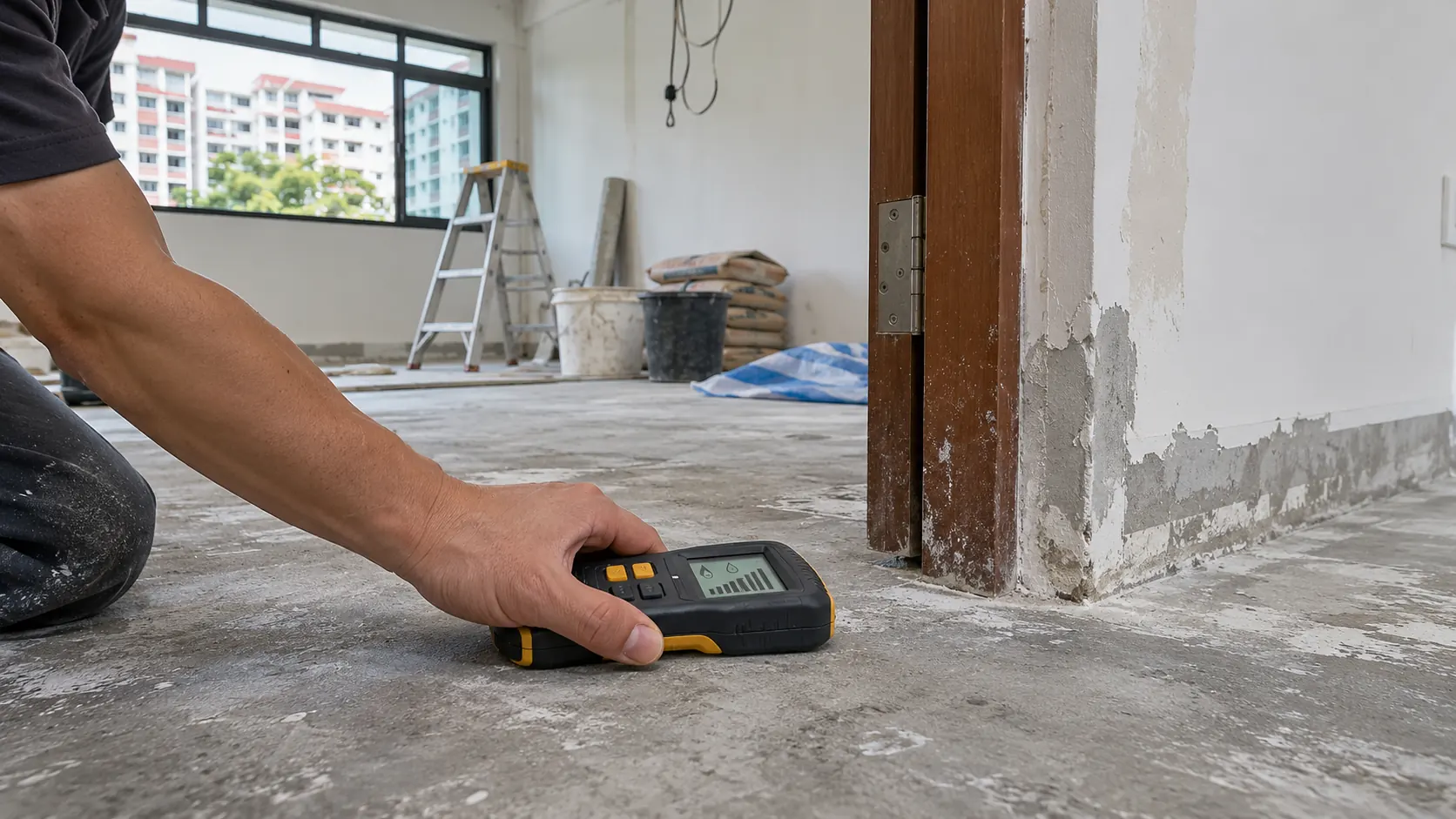
Near balcony doors and service yards, think about wind-driven rain, wet feet and how quickly you can wipe up water. Vinyl may handle everyday spills, but moisture can still get below a floor through edges or joints. For either type of wood, ask for the manufacturer’s indoor humidity, cleaning and installation requirements. For bathrooms and other areas that get wet regularly, compare finishes rated for that use.
Before laying any of the three, ask the installer to check subfloor flatness, moisture and the condition of any existing tiles. If you are considering an overlay, check how the added height affects doors and transitions. Follow the installation system’s requirements for preparation, underlay or adhesive and perimeter clearances. BCA vinyl flooring installation guidance and HDB floor finish guidelines.
04. Compare the installed floor and how you will live with it
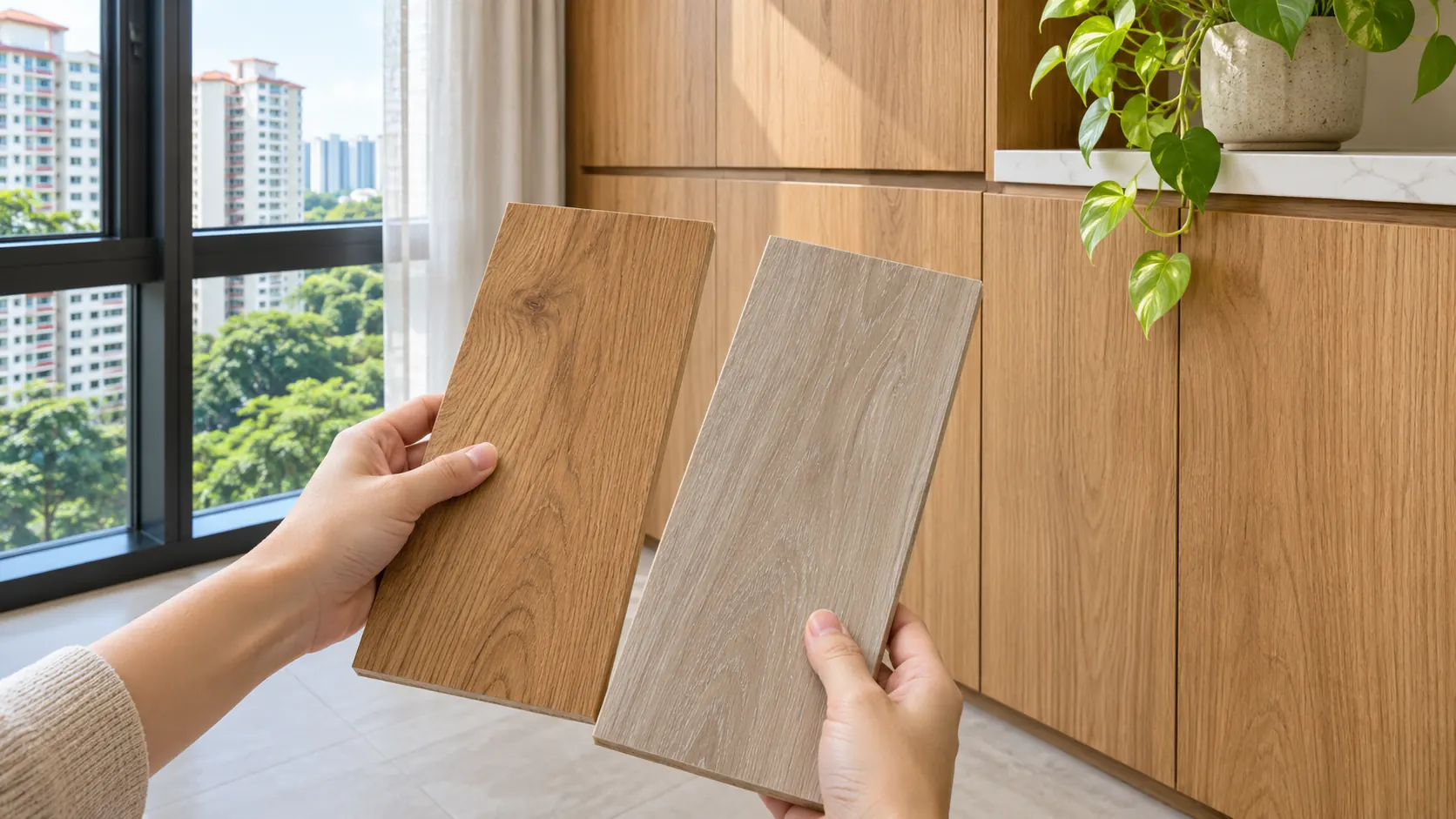
For a busy living room where simple cleaning matters, start with a suitable vinyl and compare the exact product’s scratch, indentation and care specifications. For a bedroom where you want real timber grain underfoot, start with engineered wood. For a dry room where you are happy to care for timber and want more options to refinish it later, get a solid hardwood quote as well.
Ask whether the specified floor is floated, glued or mechanically fixed. A glue-down system and an on-site timber finish may need extra time before you can move furniture in. Compare quotes for the same area and ask what each includes for removal, levelling, moisture checks, skirting, trims and door adjustments. If you settle on vinyl, see our guide to vinyl flooring types. If you are deciding what to use in wetter rooms, see our tiles versus vinyl guide.
For information and reference only. The scope, methods and sequence for your renovation depend on actual site conditions, applicable requirements and the on-site assessment and professional judgement of the specialists carrying out the work.