
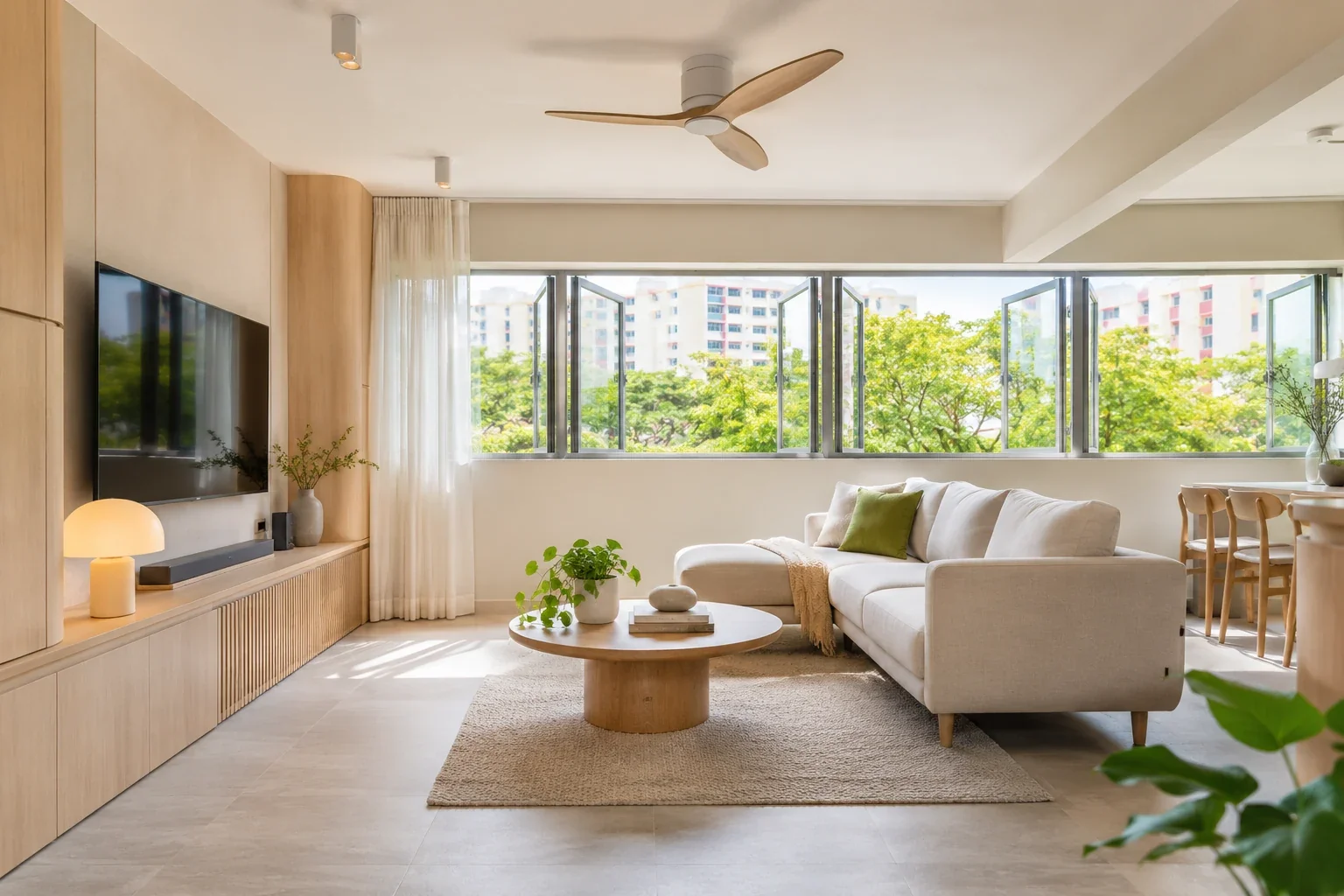
New cabinets, adhesives and furniture can release formaldehyde after renovation. Here’s how to choose lower-emission materials, plan ventilation and decide when an indoor air test is worth doing.
Can a renovated home have very low formaldehyde levels? Yes. Start by choosing products with documented low emissions, give newly fitted rooms time to air out, and test the rooms you’ll use if you need a reliable reading. A result of “not detected” means the level was below the test’s detection or reporting limit under the conditions sampled.
01. Where does formaldehyde come from?
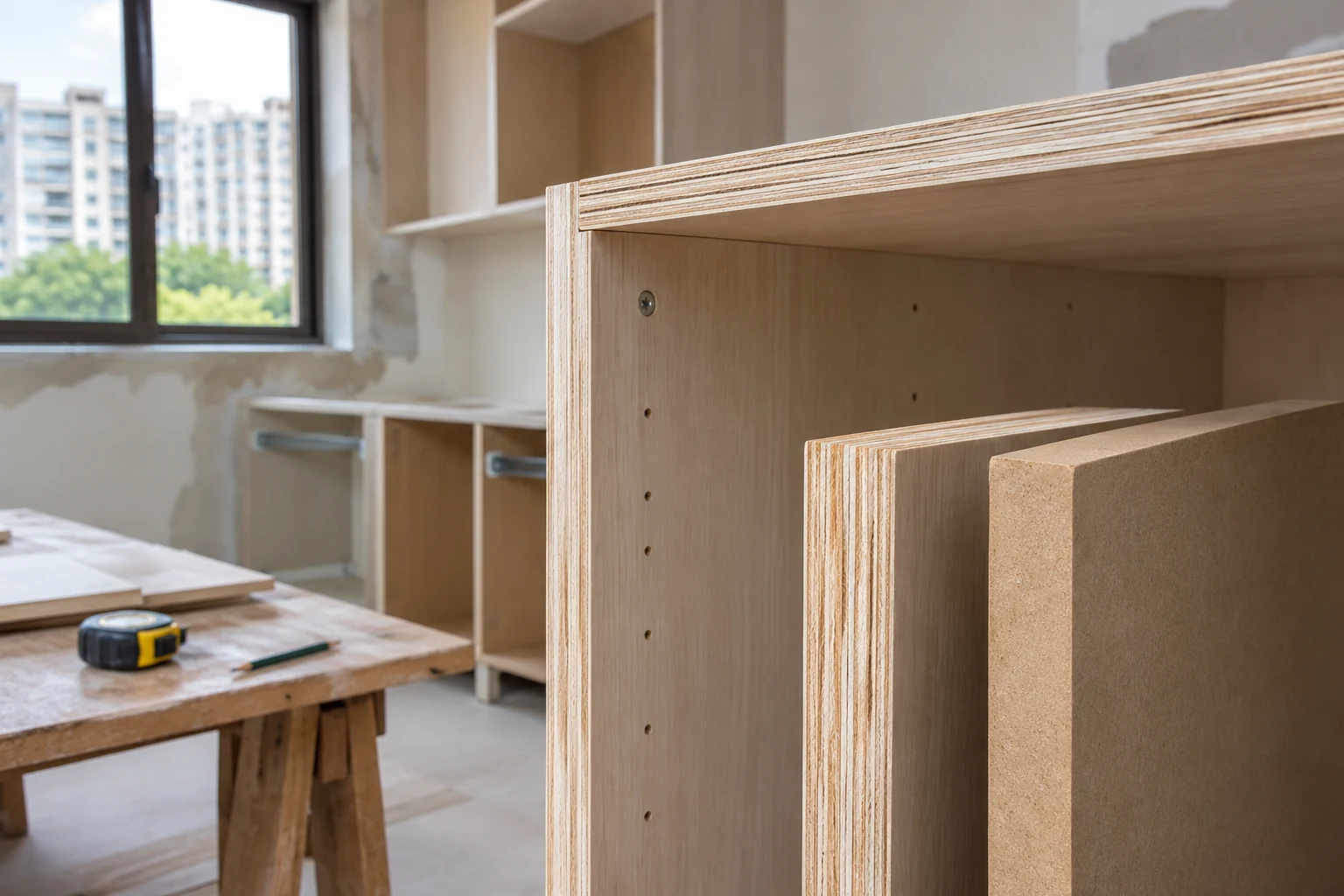
Formaldehyde is a colourless gas. Some plywood, medium-density fibreboard (MDF) and particleboard use resins that can release it. Adhesives, coatings and ready-made furniture can also contribute. In a bedroom, look at what went into the built-in wardrobe as well as what came in later, such as the bed frame and shelving.
Exposure can irritate the eyes, nose and throat. Long-term exposure increases the risk of certain cancers. A “new renovation smell” can come from several chemicals, so use a formaldehyde-specific test if you need to know the level. If irritation persists, seek medical advice. U.S. EPA guidance on formaldehyde and indoor air.
02. What do very low and zero readings mean?
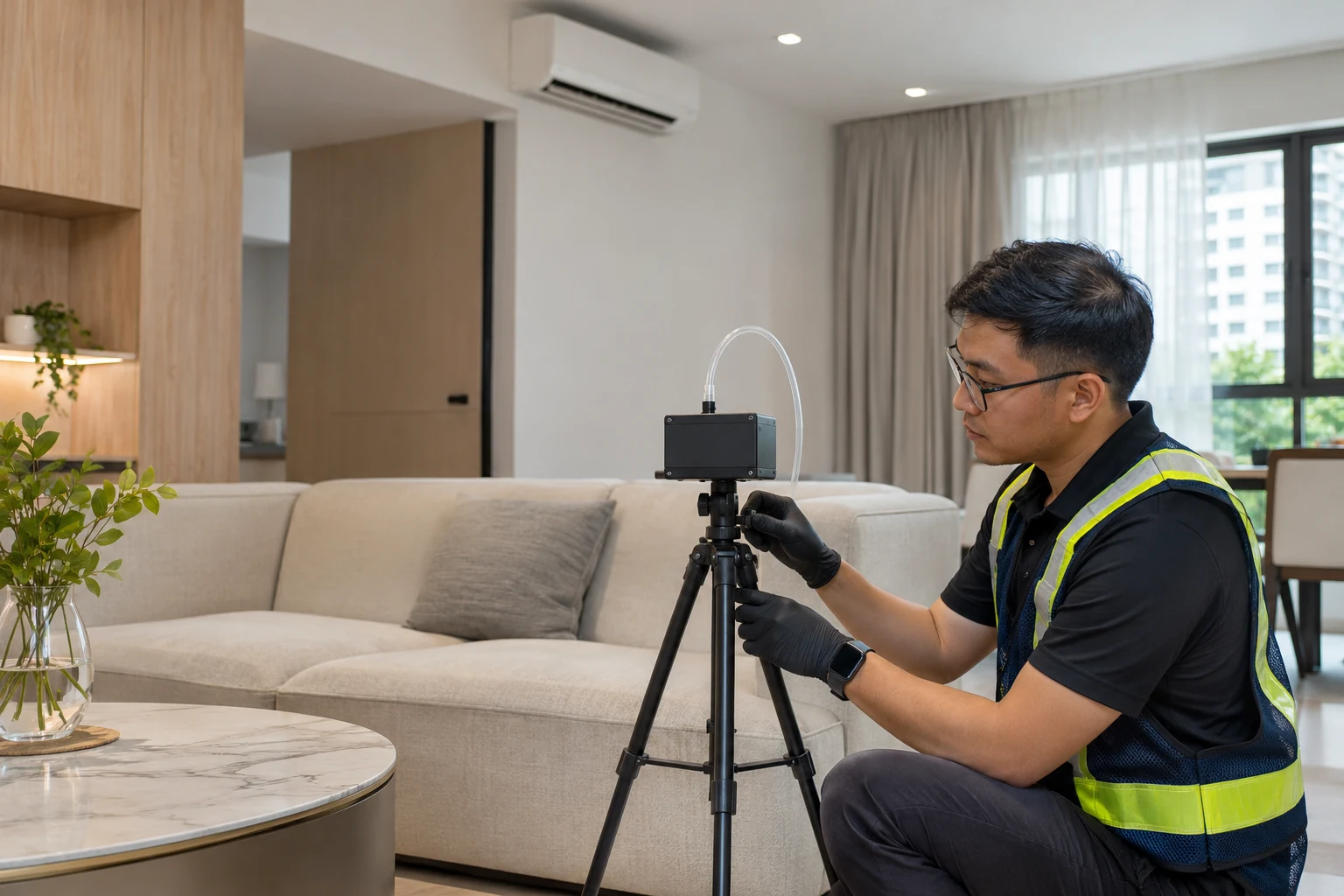
Even homes without new finishes can have background levels. A meter showing 0.00 can be rounding below its display resolution. A lab result such as “below 0.01 mg/m³” tells you the concentration was below the stated reporting limit in that room during the sample. Ask what the result covers before using it to make a move-in decision.
The World Health Organization’s indoor-air guideline is 0.1 mg/m³, about 0.08 ppm, averaged over 30 minutes. Use it with a measurement taken over a comparable period. Singapore’s SS 554:2026 standard for certain air-conditioned premises excludes homes. NEA guidance on formaldehyde in building products.
03. Check what goes into your carpentry before ordering

Ask your designer or contractor to list the exact board products in the quote. Start with the cabinet boxes, doors, shelves and back panels. Ask for a product-specific emission report or recognised low-emission certification, and check that the document covers the board being supplied. If the supplier proposes a substitute, ask for its documentation before approving it.
“No added formaldehyde” usually describes the resin. “Low VOC” is a broader claim. If you’re comparing boards for formaldehyde, ask for results that identify formaldehyde specifically and use the same test method. A board’s laboratory result describes the product under test conditions. Your room reading also reflects the amount installed, other sources and ventilation.
04. Reduce formaldehyde after renovation
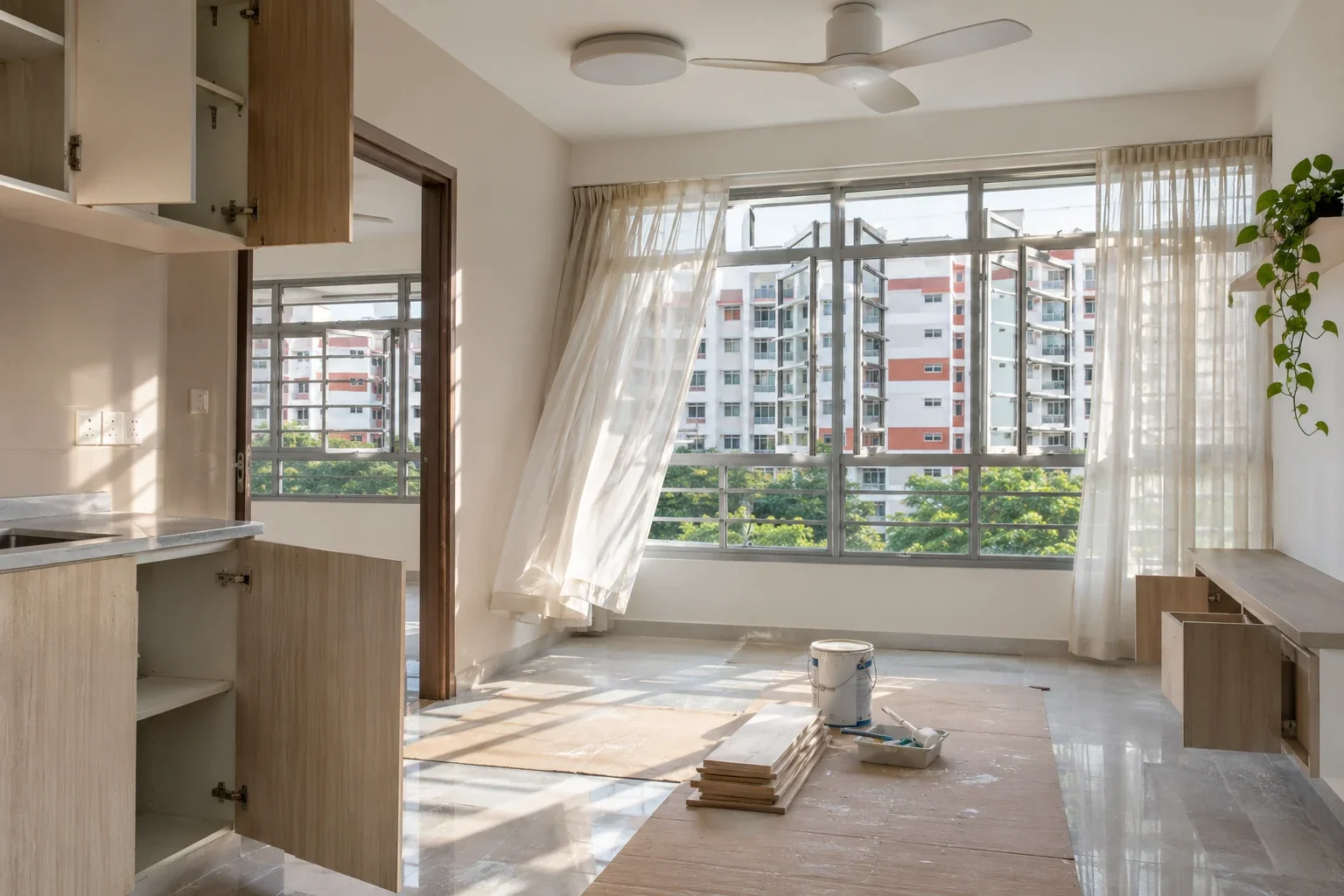
Allow a gap between carpentry installation and move-in. When outdoor air quality and site conditions allow, open windows on opposite sides for cross-ventilation. Open new cabinet doors and drawers while the room is airing, and use a fan to help direct air outdoors. Air out new loose furniture too. A typical split air-conditioner recirculates room air.
There’s no fixed number of days that works for every home. The amount of new material, the products used and the airflow all affect the result. If a room still smells strongly or causes irritation, give it more ventilation where practical, review what was installed and consider testing before spending money on treatment.
| Approach | When it helps | What to check |
|---|---|---|
| Reduce the source | When selecting materials or when a specific item is a likely contributor. | Check product emission reports or discuss removing or replacing a confirmed source. |
| Ventilate with outdoor air | During installation and after handover, where practical. | Check whether air can flow through the room and out, including rooms with new cabinets. |
| Use a gas filter | As a supplement. HEPA filters capture particles. Gas removal requires suitable filter media. | Ask for formaldehyde-specific performance data and the filter replacement interval. |
| Pay for a removal service | When a concern persists after reviewing likely sources and ventilation. | Ask for evidence of effectiveness, possible by-products and independent before-and-after testing under comparable conditions. Avoid ozone-generating treatments. |
U.S. EPA guide to home air cleaners.
05. What Singapore’s interior paint rule covers
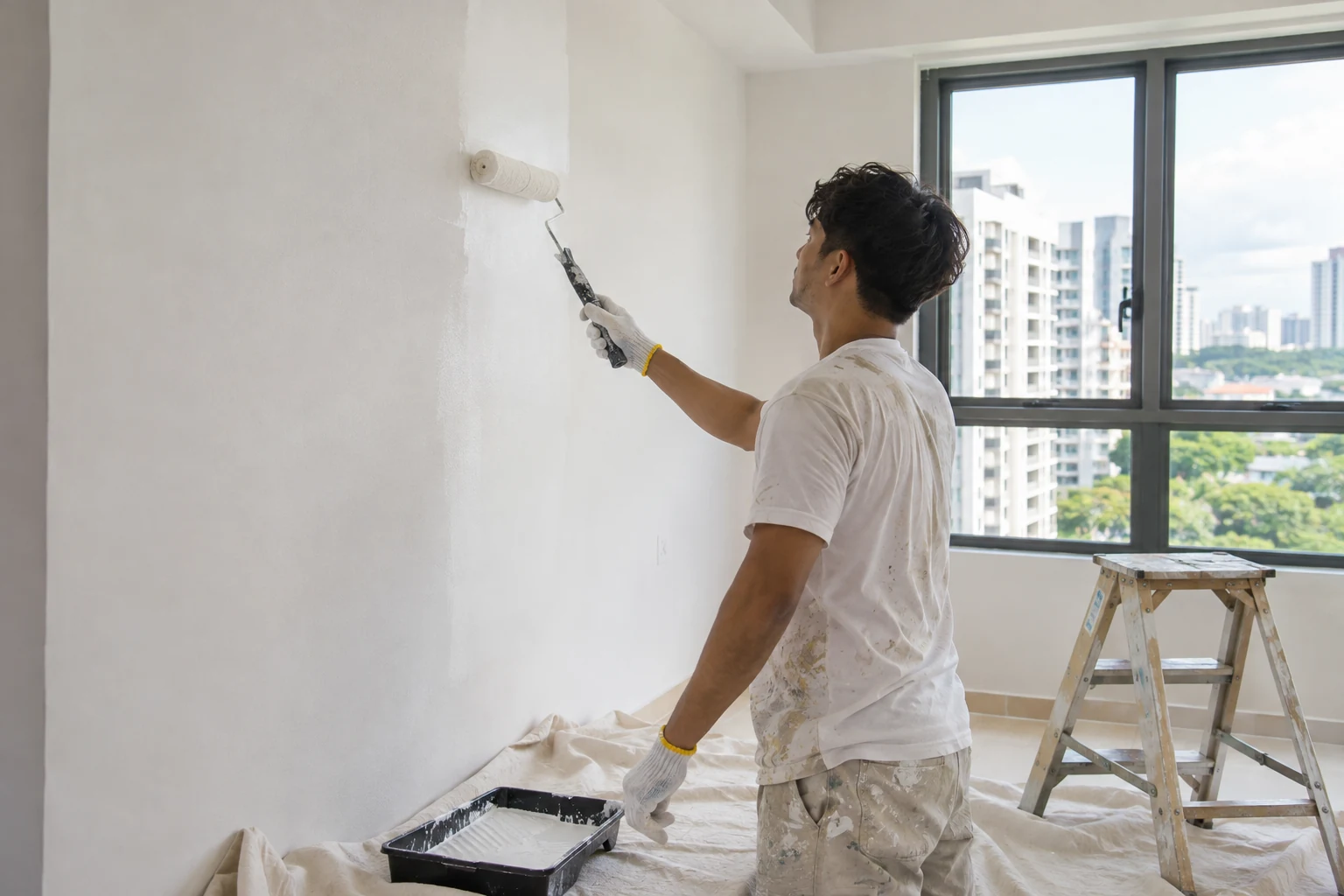
Since 1 January 2026, Singapore has prohibited the manufacture, import and sale for local use of interior paints containing 0.01% or more formaldehyde by weight. That threshold measures the paint in the can. A room-air test measures what’s in the air after paint, carpentry and furniture have been added. Ask for the exact interior paint on your quote and review the other materials separately. NEA’s interior paint requirements.
06. How to test before moving in
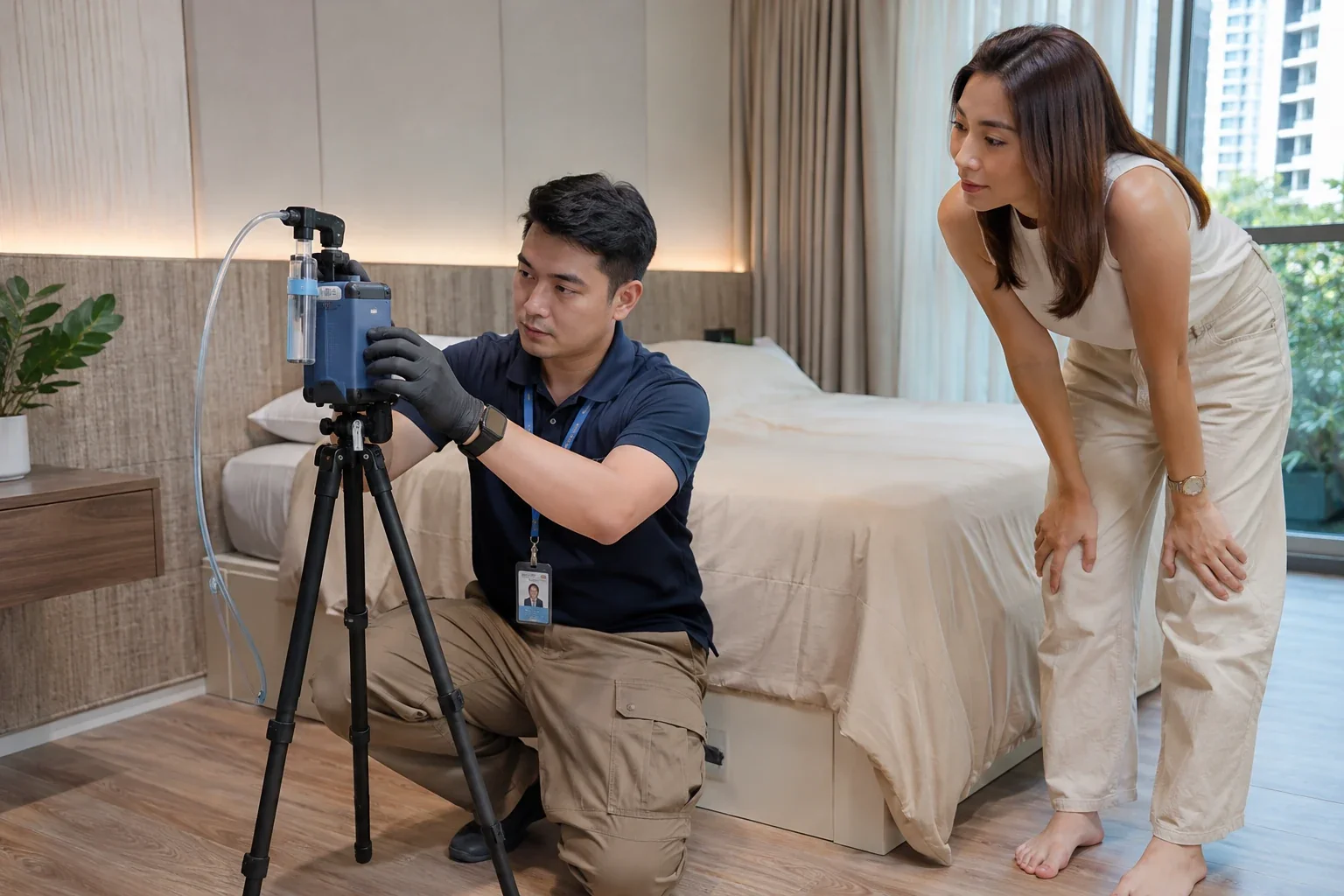
Choose a Singapore Accreditation Council-accredited laboratory whose scope includes formaldehyde in indoor air. Tell the lab which rooms have new carpentry or furniture and where you spend the most time. Ask it to set the sampling conditions, including the window and air-conditioning settings, and to report the method, duration, units and reporting limit. Singapore Accreditation Council laboratory directory.
If a result is elevated, discuss it with the lab and review the likely sources with your contractor. After addressing the source or improving ventilation, consider retesting the same room under comparable conditions. A short reading beside an open window and a bedroom sample with the windows closed describe different conditions.
Planning new carpentry or finishes? Ask Formstill Studio what product documentation is available and how ventilation time can fit into your renovation schedule.
For information and reference only. The scope, methods and sequence for your renovation depend on actual site conditions, applicable requirements and the on-site assessment and professional judgement of the specialists carrying out the work.