
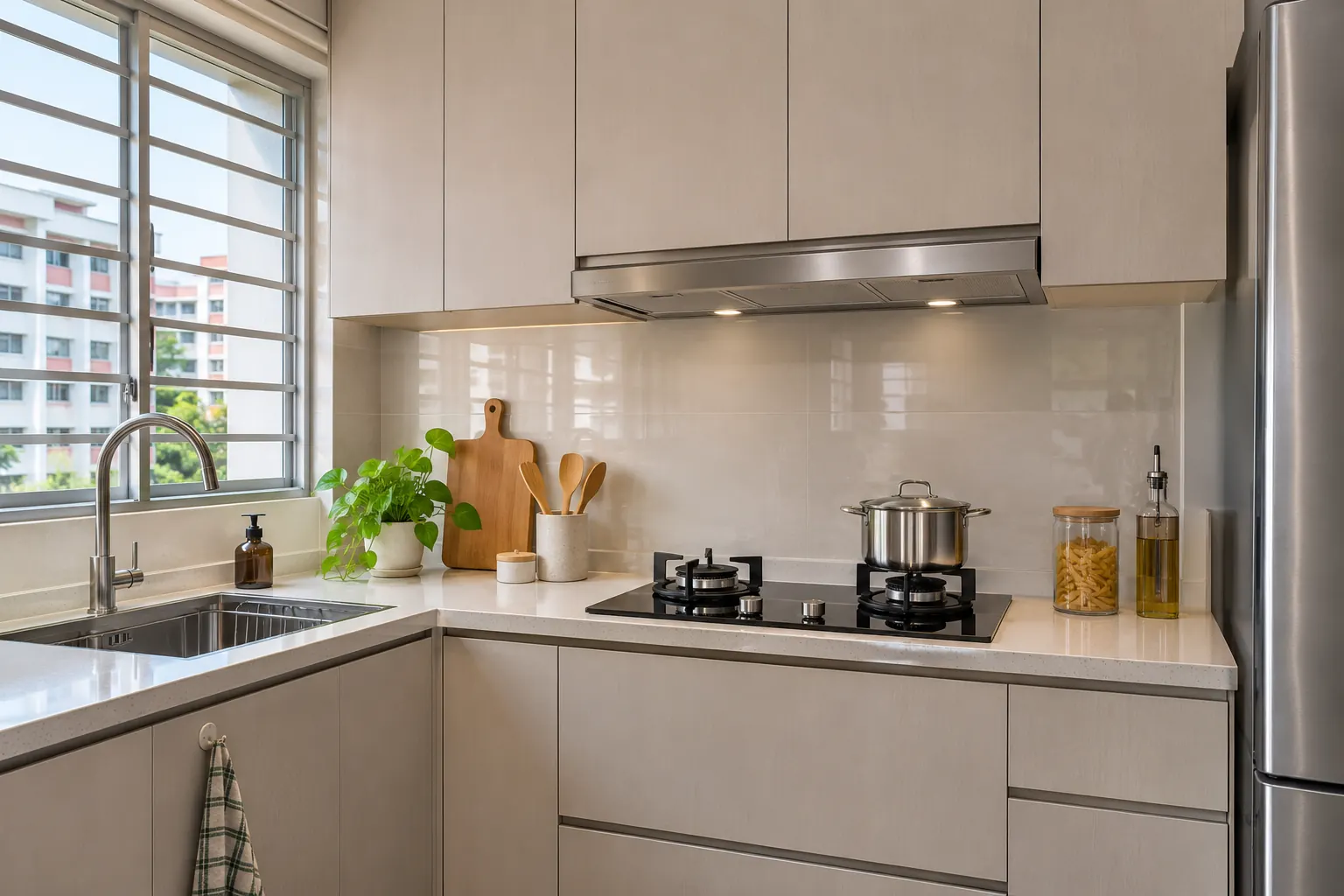
Start with what you cook, how wide your hob is and where the hood can fit. Then check how the hood will move air. Slim, telescopic and chimney describe the shape and installation. Recirculating and ducted describe where the air goes. A chimney-shaped hood can still recirculate air.
01. Consider a slim hood when overhead cabinet space matters
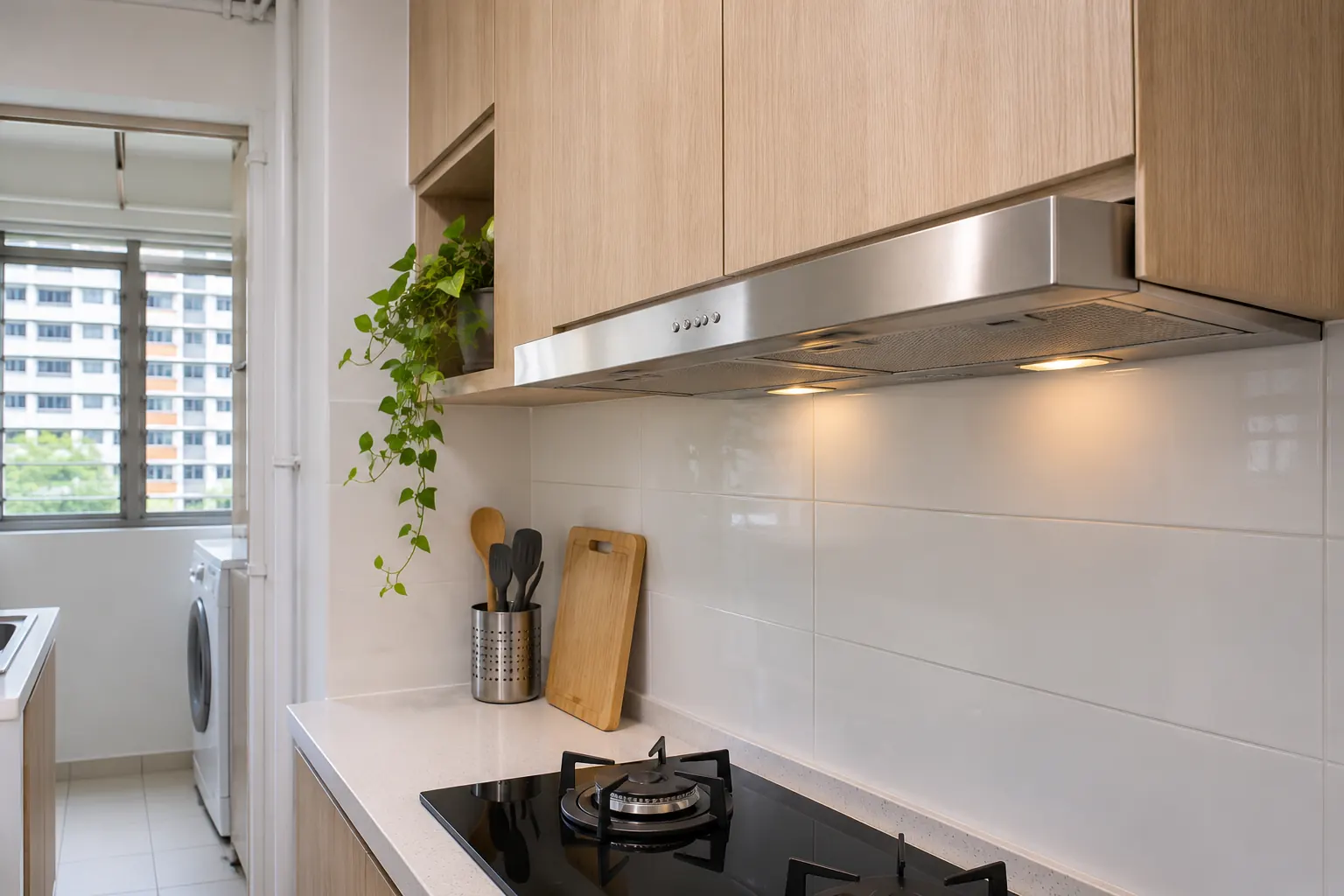
A fixed slim hood usually sits beneath the upper cabinet, with its canopy visible. It can suit a compact HDB kitchen where you want a low-profile fitting and useful storage above. Ask how much cabinet space the motor, recirculation outlet and any adapter take up.
Check how far the canopy reaches over the front burners. If you usually fry on a front burner, look at where the pan sits in relation to the intake. Two hoods of the same width can have different depths and capture areas.
| Hood type | Where it fits | What to check before buying |
|---|---|---|
| Fixed slim | Beneath an upper cabinet with a shallow visible canopy. | Canopy depth, front-burner coverage and space left in the cabinet. |
| Telescopic | Integrated into the upper cabinets with a visor that pulls forward while cooking. | Cut-out, clearance for the visor and access to the filters and runners. |
| Wall-mounted chimney | On a wall with room for a visible canopy and vertical cover. | Wall fixing, space above the canopy, and the approved airflow arrangement. |
02. Try a telescopic hood if you want a cleaner cabinet line
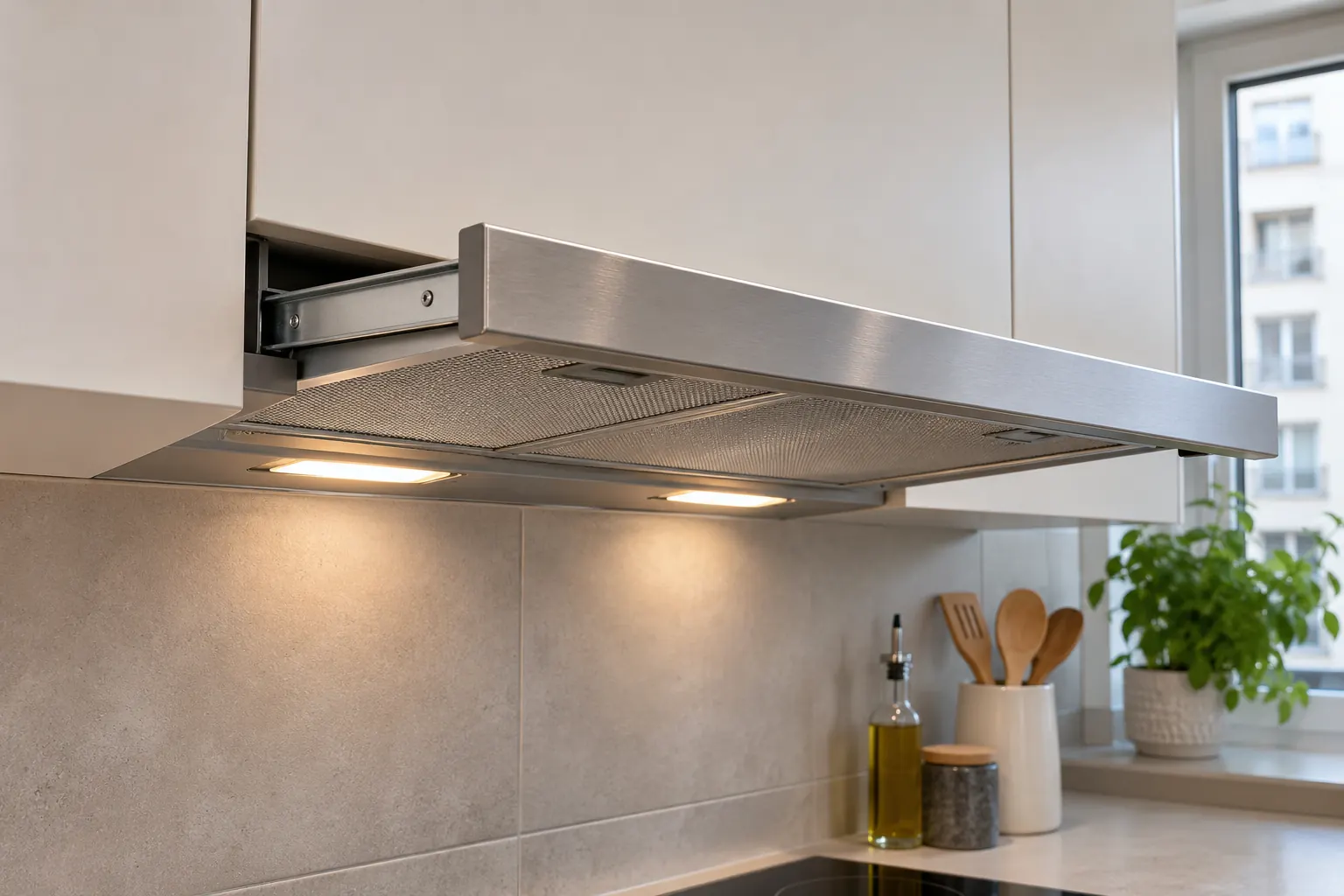
A telescopic hood has a pull-out visor that extends the intake area while you cook. The visor retracts when you finish. Check that it can slide forward without hitting neighbouring handles, projecting cabinet doors or lighting strips. Ask the installer to show where the controls sit with the visor open.
Check whether you can reach the grease filter comfortably and remove it without dismantling the cabinet. Ask how to clean the runners and whether a replacement filter can be bought locally for the exact model.
03. Compare chimney hoods by canopy size and noise
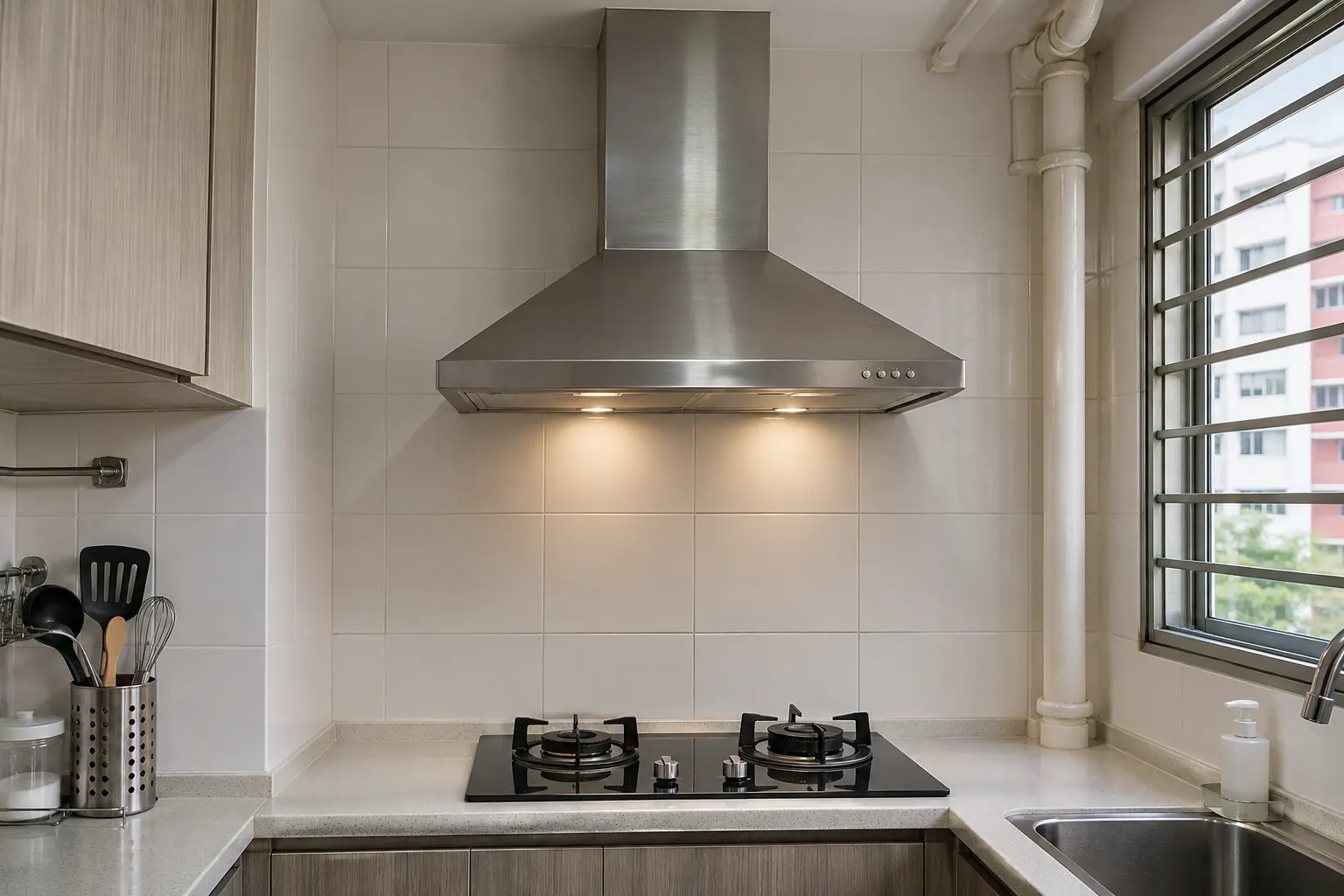
A wall-mounted chimney hood can make sense when you want a broader canopy and have wall space to spare. For frequent frying or wok cooking, compare the canopy depth and coverage over the burners you use. Shape alone tells you little about how a particular model will perform.
Check published airflow and noise figures for the mode you plan to use, and compare figures taken at similar speeds and under comparable conditions. Try the hood at the speed you expect to use most. In an open kitchen, that can matter more in everyday use than the maximum figure on the box.
04. Decide where the air goes before planning the cabinet
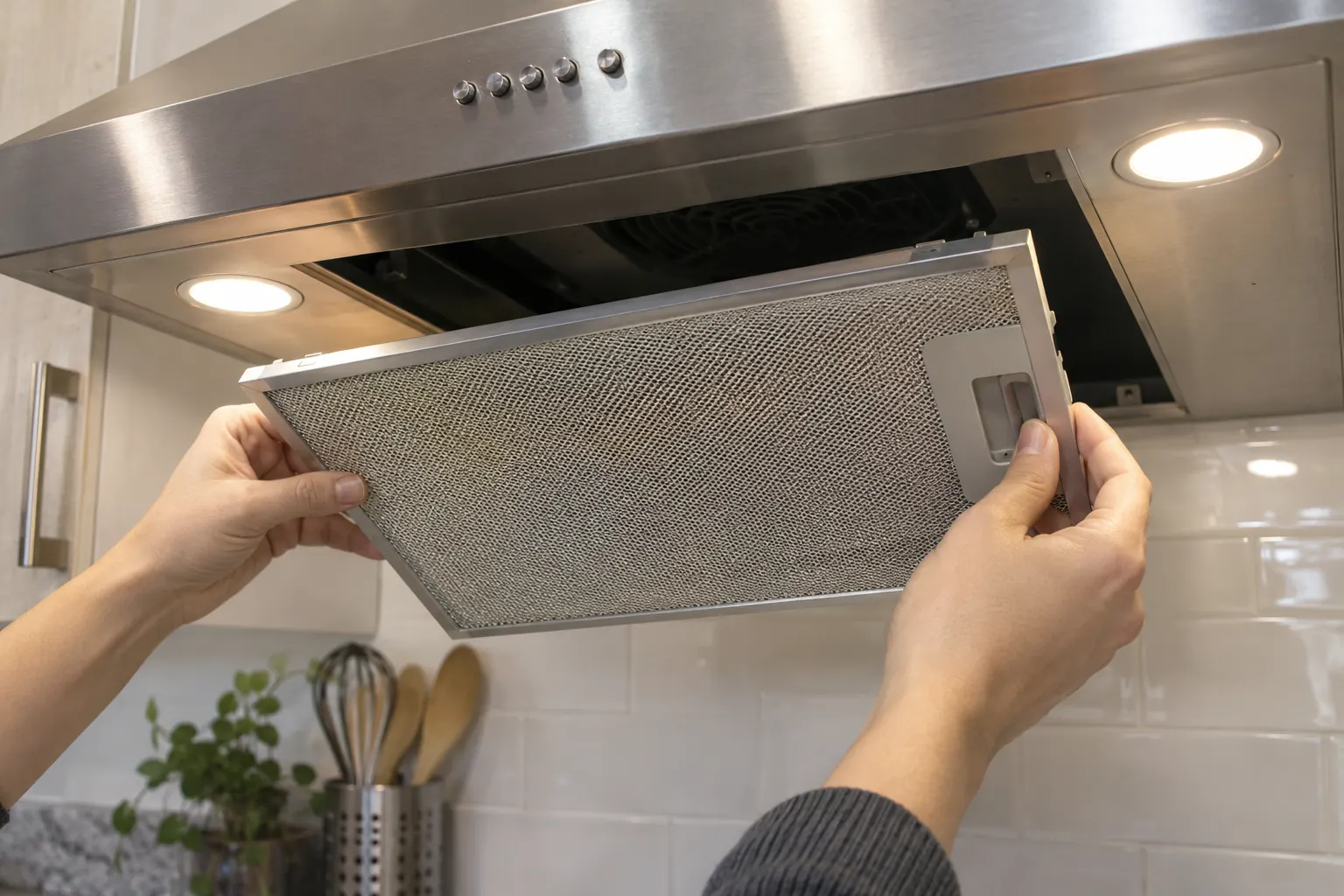
A recirculating hood passes air through a grease filter and typically a charcoal or odour filter before returning it to the kitchen. It can reduce grease and odours, while steam and heat remain in the room. Confirm whether the recirculation kit is included, where air exits and how often filters need cleaning or replacement for the selected model.
A ducted hood sends air outside through a duct. Before ordering one for an HDB flat, have your renovation team confirm whether a compliant discharge route is available for your unit. HDB’s electrical guidelines prohibit separate exhaust fans in kitchens and service yards. Check any proposed outlet, facade alteration or wall penetration with HDB before building around it. A hood advertised as ducted does not establish that a route is allowed. HDB electrical works guidelines · HDB building works guidelines.
05. Approve the hood and hob together

Give your carpenter both model numbers and installation sheets. Check the hood width against the hob and the minimum clearances in both manuals. Mark the mounting height, fixing points, power supply, filter removal space and air outlet on the cabinet drawing. If you change either model, check the drawing again before fabrication.
Choosing appliances together? See our induction versus gas hob guide and open, closed and semi-open kitchen comparison.
For information and reference only. The scope, methods and sequence for your renovation depend on actual site conditions, applicable requirements and the on-site assessment and professional judgement of the specialists carrying out the work.