
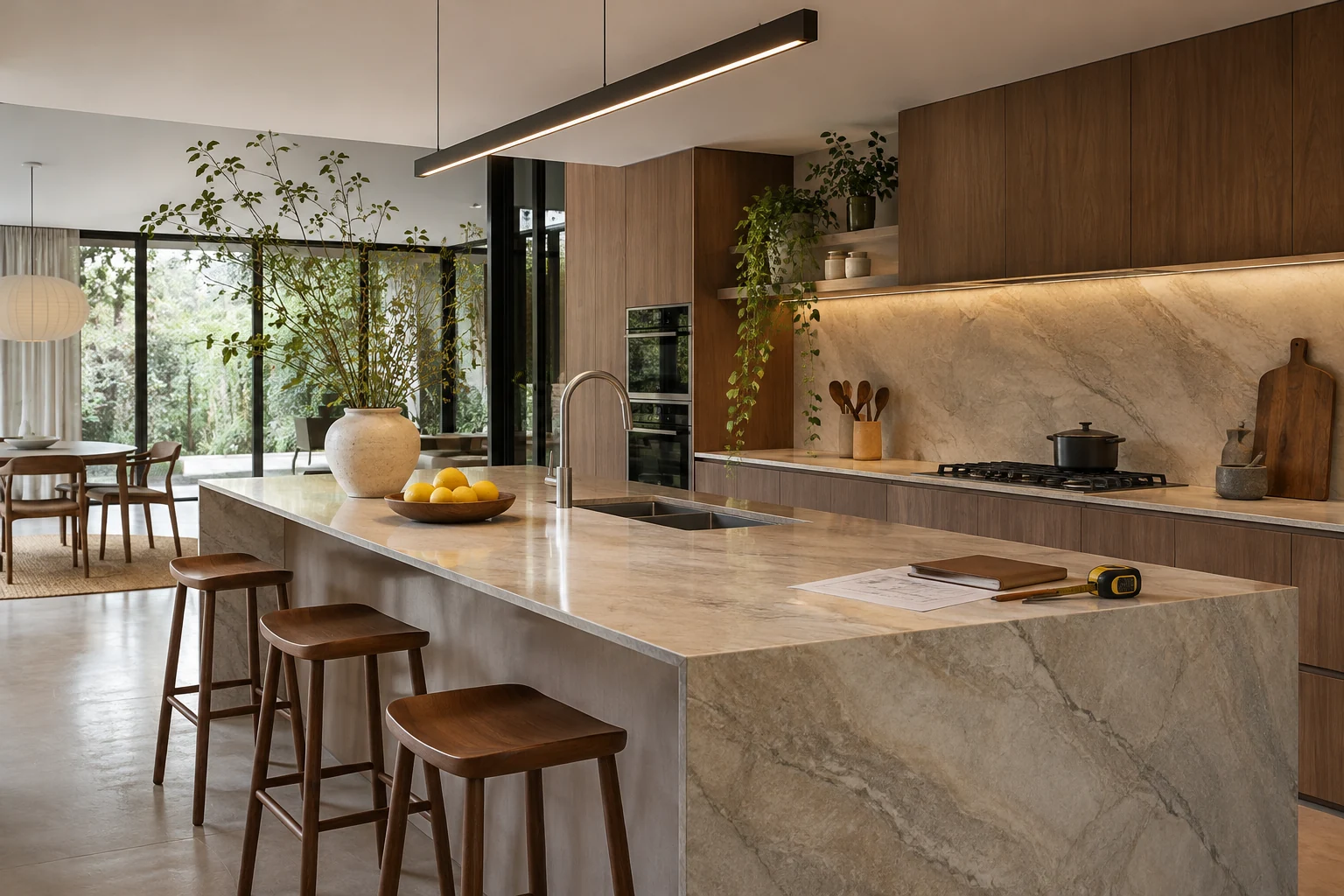
Choosing between sintered stone and engineered quartz? Start with the exact slabs you can buy and the details your fabricator will build.
Bring your kitchen drawing to the showroom. A sample can help you judge colour, while the drawing shows where you will need joins, exposed edges and cut-outs. Both affect what you pay and how the worktop wears.
| What to compare | Sintered stone | Engineered quartz |
|---|---|---|
| Hot cookware | Often more heat-tolerant. Check the maker’s guidance and use a trivet for hot pans. | Use a trivet. Sudden heat can damage the surface. |
| Scratches and chips | Often highly scratch-resistant. Exposed edges can chip if struck. | Use a cutting board. The surface can scratch and exposed edges can chip. |
| Daily cleaning | Wipe spills promptly. Use cleaners approved for the exact finish. | Wipe spills promptly with a soft cloth. Use the maker’s recommended cleaner. |
| Pattern and seams | Large slabs can reduce seams. Check how the pattern looks at cut edges. | Check the full slab and how the pattern lines up at seams and edges. |
| Outdoor use | Some products are approved for outdoor use. Check the exact slab and warranty. | Choose a product explicitly approved for outdoor use if the surface will be exposed. |
| Installed cost | Compare slab size, thickness, edge work, cut-outs and installation. | Ask for the same drawing, edge profile and cut-outs so the quotes are comparable. |
01. What is sintered stone?
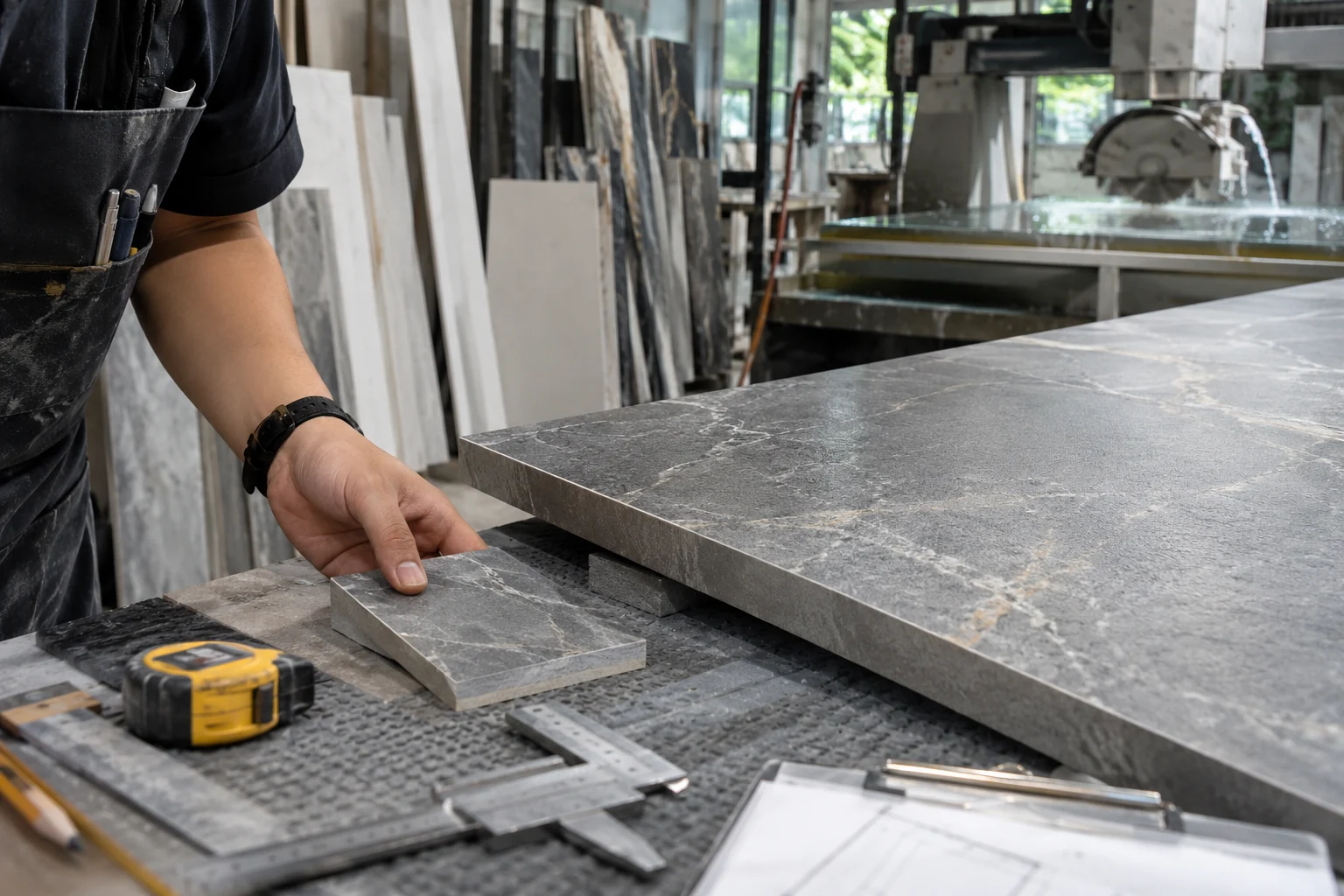
Sintered surfaces are made by compacting and firing a mineral-based mix. The composition, surface pattern and thickness vary by product. Ask for a cut sample so you can see how the face and edge will look together.
If you are choosing a veined finish, look at the sample from the side as well as from above. A matching worktop and waterfall panel may depend on how the pattern is carried through the joint.
02. What is engineered quartz?
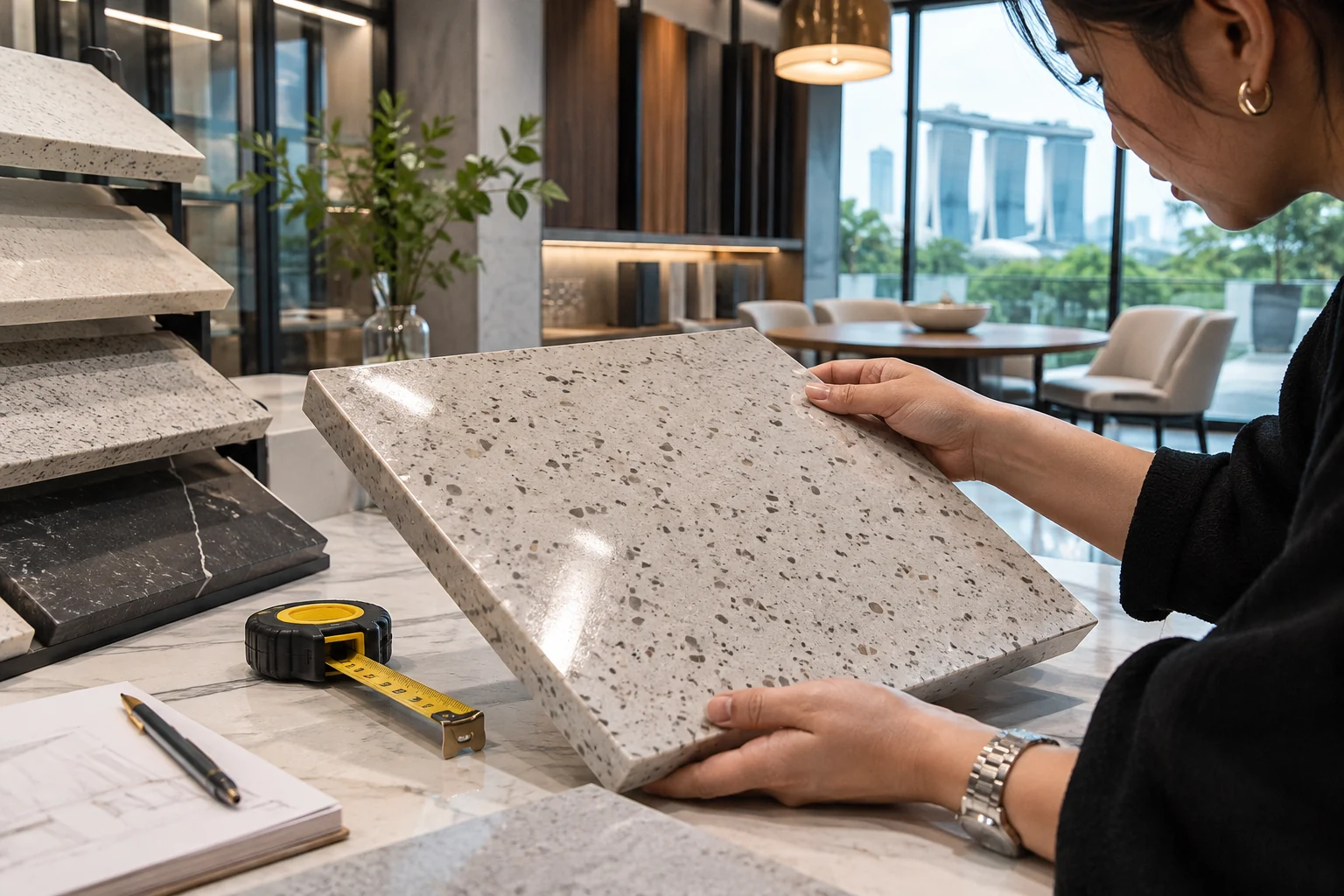
Engineered quartz commonly combines mineral particles with a resin binder and pigments. The exact composition varies, and suppliers may also offer other engineered mineral surfaces. Ask for the technical sheet and the care instructions for the exact series you are pricing.
Treat “quartz” as a starting point when you shop. Record the maker and range so the quotation, sample and warranty all refer to the same material.
03. Compare the two as installed worktops
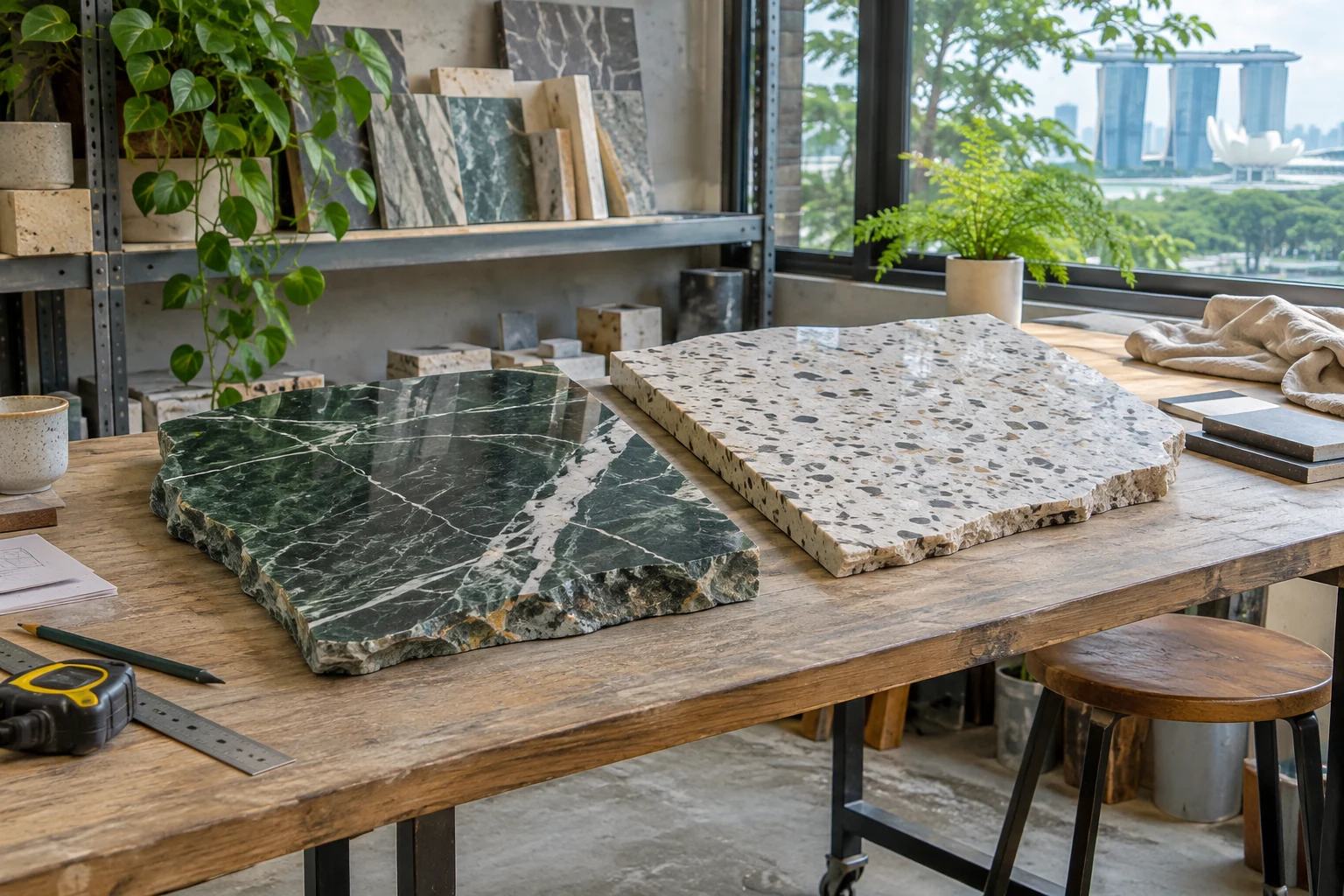
Put both samples beside your cabinet finish. Which edge do you prefer, where would each seam fall, and what does each maker say about heat and cleaning? Ask both fabricators to work from the same sink and hob drawing so you can compare the installed result.
04. Plan for hot cookware
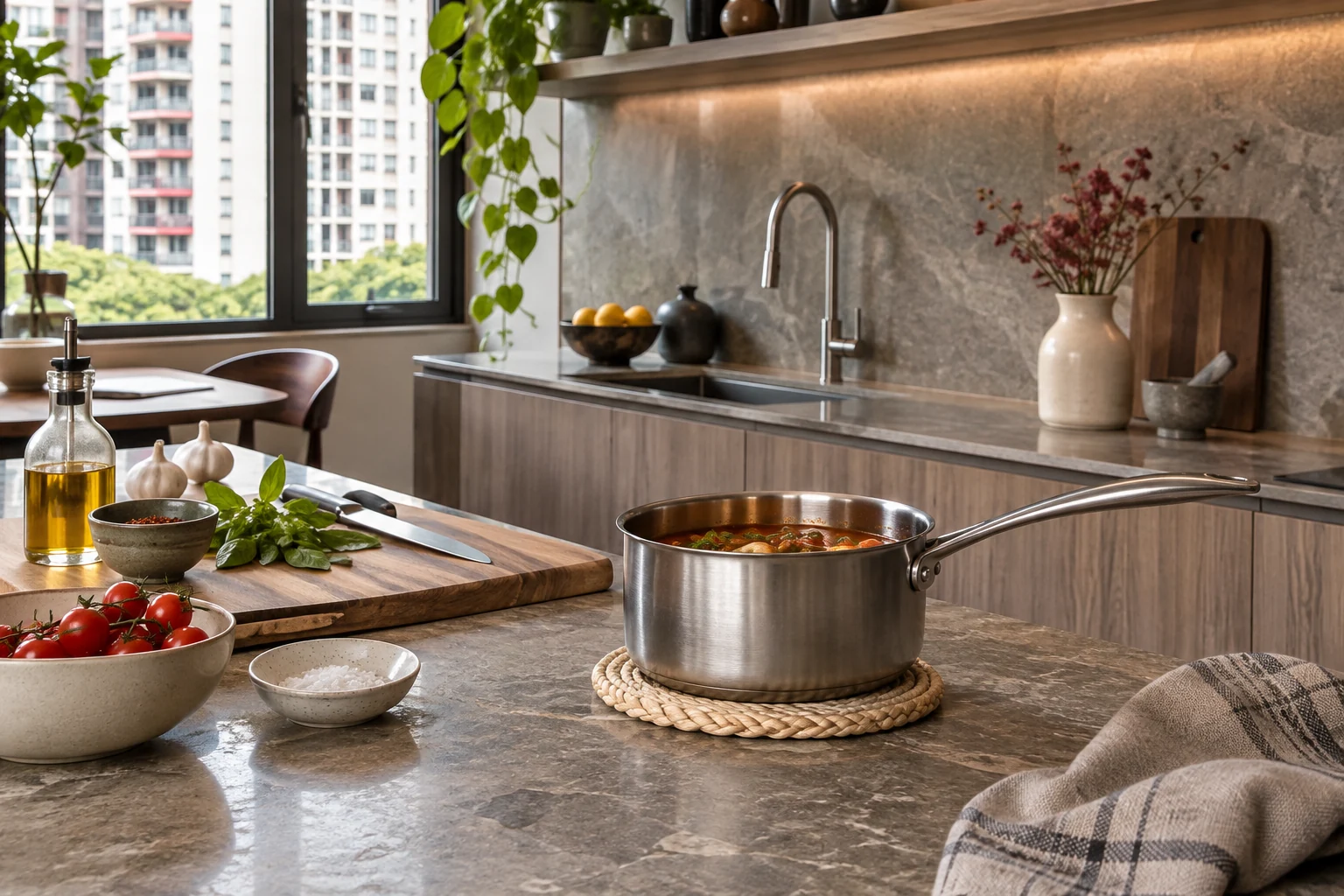
Use a trivet for hot cookware on either surface. Before choosing a slab, check the care instructions and warranty for that exact product, including any restrictions on sudden temperature changes.
Decide where hot cookware will land when it comes off the hob. Leaving a trivet beside that spot makes the precaution easy to follow.
05. Check exposed edges and cut-outs
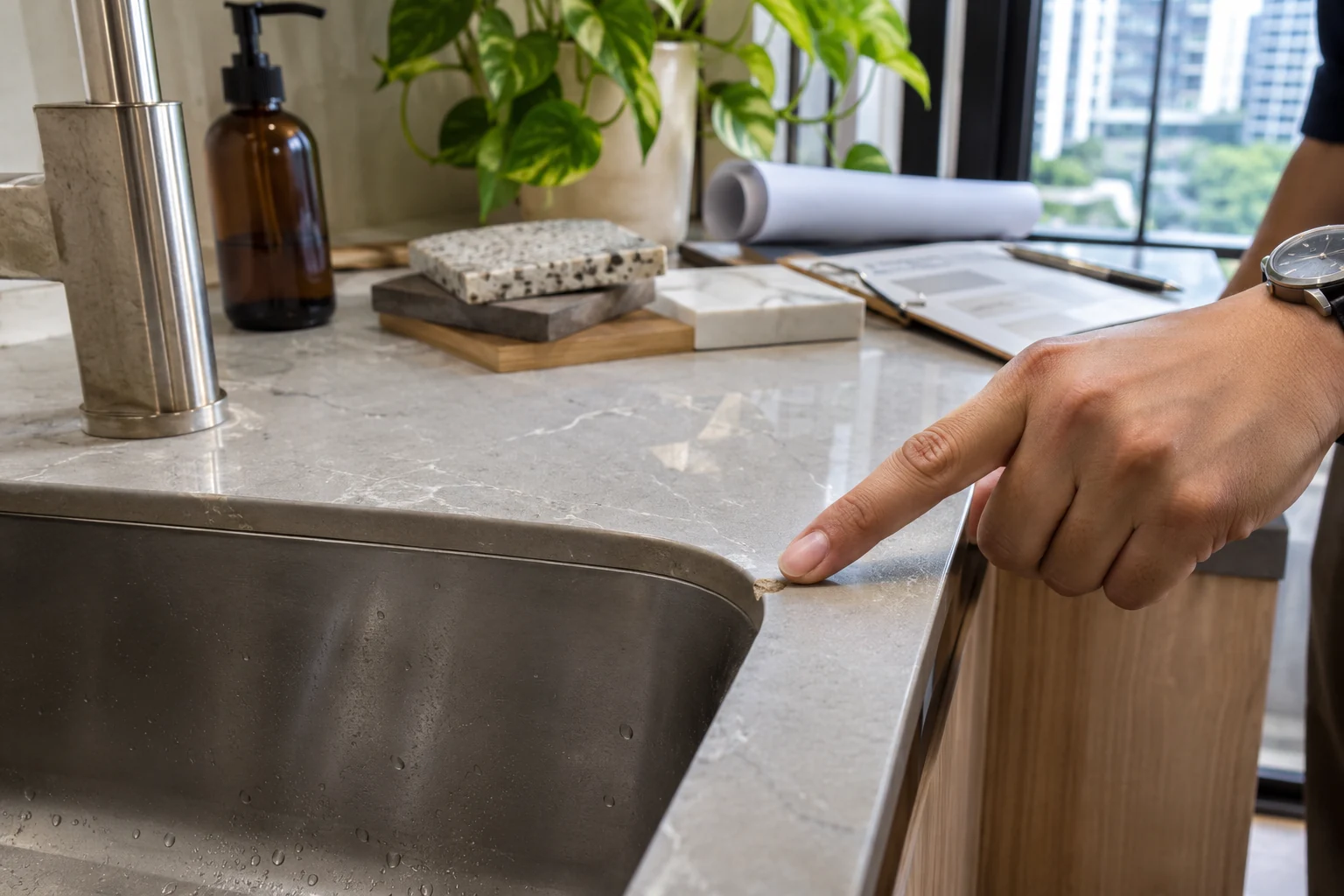
A surface that resists scratches can still chip at an edge. Inspect the sink rim, dishwasher side and island corners. Ask your fabricator which edge profiles are suitable and how the sink and hob openings will be supported.
At an undermount sink, ask to see the edge detail on a sample or drawing. That rim is exposed to knocks from pots and pans during washing up.
06. Ask how you will clean the actual finish

Get the supplier’s instructions for oil, coffee and other everyday spills. Wipe spills promptly and check which cleaners and pads the finish can take. Ask about care for the adjoining silicone and seams as well as the slab face.
Look at the sample under under-cabinet lighting. A finish that hides water marks in the showroom may show them differently next to your sink.
07. Approve seams, patterns and visible edges

Ask for the seam positions on the drawing. With strong veining, review how the pattern meets at joins and what shows at the cut edge. Check whether a waterfall side or mitred edge needs extra slab material or fabrication.
Ask whether you can approve the pattern direction before cutting. This is especially helpful where a short return or waterfall end meets a prominent vein.
08. Check suitability and support for the location
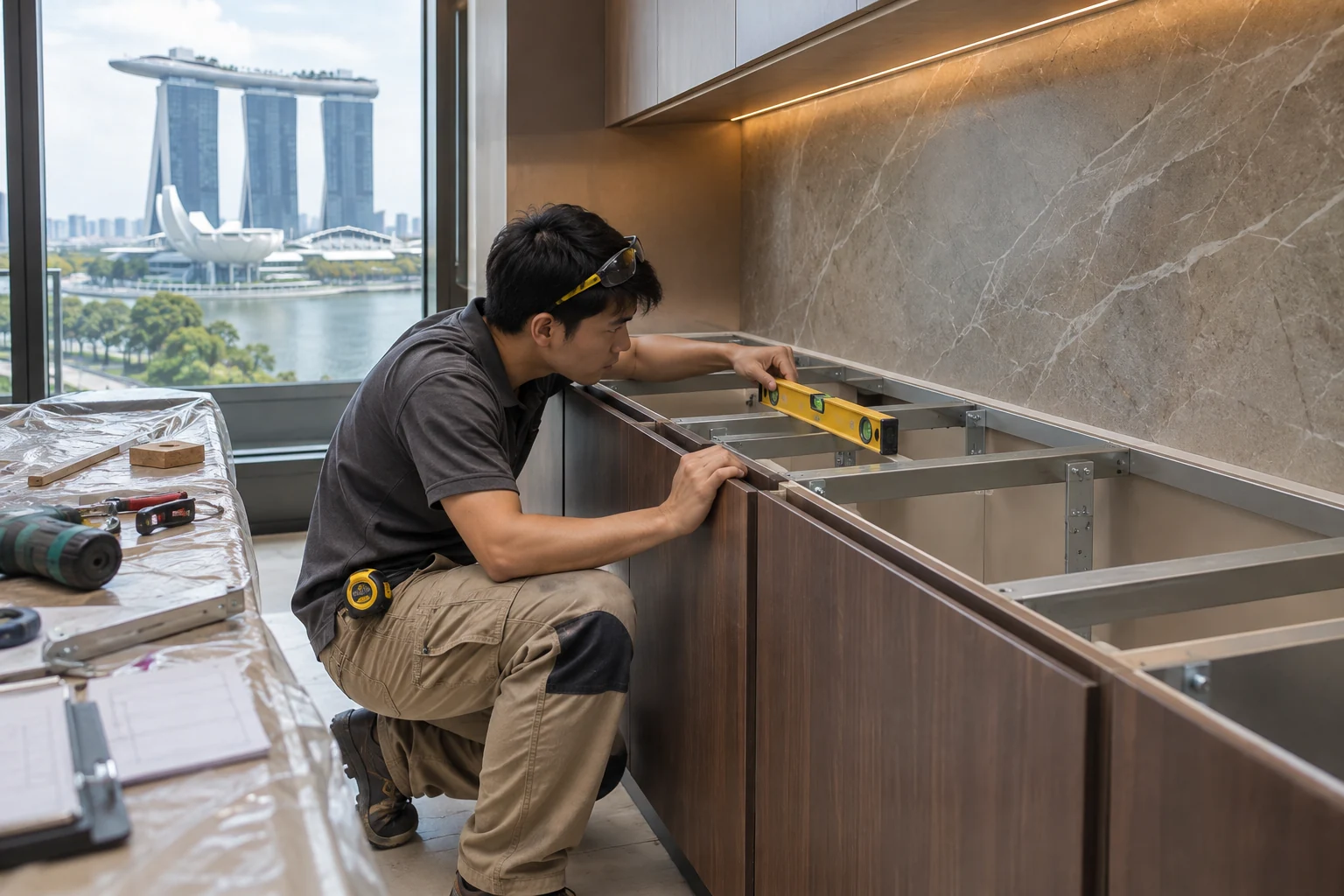
Confirm support for overhangs, cut-outs and undermount sinks. If the same product will be used in a vanity, backsplash or exposed outdoor location, ask the supplier to confirm that application in writing. Review the installation and warranty for each location.
If the layout includes an island overhang, get the support detail agreed before cabinetry is built. The worktop supplier and carpenter should be working from the same dimensions.
09. Compare the full installed price

Ask for the same worktop length, thickness, cut-outs, edging, delivery and installation in both quotes. Add any backsplash or waterfall panel you want. Check who handles sink mounting, removal of the old top and making good at adjacent finishes.
If one quote is priced per foot run, get the total for the actual drawing. Two rates are only comparable once thickness, fabrication and installation are aligned.
10. Choose for your cooking habits

If you cook frequently with hot pans, start with the exact heat guidance and how exposed edges will be detailed. If a particular look matters most, review a full slab or representative sample and confirm seam placement. Ask the fabricator to explain which slab sizes and finishes are available for your layout. Compare the actual sample, drawing, installed price and warranty together.
For information and reference only. The scope, methods and sequence for your renovation depend on actual site conditions, applicable requirements and the on-site assessment and professional judgement of the specialists carrying out the work.