
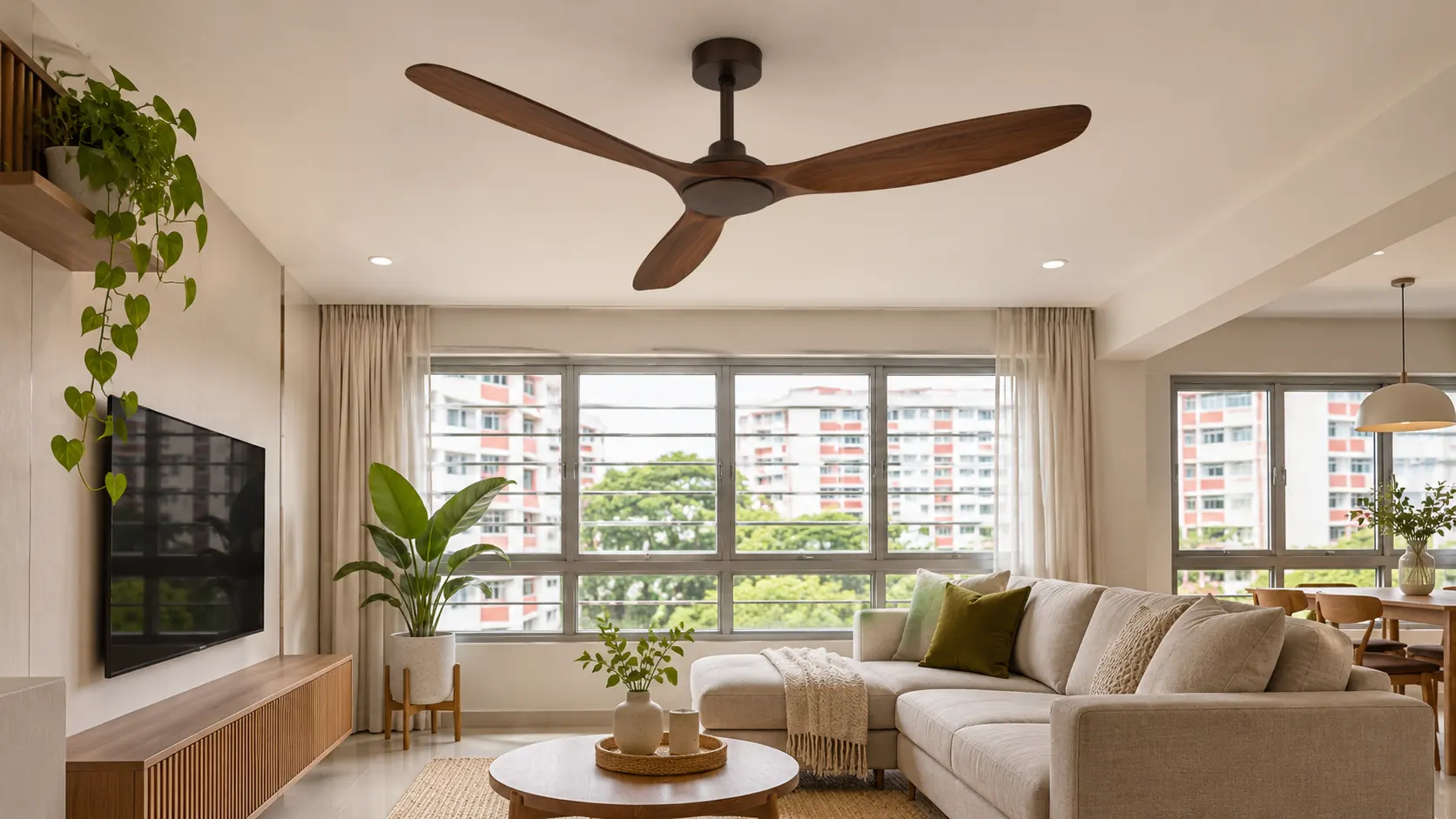
Before buying a ceiling fan, measure the space around the proposed fan point and check how far the blades will sit below the ceiling. A fan can be the right width for a room and still sit too low, clip a tall cabinet door or cast moving shadows across the sofa. Decide where you want the breeze before locking in the fan, lights and carpentry.
| Where you want airflow | Blade span to start comparing | What to measure on site |
|---|---|---|
| Compact bedroom or study | 36–42 inches | Check the distance to walls and wardrobe doors when open. |
| Larger bedroom or compact living zone | 42–48 inches | Check where the breeze will land and whether a beam narrows the usable ceiling. |
| Wider living room | 48–56 inches | Check the blade sweep against downlights, curtain pelmets and tall carpentry. |
| Long living and dining room | Compare two fans sized for their own zones with one larger fan. | Check whether both seating areas need airflow and whether there is room for two safe blade sweeps. |
01. Size the fan to the usable ceiling
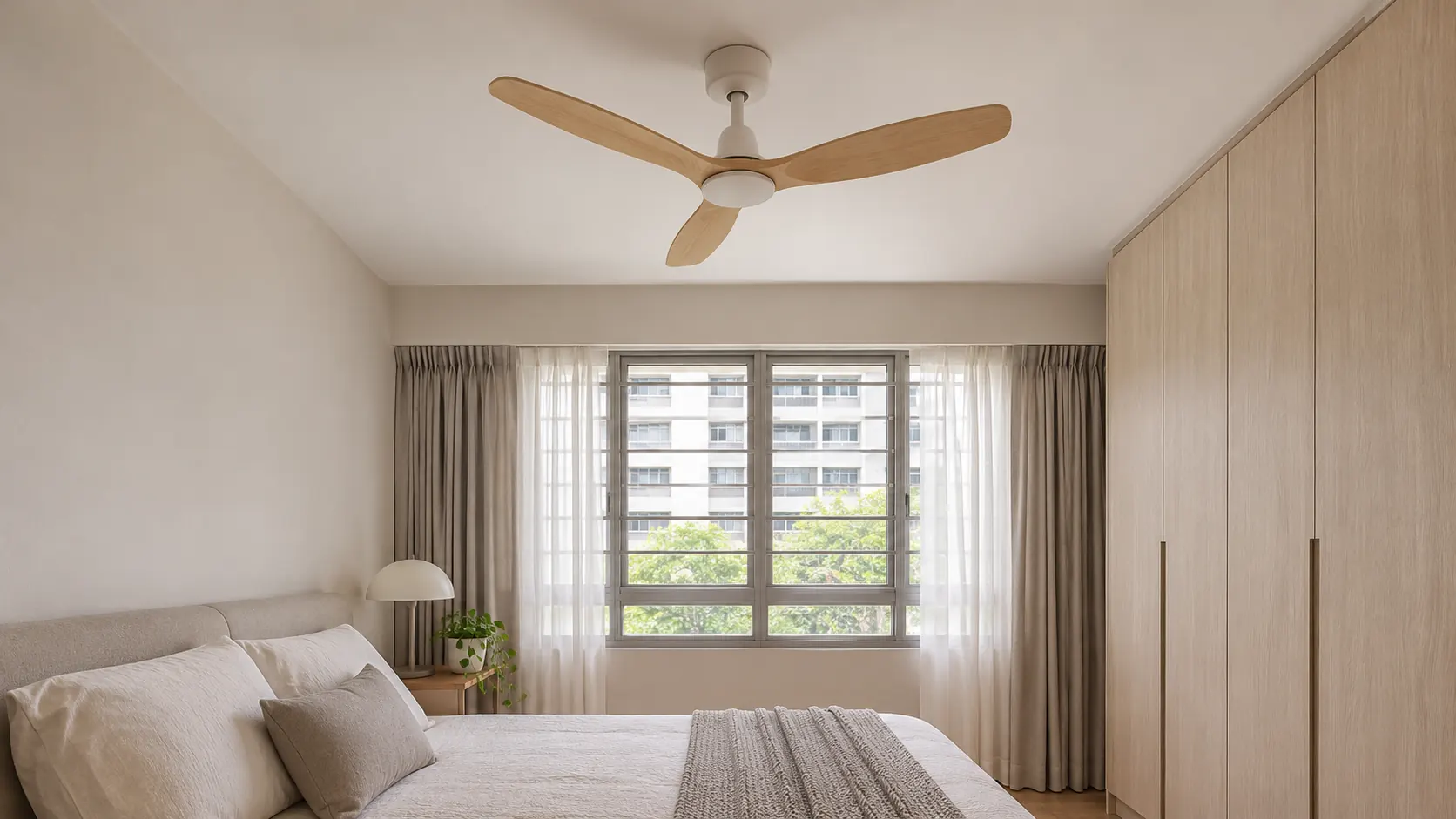
Blade span is the diameter of the circle the blades sweep. Mark that circle on your ceiling plan at the proposed fan point. Check the gap from its edge to the nearest wall, beam, track light, pelmet and open cabinet door, using the chosen model’s required clearances. The sizes above are starting points. Two rooms of the same floor area can need different fans if one is narrow or has a beam close to the mounting point.
02. Check blade height, weight and mounting before ordering
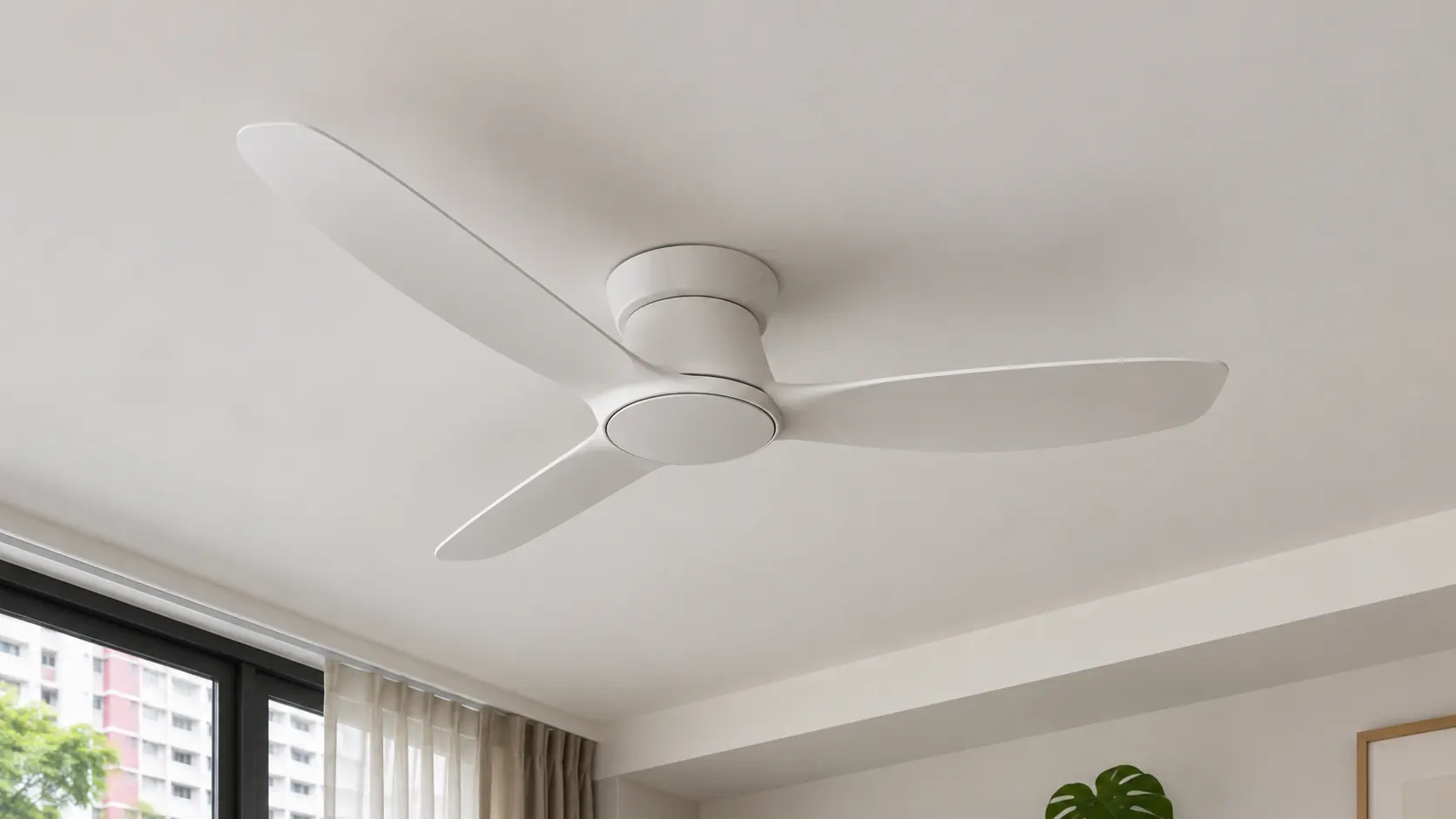
HDB lists ceiling fan installation under electrical work that can proceed without a permit when its conditions are met. The fan must weigh 6 kg or less, with at least 2.4 m from the finished floor to the blades. HDB also specifies a maximum diameter of 8 mm for the hardened-steel expanding bolt and a maximum penetration of 40 mm for the steel plug. Ask your installer to check these conditions and confirm a suitable fixing point. For an arrangement outside the published conditions, check with HDB before proceeding. HDB electrical works guidelines.
For example, a 2.60 m finished ceiling leaves 20 cm between the ceiling and the blades if you need to maintain 2.40 m below. Use the manufacturer’s ceiling-to-blade dimension for the actual mount, and check any separate clearance requirements. A short-mount model can help where the height is tight. Ask how the fan will be supported if there is a false ceiling, and use a Licensed Electrical Worker for new or altered wiring. EMA guidance on licensed electrical workers.
03. Compare airflow, motor and controls together
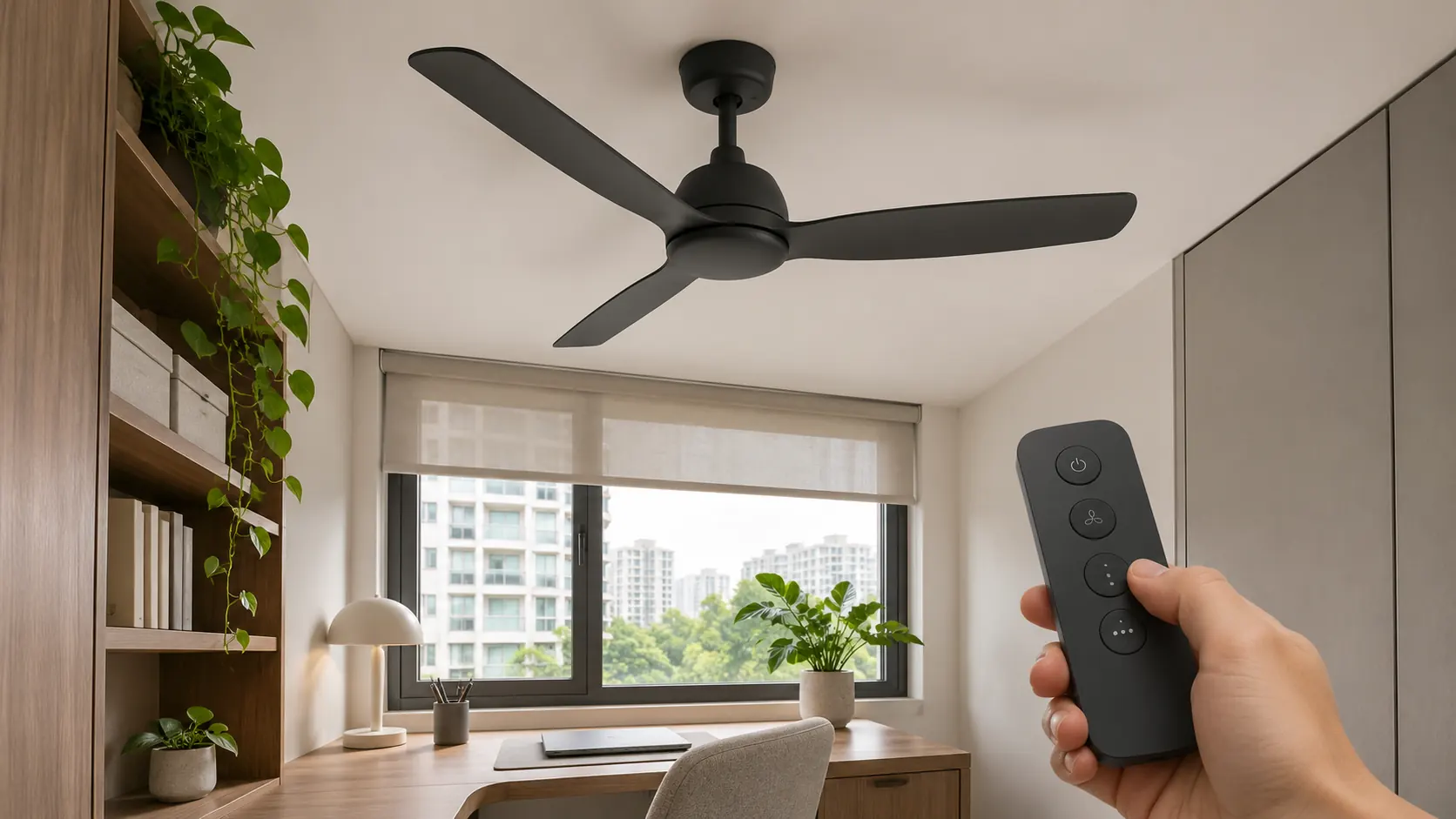
| What to compare | AC motor | DC motor |
|---|---|---|
| Power use | Check rated watts and airflow for the model. | Often uses less power at comparable airflow. Check the published ratings. |
| Controls | Wall or remote controls vary by model. | Often has more speed settings. Confirm which wall controls, if any, are compatible. |
| Bedroom use | Try the lowest speed and listen for motor or airflow noise. | Try the lowest speed and check whether the remote beeps or has a bright display. |
Compare published airflow where the figures use comparable units and test conditions. Blade count alone tells you little about how much breeze reaches the sofa or bed. Check whether the fan remembers its settings after the wall switch is turned off, and whether replacement remotes or light modules are available.
04. Draw the fan and lights on the same plan
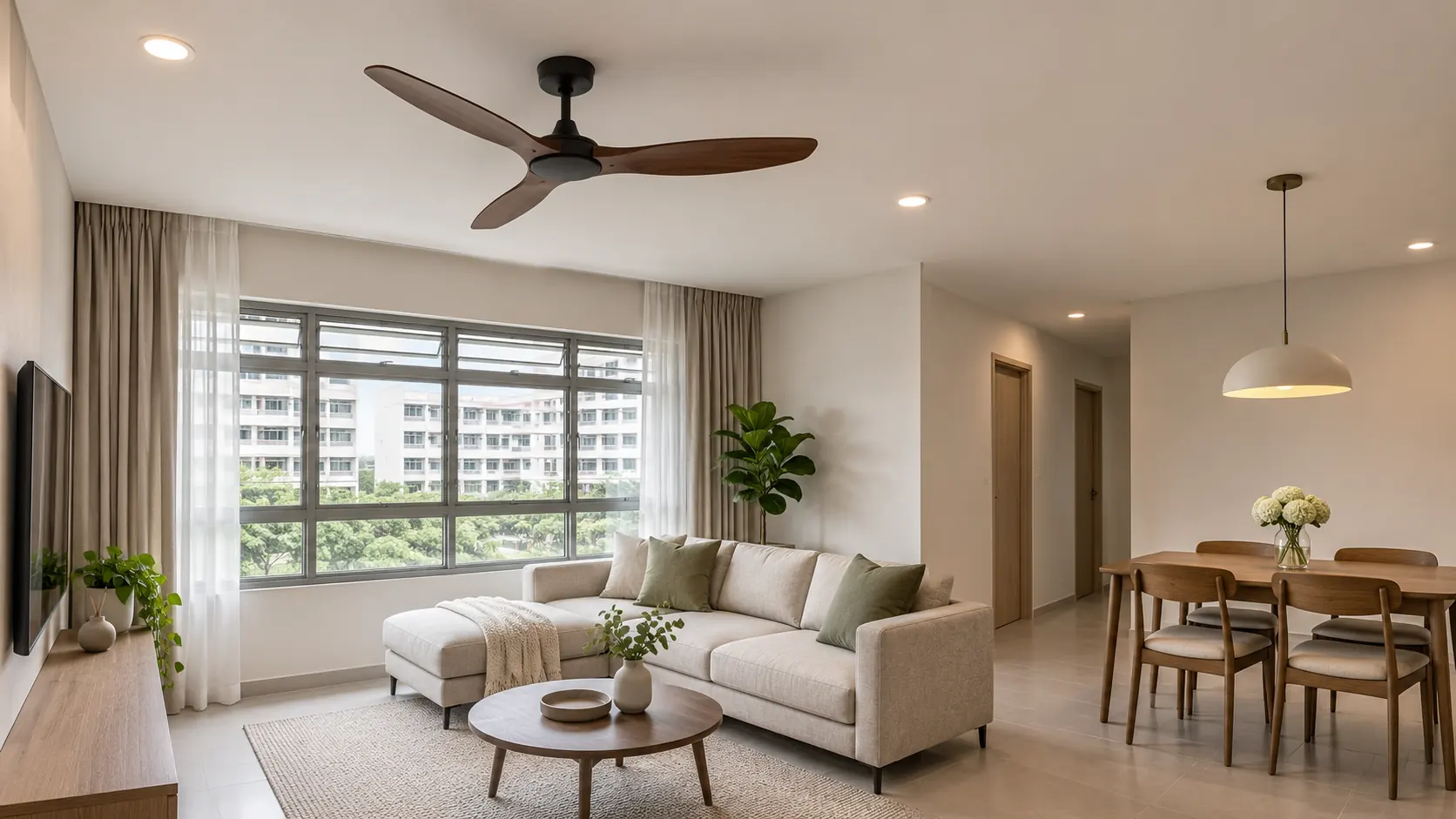
A fan with an integrated light can save a ceiling point in a compact room. Check whether the light can run independently of the fan, how it dims and whether its light module is replaceable. Separate lights let you aim light at the dining table, desk or wardrobe. Position and aim them so their beams avoid the blade sweep where practical, since blades passing through a light beam can cast moving shadows.
Agree on the fan point, light points and switch locations before wiring or closing the ceiling. If you are replacing an old fan, ask whether the new model works with the existing wall control. See our guides to planning renovation wiring and choosing lighting colour temperature.
For information and reference only. The scope, methods and sequence for your renovation depend on actual site conditions, applicable requirements and the on-site assessment and professional judgement of the specialists carrying out the work.